
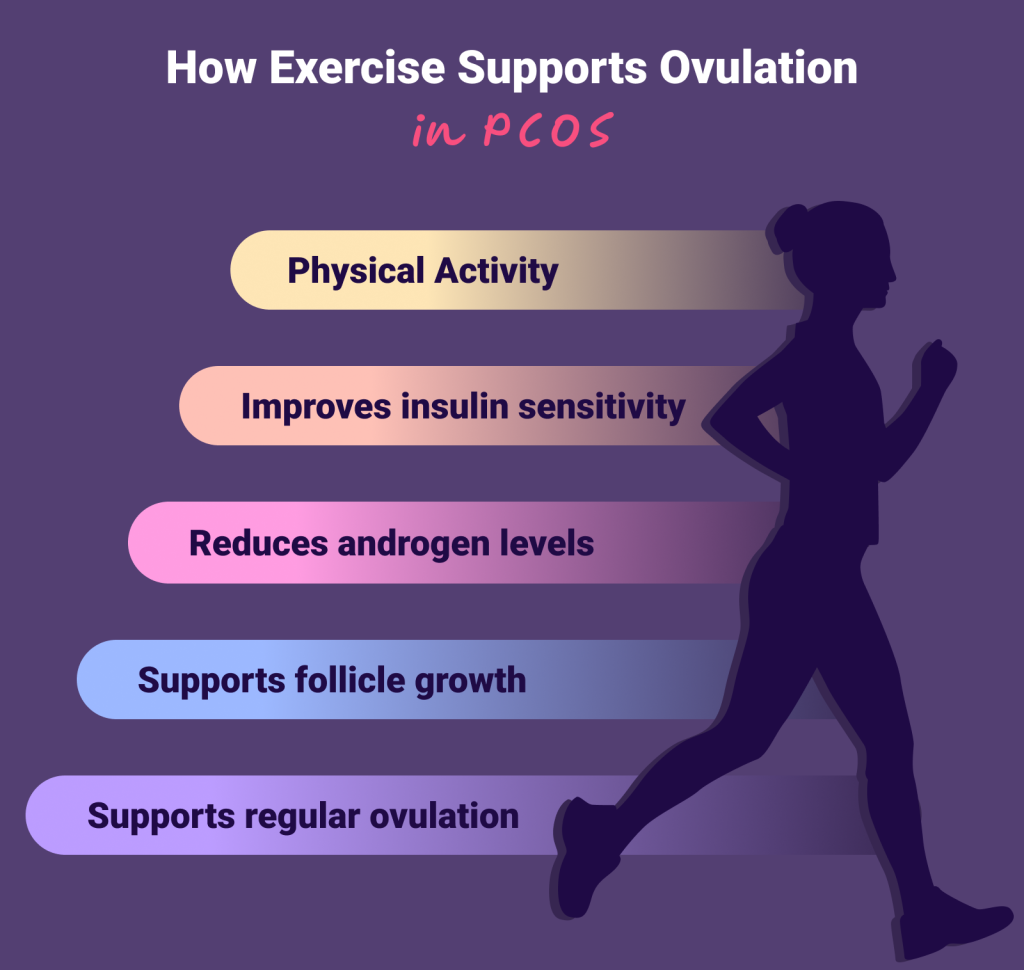
For women with PCOS, moderate exercise — around 150 minutes weekly (30 minutes of moderate physical activity each day for at least 5 days a week) — is one of the most effective natural strategies to help restore ovulation. Exercise may reduce insulin resistance, lower androgen levels, and support a healthy body weight, which may support cycle regularity.
Studies suggest that even a modest weight reduction of about 5% through lifestyle changes may help restore ovulation and improve fertility outcomes in women with PCOS. However, excessive exercise further suppresses ovulation, making a careful balance essential for reproductive health.
Key Takeaways
- Moderate exercise may support more regular ovulation naturally for women with PCOS.
- Insulin resistance may directly suppress regular ovarian cycles.
- High-intensity physical stress can halt conception progress.
- Cycle tracking helps you better identify your optimal fertile window even as your lifestyle changes.
- The Premom app may help you better understand your ovulation patterns so you can time intercourse around your fertile window.
Key Terms Explained
- Insulin Resistance: A condition where cells ignore insulin, increasing blood sugar and hormones.
- Anovulation: A menstrual cycle in which the ovaries fail to release an egg.
- Luteal Phase (11–17 days): The stage of the menstrual cycle immediately following ovulation and preceding menstruation.
- LH Surge: A spike in luteinizing hormone that triggers the release of an egg.
Physical activity may help support hormonal balance in women with PCOS. Research suggests that regular moderate exercise can improve insulin sensitivity and metabolic health, which are closely linked with hormonal regulation and ovulatory function. Over time, combining healthy lifestyle habits such as daily movement with cycle tracking tools like the Premom app may help users observe patterns and better understand their menstrual cycles.
Why PCOS Makes Ovulation So Difficult
The Role of Insulin Resistance in PCOS Anovulation
High insulin levels constantly overstimulate ovarian tissue. This disruption halts egg maturation mid-cycle. When insulin levels stay high, the body struggles to trigger the hormonal signals needed for a successful egg release.
How Excess Androgens Disrupt Your Ovulation Cycle
Elevated male hormones, or androgens, block normal follicle growth entirely. Cysts may form in the ovaries instead of the body releasing a mature ovum. This hormonal “noise” makes it hard for the dominant follicle to emerge.
What Is Anovulation — and How Common Is It with PCOS?
Anovulation is the complete absence of ovulation. Polycystic ovary syndrome is responsible for about 70–80% of anovulatory infertility cases, making it one of the most common causes of ovulation-related fertility challenges in women. Without an egg, conception is impossible, making it the primary hurdle for PCOS fertility.
Does Exercise Help Fertility and PCOS Ovulation? What the Science Says
How Polycystic Ovarian Syndrome and Exercise Are Linked
Regular movement may directly lower circulating insulin. Moderate activity may support more regular reproductive function naturally. Exercise acts like a key that unlocks the cells, letting sugar in and lowering the demand for high insulin.
Exercise and Insulin Sensitivity — the Key Connection
Muscular contraction absorbs blood glucose without insulin assistance. This biological bypass may help reduce ovarian strain. By taking the pressure off the pancreas, the ovaries can return to a more balanced hormonal state.
How Much Weight Loss Is Needed to Restore PCOS Ovulation?
Even a modest weight reduction of about 5% of body weight may help improve menstrual regularity and support ovulation in some women with PCOS. Focus on gradual progress rather than rapid changes. Even a few pounds may support the hormonal balance enough to trigger a cycle.
What Is Considered Excessive Exercise When Trying to Conceive?
Signs You May Be Over-Exercising with PCOS
Chronic fatigue, missing periods, and muscle weakness signal severe overtraining. If you feel “wired but tired” or your cycle disappears after starting a new gym routine, it may be worth pulling back on intensity and speaking with your provider.
How Much Exercise Is Too Much for Conception?
Some studies suggest that engaging in vigorous exercise at high levels — such as five or more hours per week — may be associated with a longer time to pregnancy in certain women, particularly those with normal body weight. This level of intensity signals to the brain that the environment is “stressed,” which can lead the body to prioritize survival over reproduction.
Best Exercise for PCOS Ovulation — Your Complete Workout Guide
Best Types of Exercise for Polycystic Ovarian Syndrome
Brisk walking and swimming are among the most commonly recommended options for women with PCOS. They support blood circulation without raising cortisol. These activities provide the benefits of movement without the inflammatory “spike” of heavy stress.
Does Weight Training Affect Female Fertility?
Building lean muscle mass may support improved insulin sensitivity long-term. Lifting light to moderate weights may support more balanced hormone levels. More muscle means your body processes sugar more efficiently, even when you are resting.
Low-Impact vs. High-Intensity: What’s Right for Your PCOS?
Low-impact movement protects fragile hormone balance effectively. High-intensity interval training (HIIT) requires extreme moderation. Too much HIIT can actually increase cortisol, which may worsen PCOS symptoms for some women.
PCOS Workout Plan — How to Structure Your Week for Better Ovulation
Following a consistent weekly routine may help maintain the hormonal stability that supports ovulation. Here is a sample 5-day plan built around PCOS-friendly activities:
| Day | Activity | Duration | Intensity |
|---|---|---|---|
| Monday | Brisk Walking | 30 mins | Moderate |
| Tuesday | Yoga | 45 mins | Low |
| Wednesday | Strength Training | 30 mins | Moderate |
| Thursday | Swimming | 30 mins | Moderate |
| Friday | Pilates | 45 mins | Low |
Exercise While Trying to Conceive — What to Keep vs. What to Modify
Maintain the gentle aerobic workouts you performed previously. Consider pulling back on physically draining marathons or boot camps. The goal is to keep the body in a “safe” and nourished state.
Can You Exercise During Ovulation and the Two-Week Wait?
Moderate activity remains entirely safe during the fertile window. In fact, it can help with pelvic blood flow. Avoid sudden physical extremes or trying a brand-new, difficult sport during this time.
Can Vigorous Exercise Affect Implantation?
Very intense workouts can place stress on the body, especially if they are frequent or combined with low energy intake. When the body feels under significant physical stress, it may shift its focus toward recovery rather than reproduction. Some clinicians describe this simply: if the body feels like it is “running from a tiger,” it prioritizes survival rather than pregnancy.
During the two-week wait, many doctors suggest choosing gentle movement such as walking, stretching, or light yoga instead of high-intensity training. These activities help you stay active while allowing the body to remain in a more balanced and restored state.
Exercise and Diet for PCOS — the Most Powerful Combination
How Nutrition Amplifies the Effect of Exercise on PCOS Ovulation
Consuming adequate protein repairs active muscles quickly. Balanced meals may help amplify your fitness results over time. Think of exercise as the engine and nutrition as the fuel — both need to be high-quality.
Anti-Inflammatory Foods + Exercise = Better Hormonal Balance
Eating leafy greens and healthy fats alongside moderate exercise may support metabolic health and lower inflammation. In some individuals, these lifestyle habits may also support hormonal balance, which may be associated with more regular menstrual cycles over time. Chronic low-grade inflammation is often discussed as one of the underlying factors linked with PCOS.
How to Track Ovulation While Making Lifestyle Changes
Monitor daily progress using ovulation predictor kits. Premom tracks your hormone data over time, which may help you see whether your new routine is supporting more regular ovulation.
How to Boost Ovulation with PCOS — Beyond the Gym
Sleep, Stress & Cortisol — How They Suppress Ovulation
Chronic stress demands continuous cortisol production. Since the body uses the same building blocks for cortisol and reproductive hormones, stress “steals” from your fertility. Eight hours of sleep helps repair this block.
How to Support Ovulation Naturally
- Aim for around twenty grams of protein at every meal to stabilize blood sugar.
- Walk for twenty minutes after dinner most evenings.
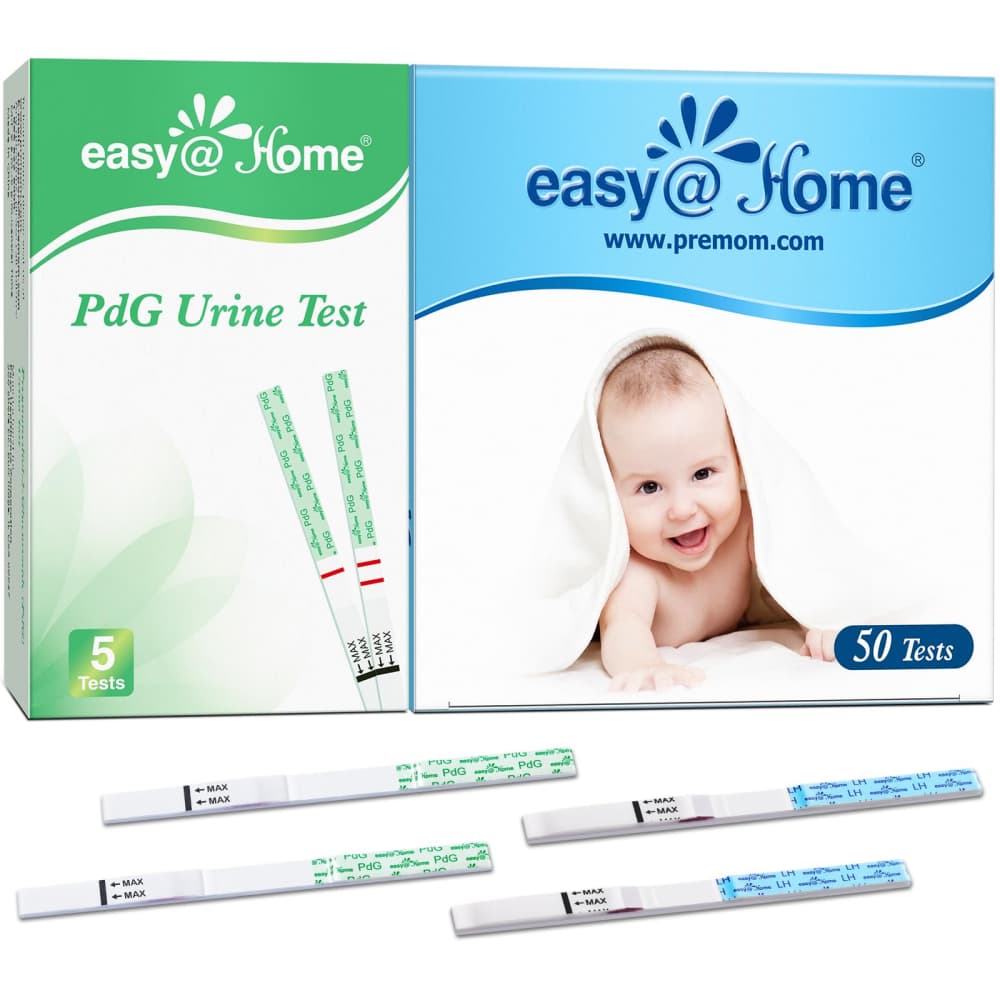
- Track hormone progression daily with easy@Home ovulation tests to find your LH peak.
- After your LH peak, use easy@Home PdG strips to see whether progesterone is present in the days following, which may suggest ovulation has likely occurred.
How to Increase Your Chances of Ovulation with PCOS
Daily consistency matters more than perfection. Small, sustained efforts rebuild fertility strongly. Focus on moving your body in ways you enjoy so you can stick with it for the long term.
The Premom app works together with easy@Home hormone testing products as one fertility tracking system. This system combines at-home ovulation testing, PdG testing, and BBT charting with digital cycle tracking so users can read, log, and analyze their fertility signals in one place. Tracking these signals over time may help individuals better understand their cycle patterns and discuss them with healthcare providers.
How Premom Helps Track PCOS Cycles
Irregular cycles can be more difficult to monitor with tools designed around predictable 28-day cycles. To support people with irregular cycles or PCOS, the Premom app offers PCOS Pro — a 6-month pass designed to help users track complex cycle patterns. PCOS Pro is a one-time purchase that does not auto-renew, and it is separate from Premom Premium.
What PCOS Pro includes:
- Tracking tools designed for irregular or complex cycles
- Daily health logs for sleep, nutrition, and stress patterns
- Cycle insights that build over time as more data is collected
- Educational guidance focused on PCOS and hormone health
Tracking these signals in one place may help users gain clearer insight into their bodies and their individual cycle patterns. Book a virtual consultation with one of Premom’s verified providers to walk through your cycle data and get a clearer read on what your tracking patterns may be telling you.
Frequently Asked Questions
Moderate physical activity directly improves insulin sensitivity and lowers androgen levels. This hormonal regulation may support more regular menstrual patterns over time without medication. Aim for 150 minutes of sustained weekly movement to see the best results for your cycle.
Tracking basal body temperature and using quantitative LH tests may help you understand your ovulation patterns. The Premom app organizes these results over time so you can see your hormone trend and observe when ovulation may have likely occurred, even with the irregular patterns common in PCOS.
Polycystic ovary syndrome causes irregular egg release rather than permanent structural damage. Proper lifestyle adjustments and clinical management enhance overall follicle health and conception opportunities significantly over time. Reducing inflammation is a great step to support egg quality.
Women can continue moderate physical activity safely while planning a pregnancy. Limiting high-intensity interval training (HIIT) preserves essential biological energy needed for successful embryo implantation and early fetal development. Stick to routines your body is already used to.
Moderate physical activity may support overall metabolic health and hormonal balance, which can be important for reproductive function. Activities such as brisk walking, swimming, or restorative yoga are often suggested because they provide movement without placing excessive physical stress on the body.
Some studies suggest that moderate exercise may support circulation, stress regulation, and insulin sensitivity, which are factors linked with reproductive health. Consistency in gentle or moderate activity may be more beneficial than very intense workouts.
Consistent tracking catches unpredictable hormonal peaks accurately. Document daily test strips using the Premom app camera to follow the luteinizing hormone (LH) progression effortlessly throughout your unique cycle length, even if your cycles are long.
Disclaimer: This article is for educational purposes only and is not intended to diagnose, treat, cure, or prevent any medical condition. Always consult a qualified healthcare provider for personalised medical advice regarding menstrual health, fertility, or hormonal concerns.
References
- Teede HJ, Misso ML, Costello MF, et al. Recommendations from the international evidence-based guideline for the assessment and management of polycystic ovary syndrome. Fertil Steril. 2018;110(3):364–379. doi:10.1016/j.fertnstert.2018.05.004 Available here
- Patten RK, Boyle RA, Moholdt T, et al. Exercise Interventions in Polycystic Ovary Syndrome: A Systematic Review and Meta-Analysis. Front Physiol. 2020;11:606. doi:10.3389/fphys.2020.00606 Available here
- Singh M, Rai A, Shalini S, Kumari R. Investigating lifestyle effects on female fertility: Explore how diet, exercise, and stress impact women’s reproductive health. Acta Scientiae. 2023;24(6):237–243. doi:10.2563/acta.sci.2023.6.23 Available here
- Wise LA, Rothman KJ, Mikkelsen EM, et al. A prospective cohort study of physical activity and time to pregnancy. Fertil Steril. 2012;97(5):1136–42. doi:10.1016/j.fertnstert.2012.02.025 Available here
- Balen AH, Dresner M, Scott EM, Drife JO. Should obese women with polycystic ovary syndrome receive treatment for infertility? BMJ. 2006;332(7539):434–435. doi:10.1136/bmj.332.7539.434 Available here