
Polycystic ovarian syndrome, commonly referred to as PCOS, affects 1 in 10 women of childbearing age, making it one of the leading causes of female infertility. Though this challenge is common, not all forms of PCOS are the same, and not all fertility solutions are the same.
There are two main categories of PCOS:
- Insulin-Resistant PCOS
- Non-Insulin Resistant PCOS
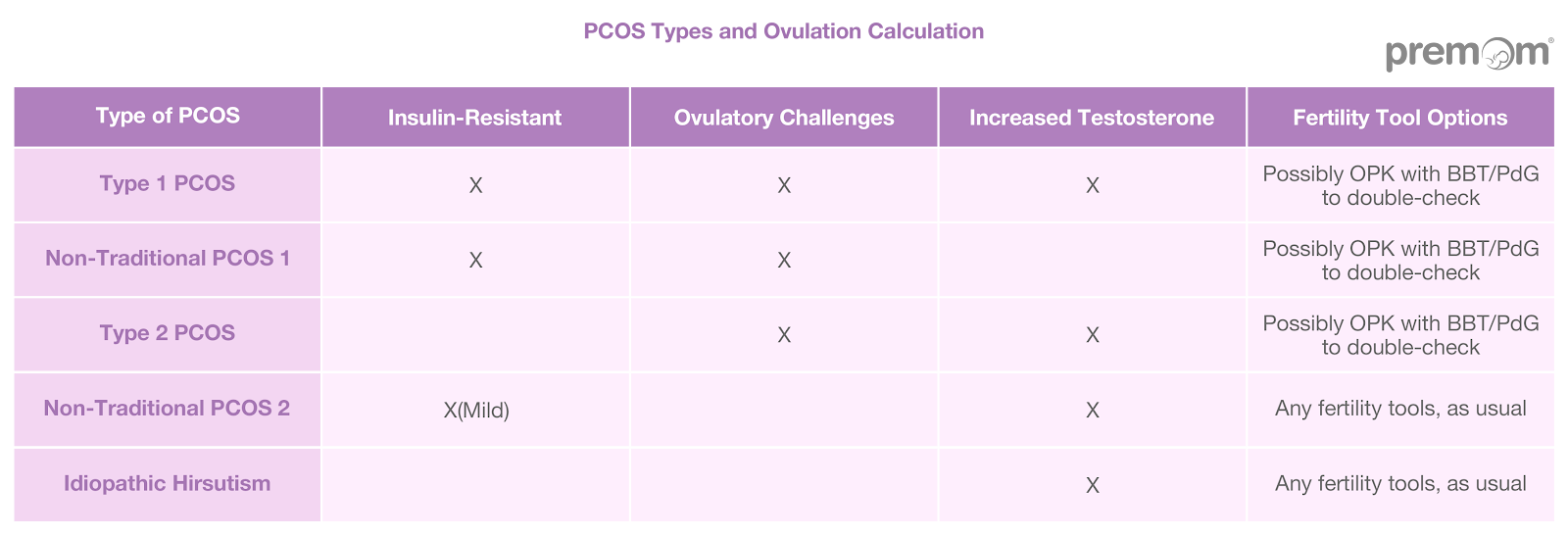
- This one can also be broken down further into 5 types (as shown in the table below)
Common symptoms of both types include:
- Irregular menstrual cycles
- Ovulatory challenges (irregular ovulation or anovulation)
- Increased levels of luteinizing hormone (LH)
- Increased levels of male hormones (androgens)
- Weight gain
- Multiple cysts on ovaries
- Excess body hair
- Hair loss
- Dark, thick patches on the skin
- Acne
- Irregular sleep
- Fatigue
- Depression
Type 1: Insulin-Resistant PCOS
This is sometimes considered the “classical” form of PCOS and is often connected to the potential for developing diabetes.
Solutions
Healthcare providers often suggest dietary changes, exercise, and weight-loss for those with this type of PCOS. Though it can be a challenge to achieve with this condition, weight loss often helps many symptoms subside.
Type 2: Non-Insulin Resistant PCOS
It’s typical to see the same symptoms as insulin-resistant PCOS but without insulin resistance.
Solutions
There are a variety of causes for this type, and reducing weight does not affect this diagnosis. Treatments might include elimination of certain foods, increased supplementation, or adding progesterone.
Trying to conceive with PCOS
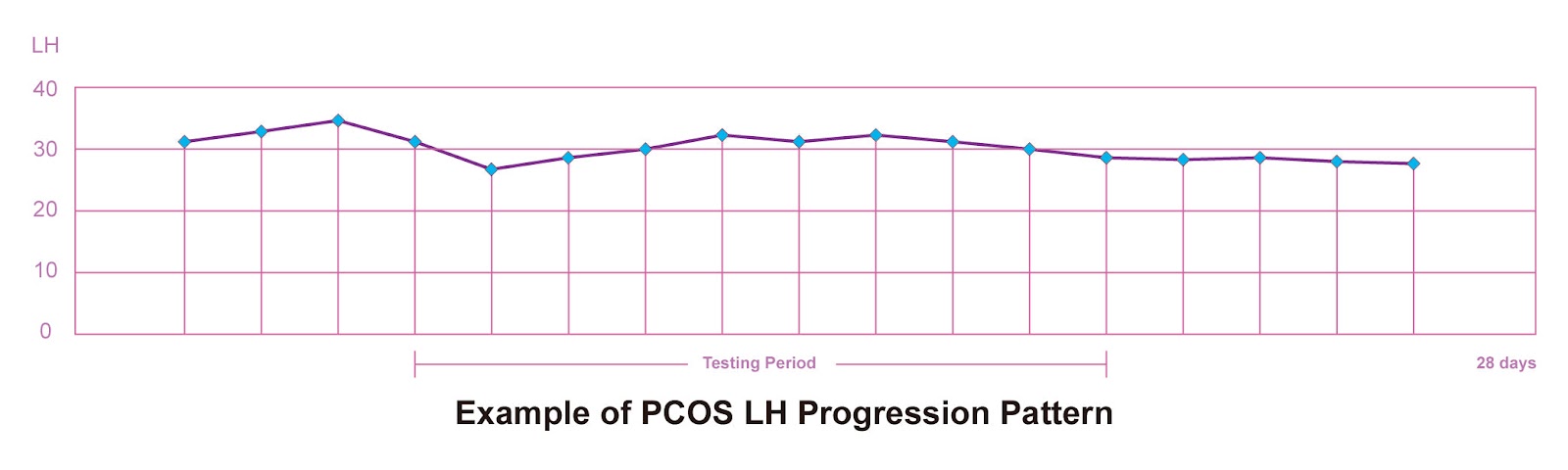
Since women with PCOS typically have higher baseline levels of LH, finding their ovulation day can be a bit more challenging. Charting with the Premom app indicates if your menstrual cycles are anovulatory by showing no LH peak and no basal body temperature spike, only high constant LH levels.
Cycles may last longer than 35 days with a persistent slippery type of cervical mucus, due to enlarged cysts in the ovaries and continual estrogen production. There are several variables to an LH progression pattern with PCOS. One of the significant LH progression patterns is similar to the chart below:
Although PCOS may cause infertility, it should be diagnosed and treated by a medical doctor according to Roterdam‘s Consensus criteria 2003.
Throughout your journey with PCOS, log and track your period again with an easy and smart app like Premom to better understand your fertility. Tests like the Premom Quantitative Ovulation Test Strips help you more precisely pinpoint your LH surge ending in peak by giving you your exact LH levels. Basal body temperature (BBT) tracking helps you confirm that you’ve found the right LH surge and peak, assuring your timing for intercourse to get pregnant.
If you have been diagnosed with PCOS, know that living with this diagnosis is manageable and you can do this!
References
- Gao X-y, Liu Y, Lv Y, Huang T, Lu G, Liu H-b, et al. Role of Androgen Receptor for Reconsidering the “True” Polycystic Ovarian Morphology in PCOS. Scientific Reports. 2020;10(1):8993.
- Creanga AA, Bradley HM, McCormick C, Witkop CT. Use of Metformin in Polycystic Ovary Syndrome: A Meta-Analysis. Obstetrics & Gynecology. 2008;111(4).
- Norman RJ, Dewailly D, Legro RS, Hickey TE. Polycystic ovary syndrome. The Lancet. 2007;370(9588):685-97.
- Mayer SB, Evans WS, Nestler JE. Polycystic ovary syndrome and insulin: Our understanding in the past, present and future. Women’s Health. 2015;11(2):137-49.