If you’ve ever noticed your jeans feel a little tighter or felt a twinge in your side midway through your cycle, you aren’t alone. Cramping and bloating during ovulation are very common symptoms caused by the natural rise in estrogen and the physical release of an egg. While these symptoms can feel uncomfortable, they are commonly associated with the hormonal changes that occur around ovulation.
Key Takeaways
- A surge in estrogen causes your body to hold onto more water, leading to that “puffy” feeling.
- Ovulation cramps (also called Mittelschmerz) often happen on just one side of your lower abdomen.
- Most ovulation-related bloating and cramping only last a few hours to a couple of days.
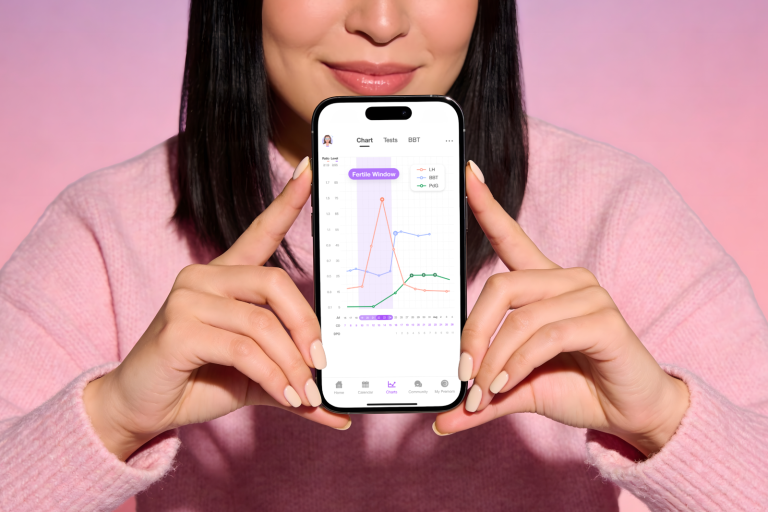
- Using the Premom app to log these symptoms alongside ovulation testing can help you better understand your fertile window and identify ovulation.
Is It Normal to Feel Bloated and Crampy During Ovulation?
Yes, it is a very common symptom! Cramping and bloating during ovulation affect many women every single month. This happens because, as your body prepares to release an egg, your estrogen levels rise rapidly. This hormone surge can lead to water retention and a bit of a bloated belly right in the middle of your cycle.
Additionally, the follicle that holds the egg grows quite large before it ruptures, which can cause pressure or a dull ache in your pelvic area.
What Causes Cramping and Bloating During Ovulation?
Understanding the why behind your symptoms can make them much less stressful. There are a few main biological reasons for abdominal cramping and bloating:
- Estrogen surge: High levels of estrogen can cause your body to retain sodium and water, leading to that bloating feeling.
- Follicle growth: Before an egg is released, the follicle on the ovary stretches. This can feel like a dull pressure or fullness.
- Fluid and blood: When the egg is released, a tiny bit of fluid or blood might also be released, which can irritate the lining of your abdomen and cause ovulation cramps.
- Digestion changes: Hormones can slow down your digestive tract slightly, which might lead to extra gas or a bloated stomach.
Why Is My Stomach So Big During Ovulation?
It can feel frustrating to notice increased bloating around ovulation, but it’s mostly just temporary water retention. Your cells are essentially holding onto water due to the change in hormones. This can even lead to a small amount of weight gain (usually 1–3 pounds) that disappears once ovulation is over.
Unlike a bloated stomach during your period, which is caused by progesterone and inflammatory compounds that trigger uterine cramping, ovulation bloating is more commonly associated with rising estrogen levels around the release of an egg.
How Long Does Ovulation Bloating Last?
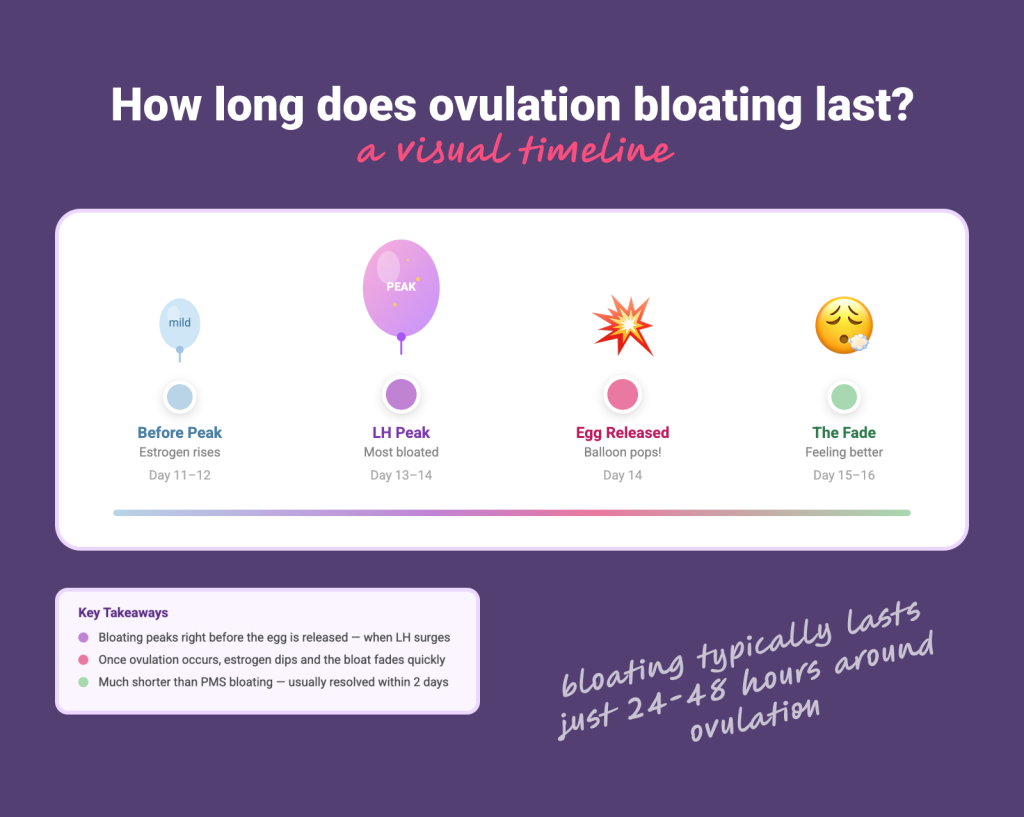
The good news is that bloating from ovulation is usually much shorter than PMS bloating.
- Typical timeline: Most women feel bloated for about 24 to 48 hours.
- The peak: You will likely feel the most bloated on the day your LH levels peak (right before the egg is released).
- The fade: Once the egg is released and estrogen levels dip slightly, the bloat reduces and you start to feel better.
What Does Ovulation Cramping Feel Like?
Ovulation cramps often feel different from period cramps. While period cramps are usually felt in the center of the uterus, ovulation pain — or Mittelschmerz — is often:
- One-sided: You might feel it only on the left or right side, depending on which ovary is releasing an egg.
- A sharp twinge or dull ache: It can feel like a quick pop or a lingering heavy feeling.
- Mild to moderate: It shouldn’t be so painful that it stops you from your daily activities.
Does Cramping During Ovulation Mean Conception?
We often get asked, “Does cramping during ovulation mean conception?” The answer is no — ovulation cramping happens at the time the egg is released. Conception happens later, once the sperm meets the egg. If you feel cramping about 6 to 10 days after ovulation, that might be implantation cramping, which is a potential sign of pregnancy.
Ovulation Bloating vs. PMS Bloating
It can be hard to tell them apart, but timing is your best clue!
| Feature | Ovulation Bloating | PMS Bloating |
|---|---|---|
| Timing | Mid-cycle (around Day 14) | A few days to 1 week before period |
| Hormone | Estrogen Surge | Progesterone Rise |
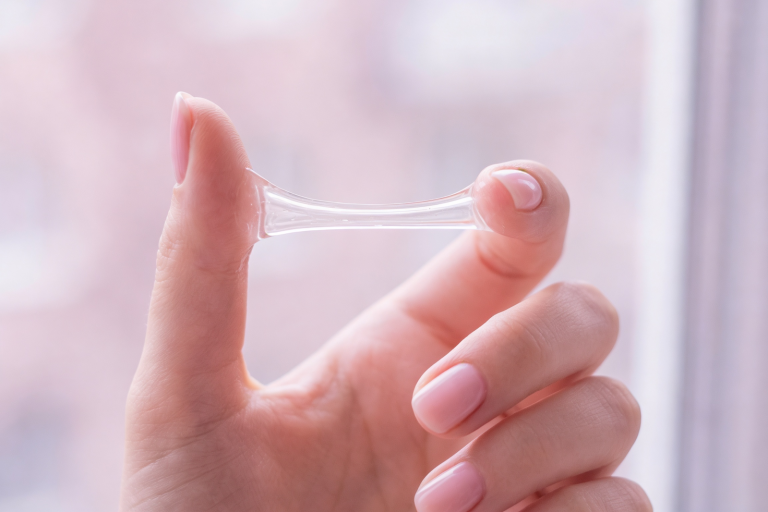
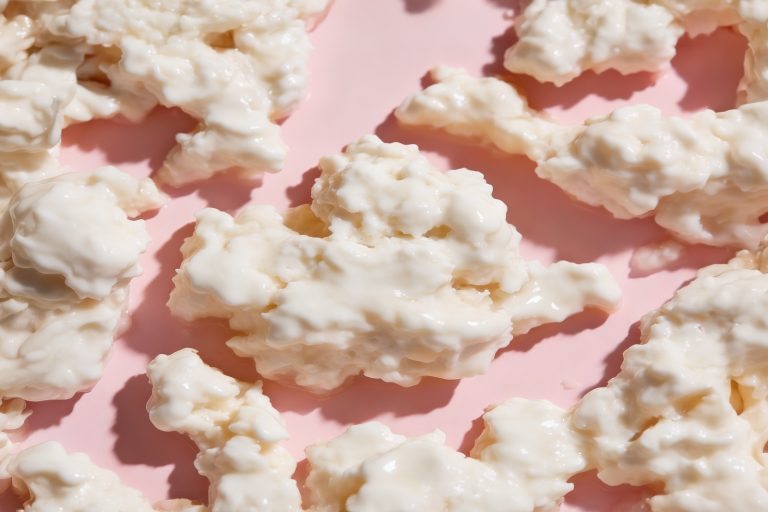
| Cervical Mucus | Clear, stretchy (egg-white) | Creamy or dry |
| Duration | 24–48 hours | 5–7 days |
PCOS Bloating During Ovulation
For those with PCOS, bloating during ovulation can sometimes feel more intense. Because the body may try to ovulate multiple times before succeeding, you might experience several waves of bloating. If you have PCOS, tracking your symptoms in the Premom app can help find your true peak amidst these fluctuations.
Tracking Ovulation Symptoms More Clearly
Because ovulation symptoms can overlap with PMS and other cycle changes, tracking patterns over time can provide more context about what your body is doing throughout the cycle. Using a tracking app like Premom alongside ovulation test strips can help you compare symptoms, LH trends, and cycle timing in one place. Over time, this makes it easier to recognize recurring patterns around your fertile window.
How to Stop Bloating When Ovulating
If ovulation bloat is bothering you, try these gentle, natural ways for relief:
- Sip More Water: It sounds counterintuitive, but staying well hydrated can actually help your body regulate fluid balance more effectively and reduce water retention.
- Boost Potassium: Foods like bananas and spinach help balance fluid levels.
- Gentle Movement: A short walk or light yoga can help move gas through your system.
- Magnesium: This mineral can help relax the muscles and reduce the intensity of ovulation cramps.

When Should You Worry About Ovulation Pain or Bloating?
While most mid-cycle discomfort is normal, you should speak with a doctor if you experience:
- Severe pain that makes it hard to stand or walk.
- Pain accompanied by a fever or vomiting.
- Persistent bloating that doesn’t go away after 2–3 days.
- Very heavy bleeding between periods.
These can sometimes be signs of ovarian cysts or endometriosis, and having your Premom charts ready will help your doctor give you the best care.
Listening to Your Body
Cramping and bloating during ovulation are common experiences linked to hormonal and physical changes during the fertile window. Paying attention to symptom timing across multiple cycles can help you better understand your personal patterns.
- Watch the timing: Ovulation-related symptoms are most commonly noticed mid-cycle.
- Support relief: Hydration, gentle movement, and balanced meals can help reduce discomfort.
- Track patterns over time: Logging symptoms alongside LH trends can provide a clearer picture of your cycle.
Frequently Asked Questions About Ovulation Cramping and Bloating
Yes, bloating and cramping during ovulation are common symptoms linked to hormonal changes and the release of an egg from the ovary.
Ovulation bloating typically lasts for 1 to 2 days around the fertile window. Symptoms often improve after ovulation occurs and hormone levels begin to shift again.
No, ovulation cramping does not mean conception has occurred. Ovulation pain happens around the time the egg is released, while fertilization and implantation occur later if pregnancy happens.
Hormonal changes during ovulation can contribute to temporary water retention, digestive slowing, and abdominal fullness. This can create a bloated or swollen feeling around the middle of the menstrual cycle.
Staying hydrated, reducing salty foods, and engaging in light exercise such as walking or stretching can help reduce ovulation bloating. Some women also find relief with magnesium-rich foods and regular sleep patterns.