
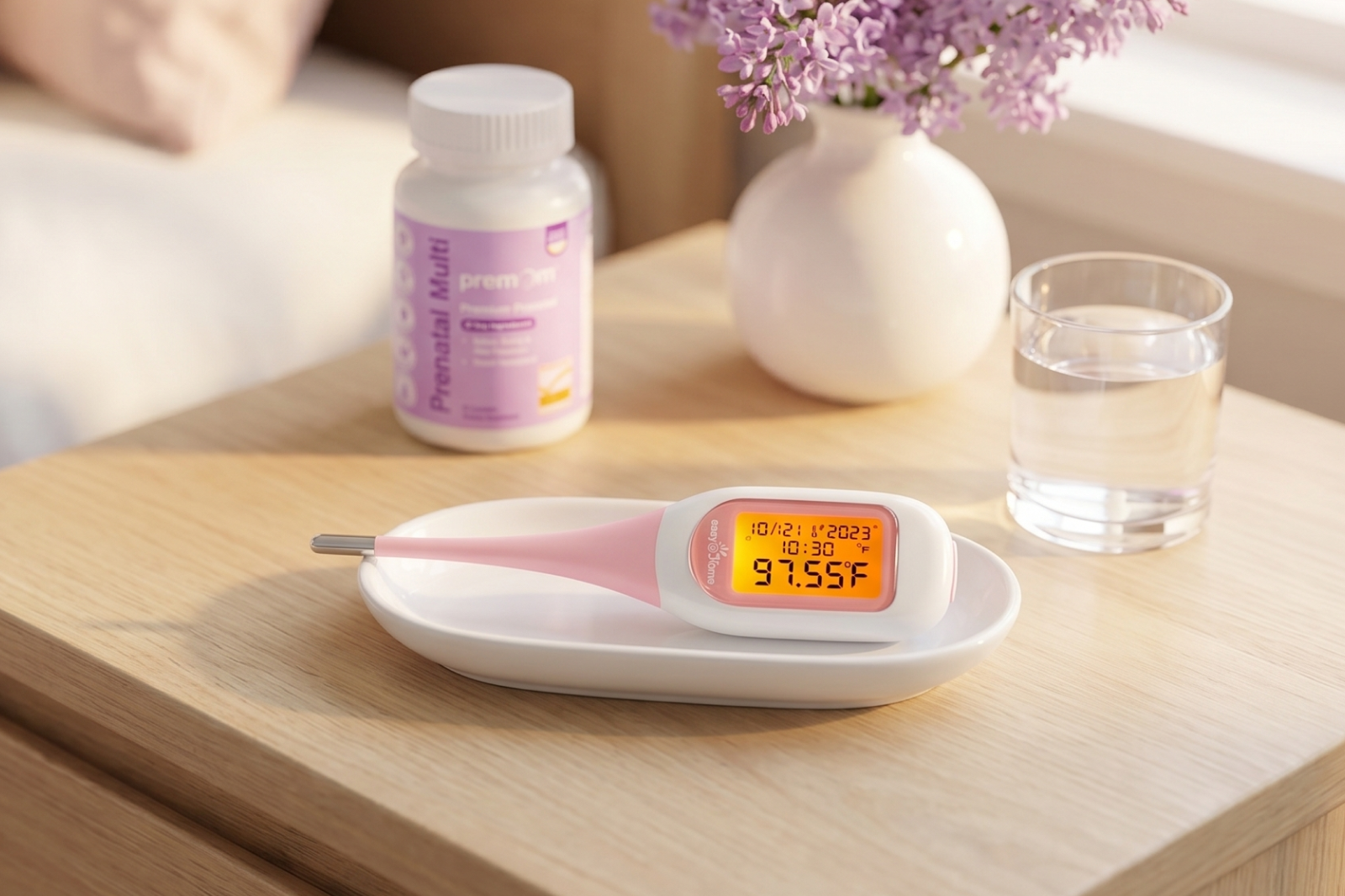
Basal Body Temperature (BBT) tracking — measuring your body’s lowest resting temperature, taken immediately upon waking — is a powerful tool to help you understand whether ovulation has likely occurred, but it works differently than in a standard cycle.
With PCOS, BBT charts often show delayed, irregular, or absent temperature shifts because ovulation itself is irregular or infrequent. A BBT rise of 0.5–1.0°F indicates ovulation has likely occurred.
For PCOS, BBT tracking works best when combined with LH surge testing (OPKs), tracking cervical mucus changes, and PdG urine testing to better understand ovulation patterns. LH testing helps identify when your body may be approaching ovulation, while PdG urine testing helps indicate that ovulation likely occurred by detecting progesterone changes after ovulation. Used together, OPK, BBT, cervical mucus, and PdG data give you the most complete fertility picture for irregular cycles without relying on frustrating guesswork.
Key Takeaways
- BBT tracking may help you understand whether ovulation likely occurred. It plays an important role in PCOS, as cycle length and ovulation can be irregular.
- PCOS BBT charts often look irregular, featuring delayed, erratic, or sometimes absent temperature shifts.
- Combine BBT logging with LH (OPK) testing, cervical mucus tracking, and PdG urine testing to better understand your cycle in PCOS.
- A temperature rise of 0.5–1.0°F, typically seen over 2–4 days after ovulation occurs, suggests that ovulation has likely occurred.
- Smart tracking apps like the Premom ovulation app can allow you to read OPK strips, log BBT, track PdG readings, and record symptoms on a single chart, helping you track irregular cycles more clearly.
What Is Basal Body Temperature?
Basal body temperature (BBT) is your body’s absolute lowest resting temperature, measured immediately upon waking before getting up, eating, drinking, or speaking. It is typically between 97–97.8°F (36.1–36.4°C) in the follicular phase and rises by approximately 0.5–1.0°F (0.2–0.5°C) after ovulation due to the thermogenic effect of progesterone.
This post-ovulatory temperature rise that happens roughly 2–4 days after ovulation is the metric utilized to understand whether ovulation has likely occurred. While standard body temperature fluctuates widely throughout the day based on activity, your resting BBT strictly responds to hormonal shifts.
How Is BBT Different From Normal Body Temperature?
Your normal body temperature reflects digestion, movement, and environmental stress. Your basal body temperature strips away those variables. It requires a highly sensitive thermometer reading to two decimal places to catch the micro-fluctuations driven exclusively by your reproductive hormones.
What Does a Normal BBT Chart Look Like?
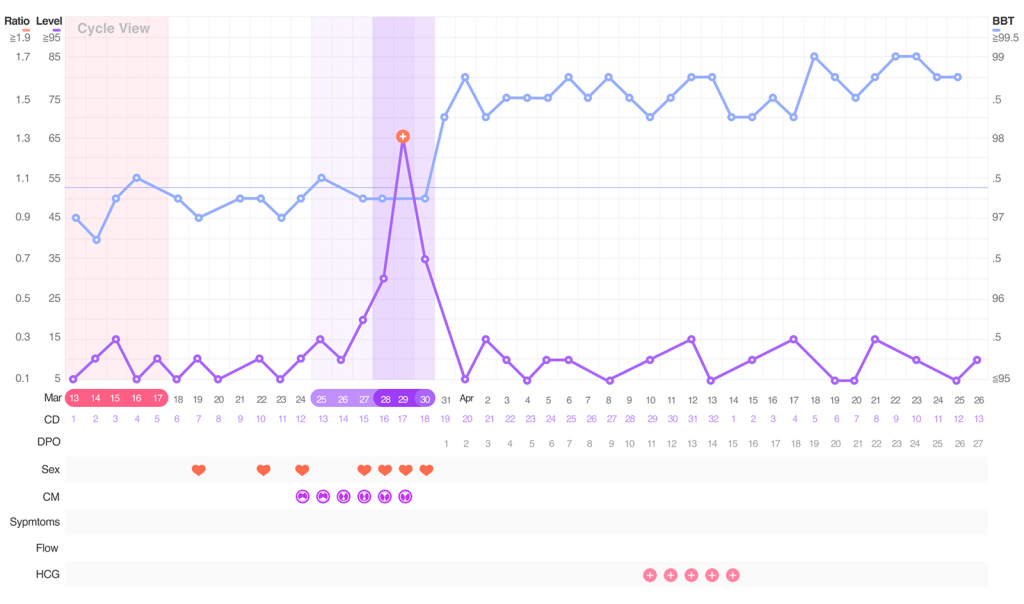
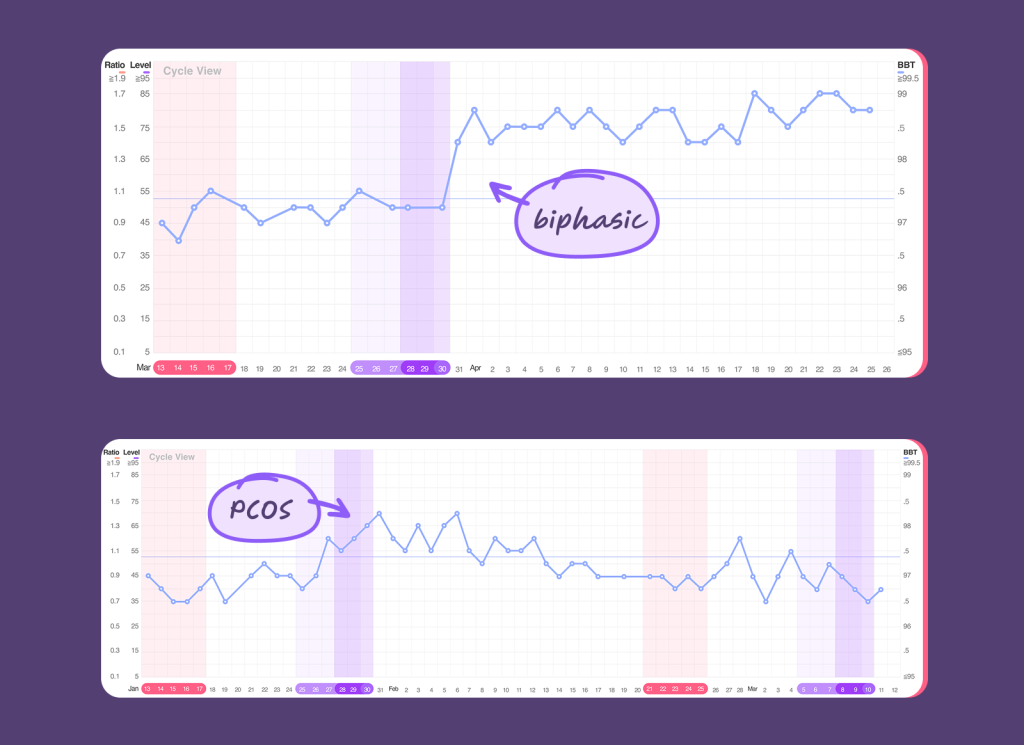
A standard, healthy BBT chart displays a clear “biphasic” pattern, meaning that temperatures remain relatively low during the first half of the cycle, then sharply shift upward (a thermal shift) right after ovulation due to progesterone, which raises the body’s temperature.
Does BBT Tracking Work With PCOS?
Yes, BBT tracking can still be useful with PCOS, though it may require more consistency and patience due to cycle variability. According to official data from the World Health Organization, PCOS affects 8–13% of women of reproductive age worldwide, and up to 70% remain undiagnosed. Knowing how to read your personal chart empowers you to take back control of your specific cycle.
Because PCOS causes irregular cycles and indefinite ovulation timing, tracking BBT is essential to understanding your true LH peak. When ovulation actually happens, the egg’s release leaves behind the corpus luteum, which produces a surge of progesterone. It is this specific release of progesterone that causes your basal body temperature to increase. By observing a sustained BBT rise following an LH peak, you may have more confidence that ovulation likely occurred.
Can You Ovulate With PCOS but Not See a BBT Rise?
In some cases, temperature changes may be less clear or delayed, especially with irregular cycles. Factors such as inconsistent sleep, measurement timing, or hormonal variation may affect how noticeable a BBT shift appears.
Why PCOS Makes BBT Tracking Harder
The primary challenge of a PCOS basal body temperature chart is unpredictability. Because polycystic ovary syndrome fundamentally disrupts the regular maturation and release of eggs, the expected temperature rise may arrive weeks later than expected, or it may not arrive at all during an anovulatory cycle.
What Does a PCOS BBT Chart Look Like?
If you are searching for a basal body temperature chart with PCOS, expect to see prolonged periods of low temperatures. A common PCOS BBT chart features a drawn-out follicular phase filled with slight rocky fluctuations, followed by a delayed thermal shift occurring much later than the standard “Day 14” expectation.
PCOS Basal Body Temperature: What Numbers to Expect
Your PCOS BBT numbers in the pre-ovulatory phase will usually look standard, typically 97.0°F to 97.7°F. The key is stopping the urge to compare your timing to the textbook standard. You are simply watching for your personal established baseline to jump by roughly 0.5°F.
Can BBT Show When Ovulation Happens With PCOS?
Absolutely. According to a landmark study published in npj Digital Medicine, BBT charting has a sensitivity of 73% for identifying ovulation, improving to an incredible 94% when combined with cervical mucus monitoring. The underlying physiology remains the same: if ovulation occurs, progesterone levels rise, which can lead to a detectable increase in BBT.
BBT Tracking vs. LH Testing for PCOS: Which Works Better?
Why OPKs Alone Often Fail With PCOS
Standard OPKs (ovulation predictor kits) only measure Luteinizing Hormone. According to clinical research published in BJOG, women with PCOS often have a 2–3x higher baseline LH level natively. This causes highly frustrating OPK false positives. Relying strictly on basic visual OPKs might show you positive results for days without an actual egg ever releasing.
BBT and LH Chart Combined: Common Tracking Approaches for PCOS
Combining these two methods in the right way can give you a clearer picture of your cycle. Look at the clinical data comparing a BBT and an LH chart:
| Tracking Method | What It Detects | Timing | PCOS Accuracy | Best Utilized For |
|---|---|---|---|---|
| OPK (LH) only | Pre-ovulation hormone surge | Prospective | Low–Moderate (false positives) | Predicting ovulation |
| BBT only | Post-ovulation progesterone | Retrospective | Moderate (73% sensitivity) | Understanding if ovulation likely occurred |
| BBT + OPK combined | Surge and thermal shift | Both | High (up to 94%) | Recommended for women trying to conceive |
| BBT + OPK + cervical mucus | All phases | Complete | More comprehensive at-home tracking | Complete fertility mapping |
How Do I Get Pregnant With Polycystic Ovaries Using BBT?
Understanding Your Fertile Window With PCOS
When women ask, “How do I get pregnant with polycystic ovaries?” a key part of the answer is understanding the fertile window. The fertile window typically includes the 5 days leading up to ovulation and the day of. Because BBT rises after ovulation has already occurred, the days before a temperature shift are considered the most fertile.
When in Your Cycle Should You Have Sex When Using BBT With PCOS?
Because BBT only registers the temperature jump after ovulation, you must have intercourse in the days leading up to the spike. This is why pairing BBT tracking with LH testing is often recommended for couples actively trying to conceive. Your LH surge tells you that ovulation is approaching; the BBT spike tells you it has likely occurred.
How to Get Pregnant With PCOS Quickly Naturally
Patience and lifestyle synchronization are critical. According to research published in the Journal of Clinical Endocrinology, a low-GI diet combined with targeted exercise successfully restored natural ovulation in 80% of women with PCOS within a 6-month period.
How to Track BBT With PCOS: Step-by-Step Guide
Step 1: Choose a Basal Body Thermometer
Use a basal body thermometer that measures to two decimal places (e.g., 98.62°F / 37.01°C). This level of sensitivity may help detect small temperature changes associated with ovulation. The Premom BBT thermometer connects directly via Bluetooth to the app, which can help reduce the need for manual entry.
Step 2: Take Your Temperature at the Same Time Each Morning
Measure your temperature immediately upon waking, before getting up, eating, drinking, or using the bathroom. Aim for the same time each morning after at least 3–4 consecutive hours of sleep and ensure you are using a dedicated oral BBT thermometer.
Step 3: Log Your BBT Consistently
Record your temperature every morning. With PCOS, consistency over time is especially important, as irregular cycles may make patterns harder to detect.
Step 4: Add in OPK Testing
Begin using ovulation test strips after your period ends to help identify when your body may be approaching ovulation. LH testing provides forward-looking information, while BBT reflects changes after ovulation.
Step 5: Look for a Sustained Temperature Rise
Focus on identifying a sustained rise of at least 0.5–1°F above your personal baseline as an indicator to understand whether ovulation has likely occurred.
Step 6: Track PdG After a Suspected LH Surge
Use PdG (urinary progesterone metabolite) test strips after a suspected LH surge. A sustained rise in PdG levels over a few days helps understand that ovulation likely occurred, especially in PCOS, where LH surges may not always lead to ovulation.
Step 7: Track Cervical Mucus Alongside BBT Monitoring
Tracking cervical mucus, especially the presence of clear, stretchy (egg-white) mucus, may provide additional context about when your body is approaching ovulation.
Step 8: Use a PCOS-Specific App to Analyze Your Data
Tracking multiple signals together may make it easier to understand your cycle. Tools like the Premom app can help you log BBT, LH test results, PdG data, and symptoms in one place, making it easier to visualize patterns across cycles.
Track Your Cycle With PCOS Using Premom
Understanding whether ovulation is occurring can be an important step when trying to conceive with PCOS. Period timing alone may not always reflect what is happening hormonally. Tracking signals like LH patterns, BBT, cervical mucus, and PdG levels may help you better understand your cycle over time.
With the Premom ovulation tracker app, you can scan OPK results, log BBT, and track symptoms on a single chart. This may help you see whether your body might be approaching ovulation or has likely ovulated. For irregular cycles, Premom also offers PCOS Pro, a 6-month pass designed for more complex cycle tracking. It is a one-time purchase and does not auto-renew.
PCOS Pro includes:
- Tools for irregular cycle tracking
- Daily logs for sleep, diet, and stress
- Cycle insights that build over time
- PCOS-focused educational guidance
- Tracking LH, BBT, and PdG together
If you are unsure how to track ovulation with PCOS, you can read our guide on How to Track Ovulation with PCOS.
BBT tracking with PCOS doesn’t have to be confusing. Want to walk through your BBT chart with an expert? Book a virtual consultation with a Premom provider to get a clearer read on what your data may be telling you.
Frequently Asked Questions (FAQs)
BBT tracking may help indicate whether ovulation has likely occurred, as the temperature rise happens after progesterone increases following ovulation. However, since it works retrospectively, it is often more useful when combined with LH testing to better understand ovulation timing.
PCOS can affect the hormonal signals that regulate ovulation. Because ovulation may be delayed or may not occur in some cycles, BBT charts can appear irregular, with fluctuating temperatures and sometimes no clear thermal shift.
A sustained temperature rise of about 0.4 to 1°F (0.2 to 0.5°C) above your baseline for at least three consecutive days may suggest that ovulation has likely occurred.
It may be helpful to track BBT for at least three cycles to begin noticing patterns. Since PCOS cycles can be longer, this process may take time, and consistency in tracking is more important than perfection.
BBT tracking alone may not give a complete picture, as it only shows changes after ovulation. Combining BBT with LH testing, cervical mucus tracking, and PdG testing may provide a clearer understanding of both ovulation timing and confirmation.
Disclaimer: The information provided in this article is for educational purposes only and should not be considered medical advice. Premom does not diagnose or treat medical conditions. Always consult a qualified healthcare provider for evaluation, diagnosis, and treatment based on your individual health needs.
References
- Bull JR, Rowland SP, Scherwitzl EB, Scherwitzl R, Danielsson KG, Harper JC. Real-world menstrual cycle characteristics of more than 600,000 menstrual cycles. npj Digit Med. 2019;2:83. Available here
- World Health Organization. Polycystic ovary syndrome fact sheet. Accessed 2026. Available here