

Tracking ovulation is one of the most powerful things you can do on your journey to conceive. While there are several ways to do it, the most accurate picture often comes from using a combination of methods that work together to see what your body is doing.
For the clearest insight, we recommend using the “ovulation trifecta”:
- Ovulation Predictor Kits (OPKs): These detect your LH surge to signal when ovulation is approaching.
- Basal Body Temperature (BBT): A sustained temperature rise after ovulation indicates ovulation has likely occurred.
- Progesterone (PdG) Tests: These measure progesterone metabolite levels in urine, instilling confidence that ovulation likely happened and that your progesterone levels may be high enough to support implantation.
Why BBT Tracking Is Helpful (But Not Always Easy)
Basal body temperature is a classic fertility tracking method. After ovulation, your body produces progesterone, which slightly increases your resting temperature. A consistent BBT spike (usually 0.4–1.0ºF) can signal that ovulation has occurred.
But BBT tracking isn’t foolproof. Common challenges include:
- Not seeing a clear temperature spike
- Missing days, which makes your chart hard to read
- Irregular sleep or wake times that throw off temps
- Underlying issues like thyroid imbalance that affect accuracy
These hurdles are common and don’t mean you’re doing anything wrong. But they can make it harder to know if ovulation was successful with confidence.
Why OPKs Alone Aren’t Enough
Ovulation predictor kits detect your luteinizing hormone (LH) surge that typically happens around 24 hours before ovulation. This helps you time intercourse during your fertile window—but OPKs predict ovulation, they don’t confirm it actually happened.
Some people never see a clear LH surge. Others get multiple surges in one cycle or get positives all month long, especially if they have PCOS or other hormonal imbalances.
What is PdG and a PdG Test?
PdG (Pregnanediol Glucuronide) is a urine metabolite of progesterone, the hormone that plays a crucial role in the menstrual cycle and pregnancy. After ovulation, your body breaks down progesterone, and PdG is what remains. Measuring PdG levels in urine may indicate that ovulation has occurred, providing valuable information if you are trying to conceive.
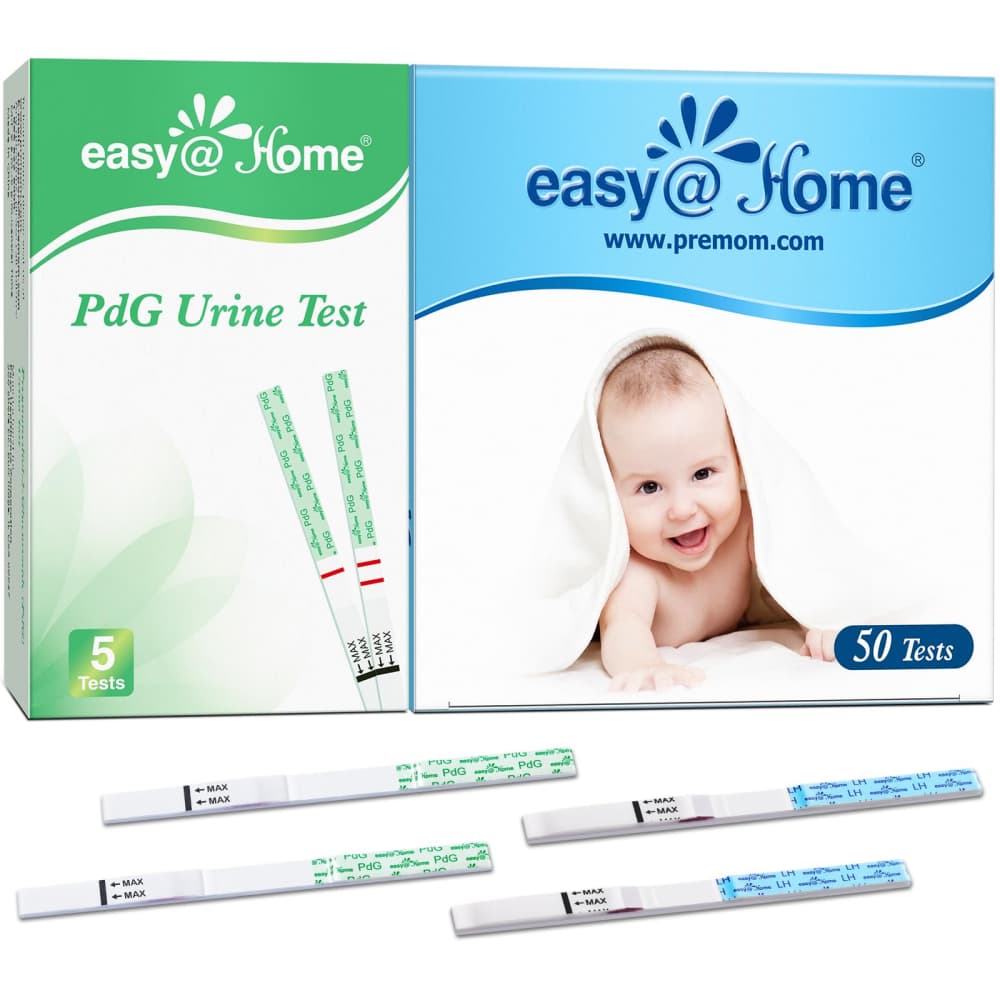
PdG testing helps you feel more confident that ovulation occurred by detecting this post-ovulation rise in progesterone through an easy at-home urine test. It’s similar to a pregnancy or ovulation test strip: dip it in urine, wait a few minutes, and read your result.
Together, PdG, OPKs, and BBT create a more complete timeline:
- OPKs predict that ovulation is about to happen.
- BBT shows a temperature shift that suggests ovulation occurred.
- PdG measures progesterone production after ovulation.
Each of these fertility tests can be read, stored, and charted in the free Premom Ovulation Tracker app. Talk about a convenient way to track your hormone levels!
Try our reliable Easy@Home PdG tests for accurate, easy-to-use hormone tracking you can trust every cycle.
Tracking Progesterone To Identify Ovulation
Measuring progesterone may indicate that ovulation has occurred. After ovulation, progesterone reduces cervical mucus production, increases body temperature by 0.4-1.0ºF, helps the uterus get ready for a fertilized egg, reduces muscle movements in the uterus, and supports early pregnancy.
Traditionally, checking for healthy progesterone levels meant either solely tracking basal body temperature (BBT) or getting a blood test. Most doctors would order a serum progesterone test around day 21 of the cycle—or 7 days after suspected ovulation (7 DPO)—to catch the post-ovulation rise in progesterone. But this approach often came with a few drawbacks: a visit to the lab, an uncomfortable needle stick, and the very real possibility of missing the correct timing if ovulation didn’t happen when expected. However, PdG tests are a tool that helps you better understand your cycle and may improve your chances of pregnancy.
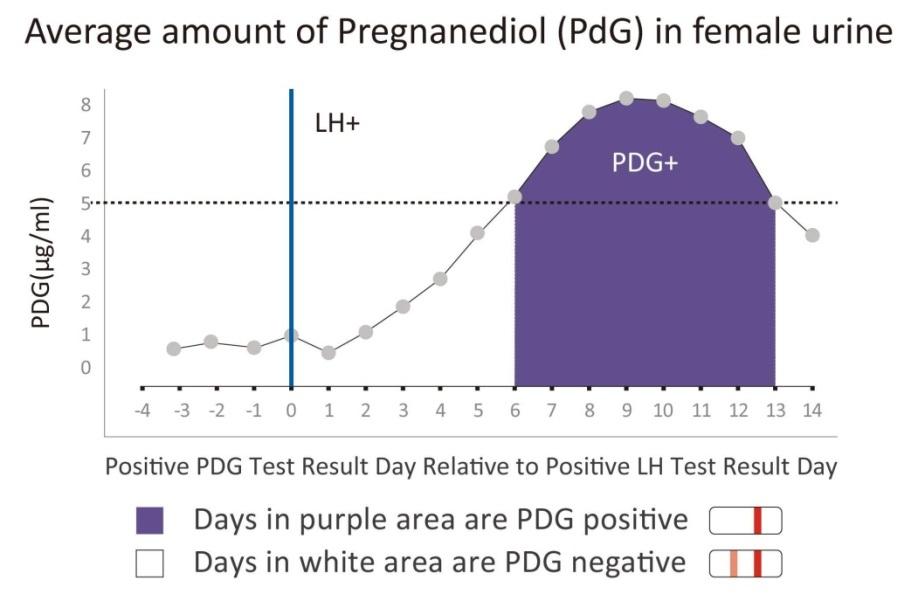
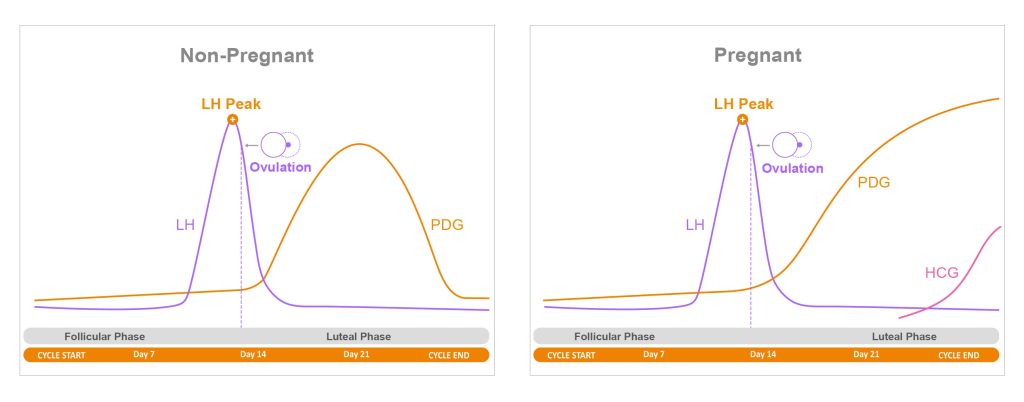
PdG starts rising about 24–36 hours after ovulation and typically reaches detectable levels (≥5μg/mL) around five days after a positive ovulation test [3].
Since this timing is after the LH surge that occurs before ovulation day, a PdG test is ideal to indicate if ovulation may have occurred. PdG tests have often been used in association with cervical mucus tracking as well [5].
The Luteal Phase and Progesterone
The luteal phase is the second half of your cycle, from ovulation to the start of your next period. It’s ruled by progesterone. Without ovulation, there’s typically no rise in progesterone.
The luteal phase includes three parts:
- Luteinization: progesterone starts to rise
- Progestation: peak levels help support implantation
- Luteolysis: levels drop if no pregnancy occurs
PdG testing helps determine whether your body entered this phase necessary for conception.
- PdG can be detected as early as 3 days after ovulation.
- PdG levels are typically highest seven days after an LH peak.
When To Use Progesterone (PdG) Testing
Adding PdG testing to your fertility tracking can give you more confidence when trying to conceive.
It’s especially helpful if you:
- Haven’t found any positive ovulation test results after multiple cycles
- Have LH surges that are inconsistent or last longer than 7 days
- Have positive ovulation tests all cycle long
- Have an irregular ovulation cycle and menstrual cycle
- Have PCOS (Polycystic Ovary Syndrome) or other fertility concerns
How PdG Tests Support You: Understanding 3 Possible Test Results
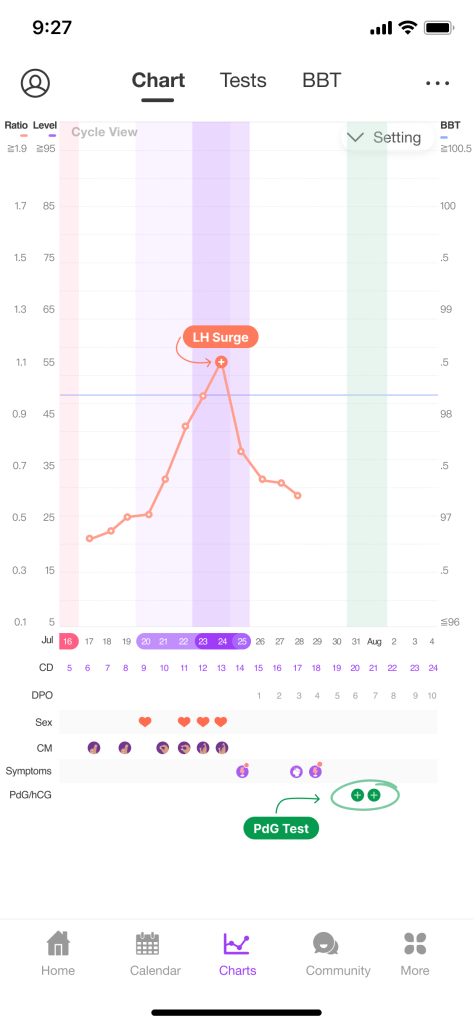
1. You See No LH Surge, But See a PdG Spike
If you don’t see an LH surge with an ovulation test, but you find a positive PdG test result, ovulation likely happened. With that information, you can focus on the possible reasons you may have missed your LH peak:
- Your LH surge level was too low to be detected
- Your LH surge was too rapid and was missed
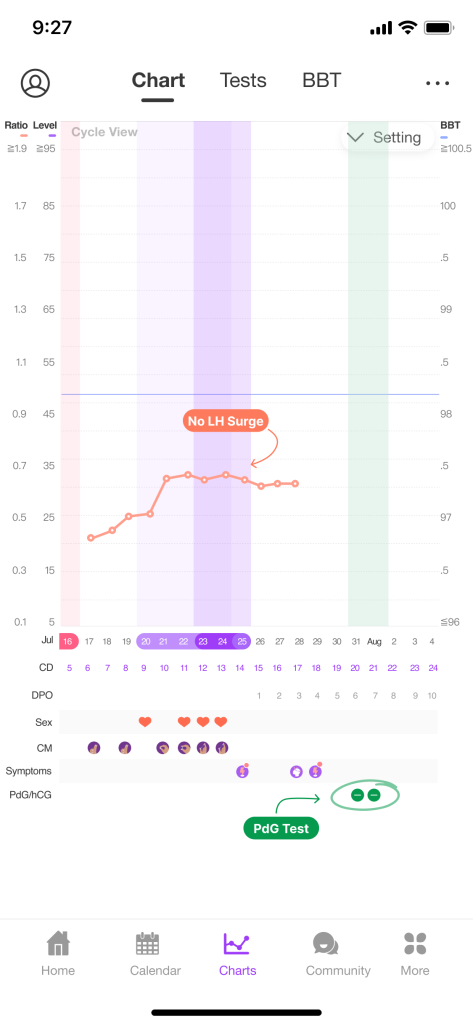
2. You See No LH Surge and No PdG Spike
If you don’t observe a positive LH test result or a positive PdG test result, we recommend you track your basal body temperature (BBT) to help better understand whether you have ovulated or not. If the BBT chart doesn’t show a noticeable temperature spike, we recommend that you visit your doctor to check whether there is an ovulation dysfunction issue, i.e., not ovulating.
3. You See an LH Surge and a PdG Spike
This is the ideal scenario! Most fertile women normally observe both their LH peak and PdG spike. Seeing these results is a good indicator that ovulation likely occurred. If you track with the Premom fertility app, it can help predict both your next ovulation day and period start dates when you track using ovulation tests, BBT and PdG tests.

References
- Blackwell LF, Vigil P, Gross B, d’Arcangues C, Cooke DG, Brown JB. Monitoring of ovarian activity by measurement of urinary excretion rates of estrone glucuronide and pregnanediol glucuronide using the Ovarian Monitor, Part II: reliability of home testing. Hum Reprod. 2012;27(2):550-557. doi:10.1093/humrep/der409
- Blackwell LF, Vigil P, Cooke DG, d’Arcangues C, Brown JB. Monitoring of ovarian activity by daily measurement of urinary excretion rates of oestrone glucuronide and pregnanediol glucuronide using the Ovarian Monitor, Part III: variability of normal menstrual cycle profiles. Hum Reprod. 2013;28(12):3306-3315. doi:10.1093/humrep/det389
- Bouchard TP, Fehring RJ, Schneider M. Pilot Evaluation of a New Urine Progesterone Test to Confirm Ovulation in Women Using a Fertility Monitor. Front Public Health. 2019;7:184. Published 2019 Jul 2. doi:10.3389/fpubh.2019.00184
- Ecochard R, Bouchard T, Leiva R, et al. Characterization of hormonal profiles during the luteal phase in regularly menstruating women. Fertil Steril. 2017;108(1):175-182.e1. doi:10.1016/j.fertnstert.2017.05.012
- Ecochard R, Boehringer H, Rabilloud M, Marret H. Chronological aspects of ultrasonic, hormonal, and other indirect indices of ovulation. BJOG an International Journal of Obstetrics & Gynaecology. 2001;108(8):822-829. doi:10.1111/j.1471-0528.2001.00194.x
- Leiva R, McNamara-Kilian M, Niezgoda H, Ecochard R, Bouchard T. Pilot observational prospective cohort study on the use of a novel home-based urinary pregnanediol 3-glucuronide (PDG) test to confirm ovulation when used as adjunct to fertility awareness methods (FAMs) stage 1. BMJ Open. 2019;9(5):e028496. Published 2019 May 27. doi:10.1136/bmjopen-2018-028496
- Wegrzynowicz AK, Beckley A, Eyvazzadeh A, Levy G, Park J, Klein J. Complete Cycle Mapping Using a Quantitative At-Home Hormone Monitoring System in Prediction of Fertile Days, Confirmation of Ovulation, and Screening for Ovulation Issues Preventing Conception. Medicina (Kaunas). 2022;58(12):1853. Published 2022 Dec 15. doi:10.3390/medicina58121853