

Sex is quite literally the key to conception and getting pregnant. While it’s common to hear advice like, “Just have a lot of sex and you’ll get pregnant fast,” or, “The more sex you have the faster you’ll get pregnant,” it’s not always that simple. Timing sex to get pregnant matters just as much as how often you try.
After making that monumental decision to have a baby, women often feel that sense of urgency to conceive as quickly as possible. Luckily, there are some things that you can do to maximize fertility nd improve your chances of getting pregnant. We’ll help break down how to time sex to get pregnant—including the best days in your cycle, how often you really need to have sex, what tools can help better spot ovulation, and whether the time of day actually makes a difference.
Timing Sex to Get Pregnant Quickly
If you’re ready to get pregnant fast, learning when you ovulate is the most important piece of the puzzle. Every menstrual cycle, you have a short fertile window—the few days leading up to and including ovulation—when sex can lead to pregnancy.
Sperm can survive up to five days in the reproductive tract, but the egg only lives for about 12–24 hours after ovulation. That means your fertile window usually spans about six days: the five days before ovulation and the day of ovulation.
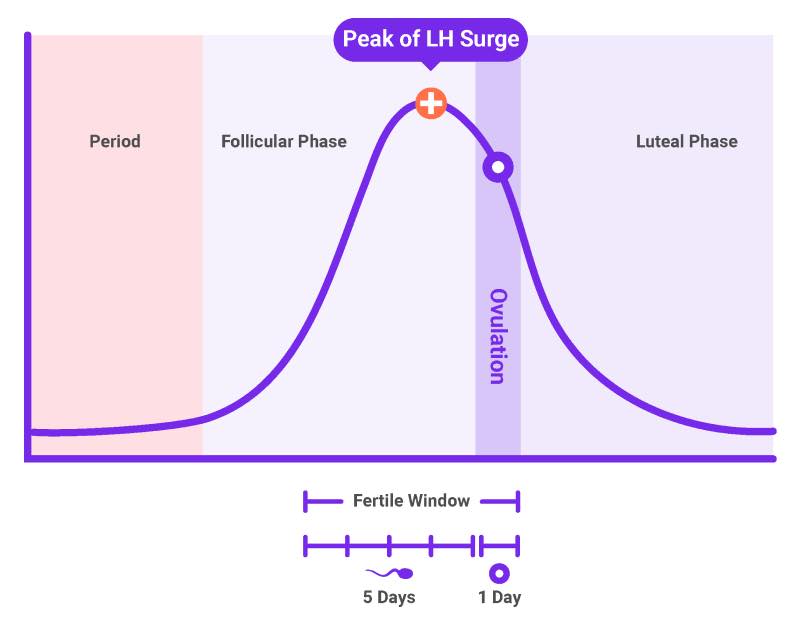
Having sex during this window gives sperm time to travel and be ready when the egg is released. So instead of guessing and having sex every day of your cycle, it’s smarter to target your fertile window.
Use Ovulation Tests to Know When to Have Sex
Timing sex to when you’re most fertile is everything when you’re trying ot get pregnant—and one of the most effective ways to do that is by tracking your luteinizing hormone (LH) levels using ovulation tests (OPKs). This hormone begins to rise—what’s called the LH surge—about 24-36 hours before ovulation.
As you test daily, you’ll notice your LH levels begin to increase. The LH peak is your highest test result during that surge, typically the darkest line you’ll see before levels begin to drop again on ovulation day. This peak signals that ovulation is likely right around the corner.
Once you identify your LH peak, you’ve found your best window to try.
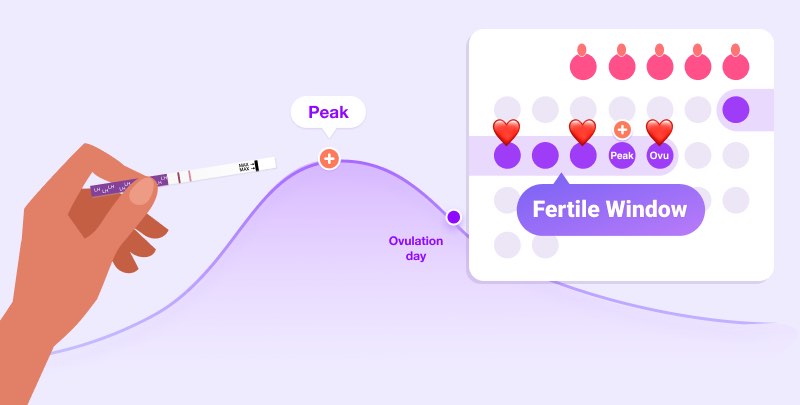
For the highest chances of getting pregnant, aim to have sex on:
- The day before your LH peak
- The day of your peak
- And the day after, which is likely your ovulation day
Why target those three days? Those days give you the highest chance. Timing sex around your LH peak takes the guesswork out of when to try so you feel more in control and less uncertain.
The Premom app is a perfect tool for tracking your fertility and using with any ovulation tests. You simply scan your test results, and the app will automatically track and analyze your hormone patterns for you. It creates a visual chart of your test line progression, helping you see your LH surge and identify your LH peak more clearly.

By combining your test data with other cycle information, Premom gives you personalized predictions so you’ll know when you’re most likely going to ovulate. No more guessing or trying to interpret faint lines on your own!
Can You Get Pregnant From Sex Outside the Fertile Window?
Technically, it’s possible—but highly unlikely. Sperm can live up to 5 days once in the fallopian tubes, but if you have sex a full week before ovulation, most sperm won’t survive long enough to fertilize the egg.
Likewise, once ovulation has passed, your chances of getting pregnant drop sharply. The egg begins to disintegrate within 12–24 hours after release. This is why timing sex to get pregnant before and during ovulation is crucial.
How Often Should You Have Sex to Get Pregnant?
One common sex myth is that the more sex you have, the better your chances. While frequent sex is great for connection and typically doesn’t hurt your odds, there is a sweet spot when you’re trying to conceive.
Most fertility experts recommend aiming for sex to get pregnant every 1 to 2 days during your fertile window. This keeps sperm supply healthy and ensures there’s always fresh sperm available when the egg is released.
Is Having Sex Multiple Times a Day Helpful?
Not necessarily. While it may seem like doubling up improves your chances, having sex multiple times a day could actually reduce sperm count, especially if your partner has borderline or low sperm parameters.
Unless advised otherwise by a fertility specialist, once every 24–48 hours during the fertile window is typically enough. Sometimes, sex while trying to conceive can feel like a job, but try to keep it fun and enjoyable with your partner.
What Time of Day Is Best to Have Sex to Conceive?
When it comes to getting pregnant, timing sex with ovulation is far more important than the time of day. But if you’re curious about whether morning or night makes a difference, here’s what you should know.
Morning vs. Night Sex: Does It Matter?
Some studies suggest that sperm count and motility may be slightly higher in the morning due to natural hormone rhythms. However, the difference is generally minimal and unlikely to make or break your chances of conceiving.
More matters more than the time of day is:
- When in your cycle you’re having sex (aim for your fertile window, especially your LH peak and ovulation day)
- Overall sperm health—including frequency, hydration, and avoiding heat exposure (like hot tubs or tight underwear)
Most importantly, have sex when it works best for both of you–your bodies, your schedules and your connection. Because while timing matters, enjoying the moment does too. Making a baby is supposed to be exciting, not stressful.
Three Sex Tips to Get Pregnant
Want to give yourself the best possible chance each cycle? Here are three helpful tips:
1. Use Fertility-Friendly Lubricant
During sex, natural lubrication like cervical mucus is best, but sometimes lubricants can help add comfort. Just be sure to do your homework on which ones are best. Some lubricants, like saliva, olive oil, and many standard drugstore brands, can actually slow down or damage sperm. Look for lubricants specifically labeled “fertility-friendly” or “sperm-safe” to support sperm motility and survival, like Premom’s Sperm-Friendly Lubricant.

2. Stick to the Bedroom—Not the Bathtub
We get it. Hot tubs, bathtubs, soaps and hot water sound fun and sexy, but they all negatively affect sperm quality and potentially change pH or introduce infection. During sex, stick to the bedroom. Soaps used in showers and baths change the pH of your vagina and lead to infections or impact sperm survival.
Hot tubs are also a big no-no due to the presence of bacteria and chemicals. Repeated hot water soaking impacts male and female fertility, especially a male’s sperm production, so feel free to soak your feet but keep prolonged hot tubbing experiences to a minimum — and again, take it to the bedroom!
3. What to Do After Sex
Contrary to popular belief, you don’t need to do handstands or put your feet up for hours because the sperm are swimming quickly. You can lie down for 5-10 minutes afterward to help sperm stay in the right place. It’s a good time to relax, reduce stress, and let nature do its thing.
Sex and Getting Pregnant — And Make Every Cycle Count
Getting pregnant isn’t just about having more sex–it’s about knowing when to try. Here’s a quick recap:
- Identify your fertile window: Use ovulation predictor kits to track your LH surge and find your most fertile days.
- Best days to try: The day you get a positive ovulation test and the 1–2 days after are your prime time for sex to get pregnant.
- How often to have sex: Aim for once every 1–2 days during your fertile window—not multiple times a day.
- Time of day? It doesn’t matter much. Focus on ovulation timing, sperm health and yes-enjoying the process.
- Tools that help: Ovulation test strips, sperm-safe lube, and tracking everything in the Premom app can make a big difference in knowing your most fertile days.
The journey to conception can feel like a puzzle, but knowing how to time sex to get pregnant gives you powerful tools to make every cycle count. Whether this is your first month trying or you’ve been on the journey for a while, the Premom Ovulation Tracker app can help you sync with your body, feel more confident about your sex timing, and take that next step toward your positive pregnancy test.
References
- Dunkin MA. Sperm: How Long Sperm Live, Sperm Count, and More. WebMD. Accessed September 19, 2023. https://www.webmd.com/infertility-and-reproduction/sperm-and-semen-faq
- Godbert S, Miro F, Shreeves C, Gnoth C, Johnson S. Comparison between the different methods developed for determining the onset of the LH surge in urine during the human menstrual cycle. Archives of Gynecology and Obstetrics. 2015;292(5):1153-1161. doi:https://doi.org/10.1007/s00404-015-3732-z
- Wilcox AJ, Weinberg CR, Baird DD. Timing of Sexual Intercourse in Relation to Ovulation — Effects on the Probability of Conception, Survival of the Pregnancy, and Sex of the Baby. New England Journal of Medicine. 1995;333(23):1517-1521. doi:https://doi.org/10.1056/nejm199512073332301
- Su HW, Yi YC, Wei TY, Chang TC, Cheng CM. Detection of ovulation, a review of currently available methods. Bioengineering & Translational Medicine. 2017;2(3):238-246. doi:10.1002/btm2.10058
- Mackenzie SC, Gellatly S. Vaginal lubricants in the couple trying-to-conceive: Assessing healthcare professional recommendations and effect on in vitro sperm function. PLOS ONE. 2019;14(5):e0209950. doi:10.1371/journal.pone.0209950ture, ovulation and the risk of conception, with special reference to the lifetimes of sperm and egg J P Royston PMID: 7115870


