

You’re not alone if you worry about getting pregnant. Our experience helping women through their conception trips has shown us how anxiety becomes a constant companion for those trying to conceive.
Here’s what you need to know: while chronic stress can impact fertility by elevating cortisol and potentially disrupting ovulation, occasional worry about conception is normal and won’t prevent pregnancy on its own. Many women successfully conceive even during stressful periods. The key is learning to manage anxiety in ways that support both your mental wellbeing and your fertility journey.
Stress triggers your body’s principal stress hormone, cortisol. Your sex drive can drop, and your risk for anovulation might increase when an egg isn’t released during your menstrual cycle. The body’s elevated levels can also lead to inflammation and affect your gut, immune system, and thyroid function. Understanding these connections helps break the worry cycle.
Let me share practical strategies to help you manage pregnancy-related anxiety while supporting your fertility. You won’t hear any “just relax” advice here, his piece covers everything from why conception seems challenging to handling the overwhelming urge to conceive. Together, we’ll reshape worry into wellness as you move toward parenthood.
Key Takeaways
- Stress affects fertility but doesn’t prevent pregnancy – High cortisol can disrupt ovulation and implantation, yet many women conceive despite experiencing anxiety and stress.
- Practice daily stress-reduction techniques – Mindfulness meditation, gentle exercise, journaling, and limiting social media comparisons can significantly reduce fertility-related anxiety.
- Reframe your conception timeline expectations – Let go of “perfect timing” beliefs, celebrate small wins in your journey, and use positive affirmations to shift from fear to hope.
- Seek professional help when anxiety interferes with daily life – Consider therapy or fertility clinic counseling if you experience persistent sadness, social isolation, or obsessive preoccupation with getting pregnant.
- Focus on what you can control – While you can’t control conception timing, you can manage stress levels, maintain healthy habits, and build emotional resilience throughout your fertility journey.
The key is finding balance between hopeful expectation and gentle acceptance, creating space for both your emotions and your body’s natural processes to unfold.
Understanding the Link Between Stress and Fertility
The connection between stress and fertility isn’t as simple as you might think. Let’s break down what happens in your body when those worried thoughts start racing through your mind.
How stress affects hormone levels
When your body senses stress, the sympathetic nervous system reacts immediatelym releasing adrenaline and norepinephrine to heighten alertness and energy. If stress continues, the hypothalamic-pituitary-adrenal (HPA) axis takes over, releasing cortisol to help sustain the response.
These stress responses can throw off your reproductive system in several ways:
- Hormone imbalance: Stress hormones can mess with gonadotropin-releasing hormone (GnRH), which controls your reproductive cycle.
- Menstrual irregularities: High cortisol can shake up your menstrual cycle and make tracking your fertile window trickier.
- Ovulation disruption: Long-term stress might delay or stop ovulation completely.
- Implantation difficulties: Too many stress hormones can make your uterus less welcoming for implantation.
Research shows women with high salivary alpha-amylase (a stress marker) took 29% longer to get pregnant than those with lower levels. Women with the highest stress markers faced double the risk of infertility.
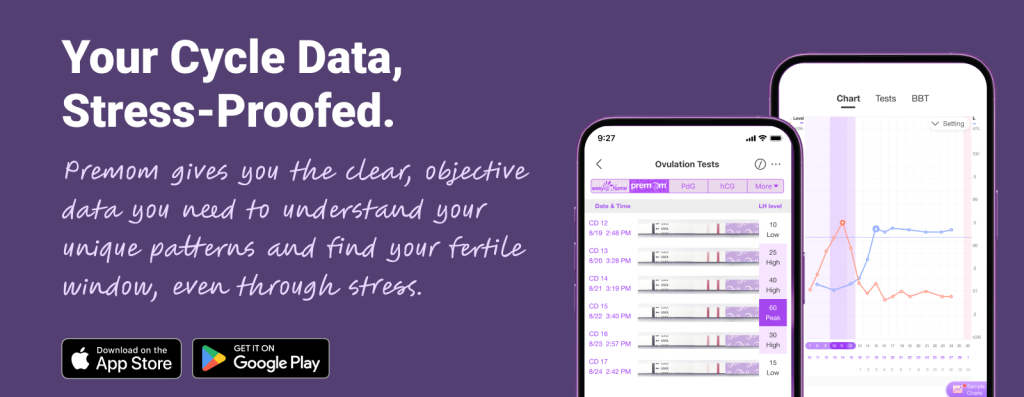
This is where accurate cycle tracking becomes invaluable. When stress affects your cycle, having objective data helps you identify patterns and adjust your timing. Premom’s cycle tracking with LH test reading and BBT charting gives you the data you need to understand your unique patterns – even when stress throws things off schedule. Instead of adding more worry by guessing, you gain confidence through clear information about your actual fertile window.
The role of cortisol in ovulation and implantation
Cortisol, often called the “stress hormone,” is released by your adrenal glands in response to ongoing stress. While short bursts of cortisol can be adaptive, chronically elevated levels may interfere with the hormonal balance needed for a healthy luteal phase and successful implantation.
During the luteal phase, progesterone from the corpus luteum helps thicken and stabilize the uterine lining for implantation. Prolonged stress and high cortisol can impair this process by reducing luteinizing hormone (LH) support to the corpus luteum, leading to lower progesterone output. In some cases, this can cause a shortened luteal phase or early spotting before menstruation.
Cortisol also influences local uterine and immune factors involved in implantation. Elevated cortisol may alter endometrial receptivity by changing cytokine balance and reducing blood flow to the uterine lining. If the luteal phase lasts fewer than about 12 days or the endometrium fails to reach 8 mm or more in thickness, implantation becomes less likely.
In essence, cortisol’s greatest impact on fertility often occurs after ovulation, by weakening progesterone stability, altering endometrial health, and narrowing the implantation window, rather than by preventing ovulation itself.
Why stress doesn’t always prevent pregnancy
Many women get pregnant during tough times, even with all these effects. Long-term stress can affect fertility, but it doesn’t mean pregnancy won’t happen.
Research tells us stress hormones hit everyone differently. Your body’s reaction to stress might determine how much it affects your reproductive system. Some women ovulate like clockwork even under intense pressure, while others see changes from minor stress.
The timing of stress makes a big difference, too. Quick bursts of stress usually won’t mess with your fertility like ongoing stress does. Your body bounces back pretty well from brief stressful moments.
IVF results give us another angle to consider. The largest longitudinal study found no clear link between emotional distress and treatment success. This suggests that while stress might affect natural conception by disrupting ovulation, it might not be as disruptive to other parts of reproduction.
The truth is that plenty of women conceive while dealing with anxiety and stress. Knowing this can help you relax – after all, stressing about stress just piles on more worry. You might find it more helpful to focus on managing stress to boost your overall health while trying for a baby.
Why You Might Feel an Overwhelming Urge to Get Pregnant
The urge to have a baby isn’t just in your head—it mixes biology, emotions, and social factors that can feel overwhelming.
Biological and emotional drivers
Many women feel an almost primal urge to have children. As one woman put it, “I’ve been wanting babies forever”. This deep longing connects to positive feelings like love, joy, and the sense that children complete a family. Some women yearn for the birth experience itself. One mother shared, “It’s just a joyous occasion…I love when the babies come out of you. You just hold them”.
Scientists think this feeling—nicknamed “baby fever”—has biological roots. Their research points to several triggers:
- Age milestones
- Falling in love
- Previous pregnancies
- Being around babies of relatives and friends
Research shows fertility desires have a heritability component of approximately 70%. Our reproductive urges might be partly hardwired, though culture shapes them too.
Societal and personal expectations
Outside forces shape our desire to get pregnant a lot. About 9 out of 10 women feel judged as mothers, and 8 out of 10 face criticism from their own families. This judgment starts the moment a woman becomes pregnant.
People expect more than just having children. Modern women must:
- Be a perfect mother
- Maintain a successful career
- Stay physically fit
- Have an active social life
- Remain perpetually happy
These impossible standards create what researchers call “a discrepancy between what we are and what we should be,” and lead to emotional strain.
Women think over their education, money situation, and relationship stability when planning a pregnancy. Studies show these factors help determine the “right time” to have a baby.
When desire turns into anxiety
Regular baby fever can turn into worry when pregnancy doesn’t happen quickly. Women who face delays find each month more stressful – hoping and then facing disappointment.
Between 8.5% and 10.5% of pregnant women deal with Generalized Anxiety Disorder (GAD). Many struggle with anxiety before pregnancy. This worry grows after months or years of trying.
Women with the highest stress hormone levels had a 29% lower monthly chance of conceiving compared to the least stressed women. The more you worry about getting pregnant, the harder it might become – creating a tough cycle to break.
Getting to know these baby fever triggers helps manage related anxiety. These feelings are normal, but knowing when they’ve become unhealthy lets you take a more balanced approach to family planning.
When anxiety about conception starts feeling overwhelming, having a trusted source for answers can make a significant difference. Premom’s Ask AI feature provides personalized responses to your fertility questions 24/7 – helping you process questions in real-time rather than spiraling into worry. Whether you’re wondering if a symptom is normal or need reassurance about your cycle, having instant access to reliable information can interrupt the anxiety cycle before it takes hold.
8 Calming Strategies That Actually Work
Finding peace while dealing with fertility stress needs practical steps. These eight research-backed strategies can help calm your mind and support your conception experience.
1. Practice mindfulness or meditation
Mindfulness training helps stabilize cognitive abilities, overactive autonomic arousal, and emotional control. It changes your outlook from “I am infertile” to “I am a person experiencing conception problems”. This change in point of view can set you free.
A simple 4-5-6 breathing exercise works well: breathe in for four seconds, hold for five, then exhale for six seconds. Keep repeating until you feel calmer. Just 5-10 minutes of daily meditation can reduce your stress levels noticeably.
2. Limit social media and comparison
Social media usage can increase a lot when you’re pregnant. Sadly, too much social media creates chances for negative comparisons and exposure to unrealistic standards.
Women who saw idealized pregnancy images felt worse about themselves and worried more. Your mental health matters, so think about:
- Setting time limits on social apps
- Unfollowing accounts that make you anxious
- Joining smaller, supportive online groups instead of large forums
Premom’s community feature offers a more supportive alternative to general social media. Instead of curated pregnancy announcements and idealized content, you’ll find women navigating similar fertility journeys. The community provides a space to share concerns, celebrate small wins, and receive encouragement from others who truly understand what you’re experiencing – without the comparison triggers that come with mainstream platforms.
3. Create a worry journal or schedule worry time
Writing in a journal helps reduce stress during conception by letting out bottled-up emotions. The act of writing worries down makes your brain slow down and sort thoughts better than just thinking about them.
Scheduling specific “worry time” or keeping a “worry journal” works really well. This method lets you put off nagging thoughts until later, making it easier for your mind to accept “not now” versus “not at all”.
4. Move your body with gentle exercise
A daily walk or regular gentle exercise lowers stress and helps balance reproductive hormones. Walking boosts blood flow to reproductive organs while releasing feel-good hormones like dopamine and serotonin.
Take Premom’s in-app Pre-Pregnancy Stress & Well-Being Assessment to learn about your stress levels and get individual insights based on your responses.
Exercise exceeding four hours weekly might hurt fertility. Swimming, yoga, or pilates work better as they improve circulation without pushing too hard.
5. Try acupuncture or massage
Acupuncture might help fertility by addressing thyroid problems and increasing blood flow to the endometrium. Clinical observations show treatments often work best when combining acupuncture, herbal medicine, and traditional approaches.
The best results come from treatments before and after embryo transfer during IVF. Make sure you visit a licensed practitioner who specializes in fertility issues.
6. Cut back on caffeine and alcohol
Research shows conception chances drop by half during cycles when participants drank alcohol. Women who avoided alcohol and drank less than one coffee daily achieved 26.9 pregnancies per 100 menstrual cycles, nowhere near the 10.5 for those who drank alcohol and more coffee.
7. Talk to a therapist or join a support group
Support from family, friends, medical caregivers, and mental health professionals helps during fertility challenges. Counseling might help if you feel depressed, anxious, or can’t stop thinking about infertility.
8. Get a fertility check for peace of mind
Pre-pregnancy fertility testing offers valuable peace of mind. Positive results boost confidence, while early concerns give you time to make changes. This proactive step lets you plan better and reduces anxiety from uncertainty.
How to Reframe Your Thoughts About TTC to Stop Worrying
Your mental approach to trying to conceive can make a huge difference in your emotional well-being. Our thoughts about fertility shape our experience – good or bad. Let go of the ‘perfect timeline’
You need to understand that conceiving doesn’t follow a set timeline. Most of us think pregnancy “should just happen on its own.” This leads to disappointment when reality is different from what we expect. Letting go of these preconceived timelines becomes one of the toughest parts of TTC.
Pregnancy and birth teach us to release the control we’re used to having in other parts of life. One woman’s words ring true: “Learning to let go of what I thought this experience would look like has been the hardest part”.
Celebrate small wins and cycles
Small victories create momentum and remind you that progress happens, even when things feel slow. These little wins become motivation that helps you see movement, even if it’s not as fast as you’d like.
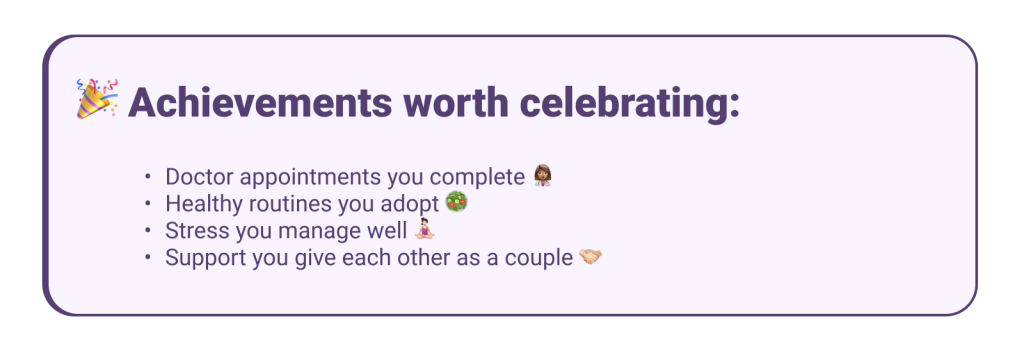
Here are some achievements worth celebrating:
- Doctor appointments you complete
- Healthy routines you adopt
- Stress you manage well
- Support you give each other as a couple
- Remembering to take your prenatal
Use affirmations and calming mantras
Simple, positive statements create new neural pathways in your brain. Research shows these statements activate brain areas linked to self-processing and reward.
These fertility affirmations work well:
- “I am enough.”
- “My body is perfectly designed.”
- “I trust my body’s timing and life.”
Start with statements you believe, even just a little. Practice matters – focus on one affirmation daily to get the best results. Regular practice will help your mood improve as hope takes the place of fear.
When to Seek Professional Help
Professional support can be life-changing during your fertility experience. Let’s explore what you should know about getting help.
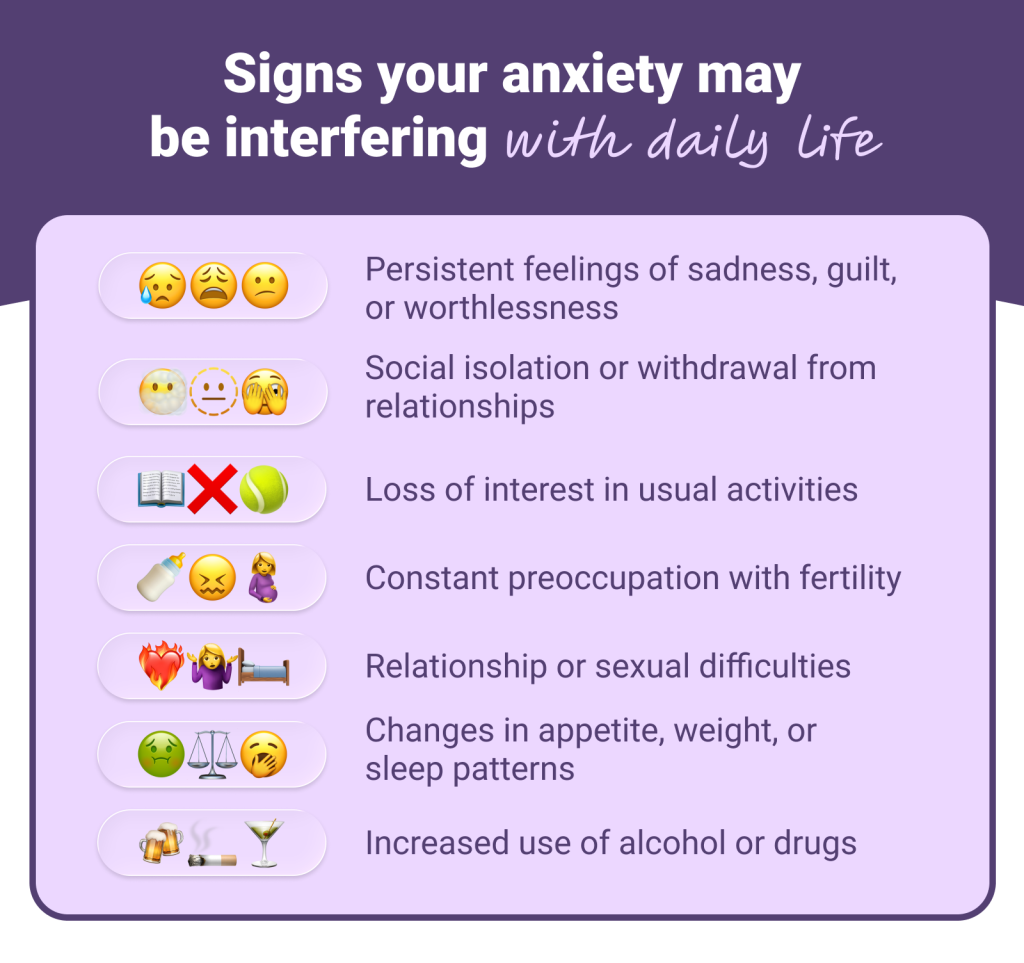
Signs your anxiety may be interfering with daily life
You should seek professional support if you notice:
Premom’s in-app Pre-Pregnancy Stress & Well-Being Assessment could be your first step to review your stress levels before seeking professional guidance.
How fertility clinics can support your mental health
Fertility clinics provide in-house counseling with specialists who understand reproductive challenges. These services include pretreatment psychological evaluations, ongoing emotional support, and guidance to make treatment decisions. Most clinics now recognize that better mental health leads to improved emotional well-being and treatment outcomes. These specialists provide a safe space to explore your feelings while offering medically-informed support tailored to your unique experience.
Conclusion
You don’t need to let stress define your fertility journey. The strategies we’ve covered – from mindfulness to reframing your timeline – give you practical ways to manage anxiety while supporting your reproductive health. Remember, many women conceive even during challenging times.
Take the next step toward balance – complete the Pre-Pregnancy Stress & Well-Being Assessment in the Premom app to get personalized recommendations for managing stress as you prepare for pregnancy. Use Ask AI when questions arise, and connect with the Premom community for support from women who understand exactly what you’re experiencing.
You’re not alone in this. Taking care of your mental health creates the best foundation for your journey to parenthood.
Note: Health Assessment Tools are provided solely for educational and information purposes only; they should not be used as a substitute for professional medical advice, diagnosis, or treatment. These tools are available to Prmom Premium subscribers in the Premom app.
How to Stop Worrying About Getting Pregnant-FAQs
Focus on self-care activities like meditation, gentle exercise, and journaling. Limit social media use to avoid comparisons, and consider talking to a therapist or joining a support group. Remember that stress doesn’t necessarily prevent pregnancy, but managing it can improve your overall well-being.
Yes, it’s completely normal to feel anxious about getting pregnant. Many women experience these feelings, especially if they’ve been trying for a while. However, if anxiety starts interfering with your daily life, it may be time to seek professional help.
Let go of the idea of a “perfect timeline” for pregnancy. Instead, celebrate small wins in your fertility journey, use positive affirmations, and try to maintain a balanced perspective. Remember that everyone’s path to parenthood is unique.
While chronic stress can potentially disrupt ovulation and affect fertility, it doesn’t guarantee you won’t get pregnant. Many women conceive despite experiencing significant stress. Focus on stress management techniques to support your overall health and well-being.
If you notice persistent feelings of sadness, social withdrawal, loss of interest in usual activities, or if your anxiety is significantly impacting your daily life or relationships, it may be time to consult a mental health professional or a fertility clinic that offers counseling services.
References
Crawford NM, Steiner AZ. Age-related infertility. Obstet Gynecol Clin North Am. 2015;42(1):15-25.
Boivin J, Griffiths E, Venetis CA. Emotional distress in infertile women and failure of assisted reproductive technologies: meta-analysis of prospective psychosocial studies. BMJ. 2011;342:d223.
Morris SN, Missmer SA, Cramer DW, Powers RD, McShane PM, Hornstein MD. Effects of lifetime exercise on the outcome of in vitro fertilization. Obstet Gynecol. 2006;108(4):938-945.
Misri S, Abizadeh J, Sanders S, Swift E. Perinatal Generalized Anxiety Disorder: Assessment and Treatment. J Womens Health (Larchmt). 2015 Sep;24(9):762-70. doi: 10.1089/jwh.2014.5150. Epub 2015 Jun 30. PMID: 26125602; PMCID: PMC4589308.
Hakim RB, Gray RH, Zacur H. Alcohol and caffeine consumption and decreased fertility. Fertil Steril. 1998 Oct;70(4):632-7. doi: 10.1016/s0015-0282(98)00257-x. Erratum in: Fertil Steril 1999 May;71(5):974. PMID: 9797089.
Pasch LA, Gregorich SE, Katz PK, et al. Psychological distress and in vitro fertilization outcome. Fertil Steril. 2012;98(2):459-464. doi:10.1016/j.fertnstert.2012.05.023