

Wondering whether taking a PdG test can help you get pregnant faster? It may very well help you track ovulation — an invaluable insight you’ll be able to leverage once you learn how to read your Easy@Home PdG test.
If you’ve dipped and uploaded results from dozens of Luteinizing Hormone test strips (aka ovulation tests), but still aren’t quite sure you’ve ovulated, you’re not alone! Researchers have identified anovulation (absence of ovulation) in more than a third of all clinically normal menstrual cycles lasting 21-35 days.[1] And that doesn’t even include the 14% to 25% of women with irregular cycles. [2]
Enter the Easy@Home PdG test — designed to be used with the Premom app. Once you learn how to read your Easy@Home PdG test and track your progesterone levels, you’ll understand why this powerful fertility hormone is so critical to your conception journey.
What is PdG testing?
A PdG test detects pregnanediol glucuronide (PdG), the primary urinary metabolite of progesterone. Because progesterone rises after ovulation, measuring PdG offers valuable insight about how your luteal phase is progressing.
After you ovulate, your progesterone rises to prepare your uterus to host a fertilized egg, creating an optimal environment for embryo implantation and development. While ovulation predictor kits (OPKs) are great for predicting ovulation, PdG tests monitor the rise of progesterone levels that should occur after successful ovulation.
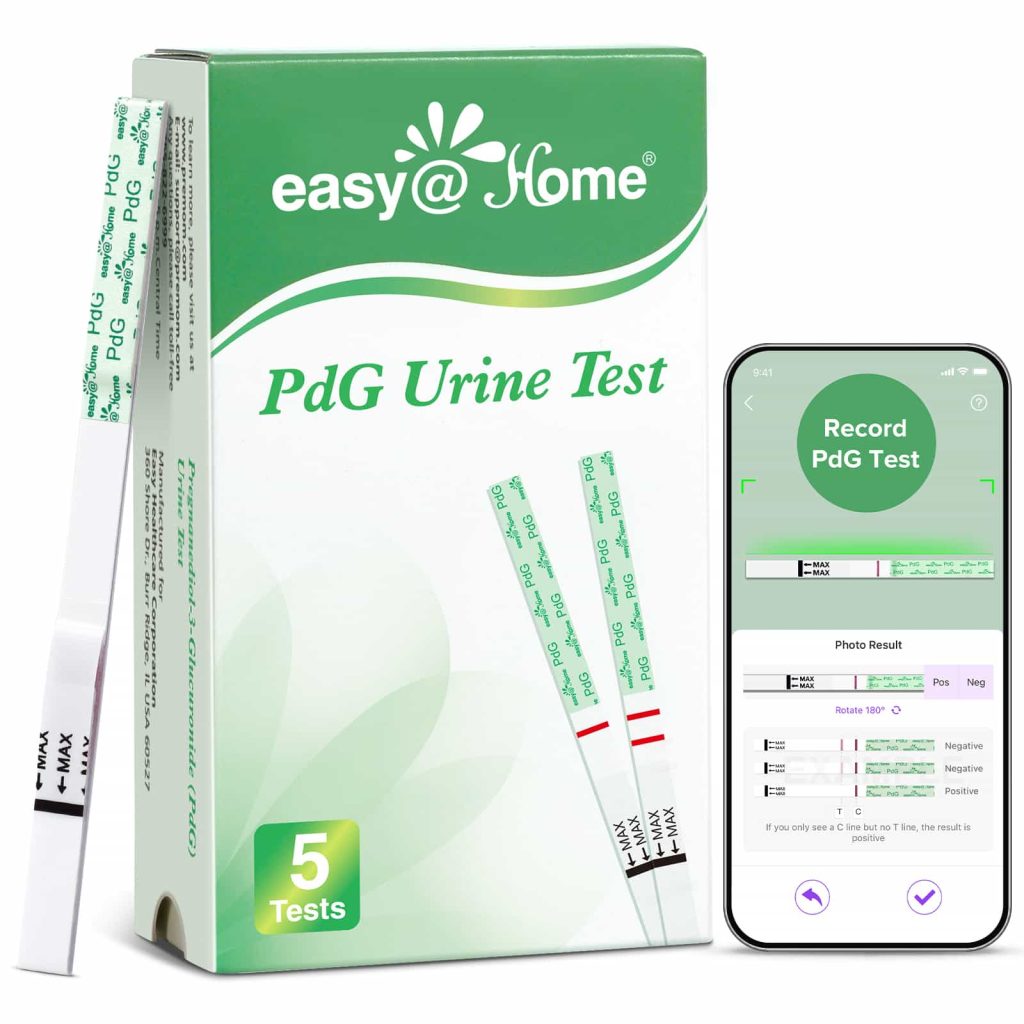
Why Learn to Read Easy@Home PdG Tests While Trying to Get Pregnant?
If you’re trying to conceive, you’re probably already tracking your period and your LH levels — but identifying ovulation is just as important. Easy@Home PdG tests help you:
- Support Luteal Phase Monitoring: Your progesterone is at its highest in the post-ovulation luteal phase. Testing PdG levels during this phase helps ensure your body has the support it needs to nurture a fertilized egg.
- Identify Potential Fertility Issues: Learning how to read an Easy@Home PdG test means optimizing your fertility and learning about your body. If you discover your PdG levels are low, you’ll be able to alert your doctor, who can personalize a progesterone support protocol.
How to Test and Read an Easy@Home PdG Test
Reading an Easy@Home PdG test is easy. But it’s only helpful if you interpret the results correctly to monitor your elevated progesterone levels which indicate proper luteal function. Make sure to collect first morning urine. Then, just dip for 5-10 seconds, wait for 5-10 minutes and record the results to your Premom app.
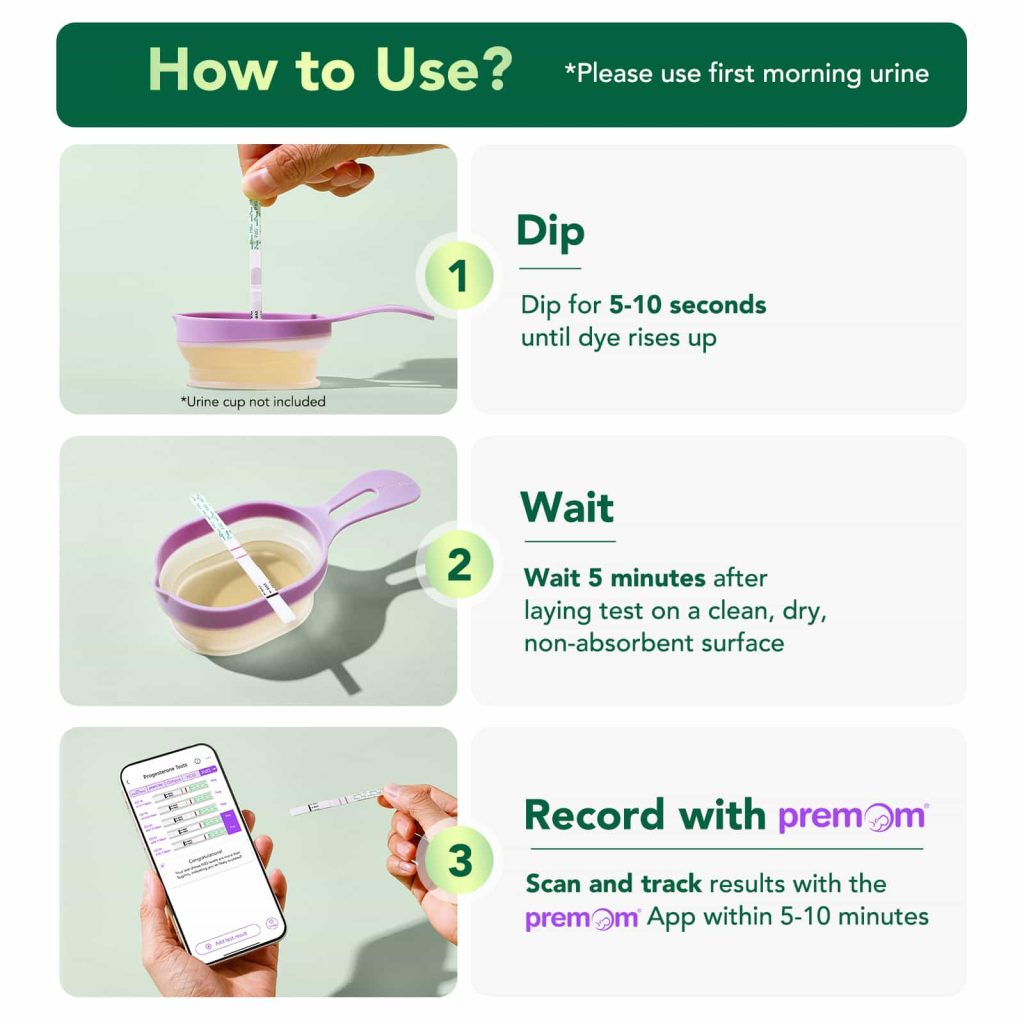
Your test strips will have a Control Line (C) and your Test Line (T) that are clearly marked.
Positive PdG Test
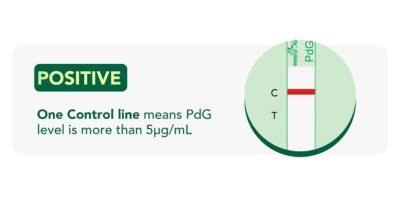
Unlike an ovulation or pregnancy test, a positive PdG test has only one Control line. This means the PdG level in your urine is more than 5 μg/mL, indicating a high PdG level that may correlate with ovulation.
Negative PdG Test
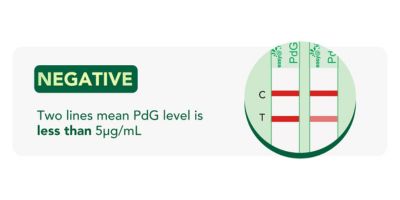
The appearance of two lines indicates a negative PdG test. This means the PdG level in your urine is below 5 μg/mL, which is associated with anovulation or progesterone deficiency.
For the most accurate results, start testing your urine for PdG 5 days after achieving a positive result with your ovulation test (LH peak day).
What does a positive PdG test mean for pregnancy?
A positive PdG test can feel like a huge win—and for good reason! It’s a strong indicator that your body is producing enough progesterone to promote:
- A Healthy Luteal Phase: After ovulation, progesterone levels should rise to help build and maintain a thick uterine lining—the comfy, nourishing environment an embryo needs to implant and grow. A positive PdG test shows that your progesterone levels are rising as they should be after ovulation.
- Confident Next Steps: Once you’ve achieved a positive PdG test, continue tracking your cycle. The next big step is to take a pregnancy test 12-14 days past ovulation (DPO) to confirm conception.
Learning how to read an Easy@Home PdG test and identifying a positive result reassures you that your body is on the right path, and you’ll soon be ready to take a pregnancy test!
What to do if you get a negative PdG test?
A negative PdG test can feel disheartening, but it’s critical to understanding your fertility. If your PdG levels are low, here’s what you can do:
- Retest: Progesterone levels fluctuate throughout the luteal phase, so it’s a good idea to test again on the following day to check whether or not your progesterone levels are rising.
- Track Other Fertility Signs: You can track other fertility signs like your basal body temperature (BBT) and cervical mucus for a clearer picture of your cycle. This three-pronged approach can help you track ovulation from multiple angles.
Consult a Healthcare Provider: If you consistently get negative PdG results, it could point to low progesterone or a luteal phase defect. Chatting with your doctor can help you explore options such as progesterone supplementation to support a healthy luteal phase and improve your chances of implantation.
Best Tips for Using Easy@Home PdG Tests
To maximize the effectiveness of PdG testing, here are a few tips to keep in mind:
- Track Consistently: Use your Easy@Home PdG tests consistently during the luteal phase (5-9 days after your last, highest ovulation test). This daily testing will give you a clearer picture of your hormone levels over time.
- Use Other Tools: PdG testing works best when combined with other tracking methods like ovulation predictor kits (OPKs) and basal body temperature (BBT) monitoring. Together, these tools can give you a complete view of your fertility window.
Log Results in the Premom App: The Premom app allows you to log your PdG test results and track your fertility data over time. This makes it easier to spot patterns in your cycle and seek medical attention earlier, if needed.
Why do PdG levels matter when trying to get pregnant?
Progesterone plays a critical role in early pregnancy. After ovulation, it helps thicken the uterine lining, creating a welcoming environment for a fertilized egg. Learning how to read Easy@Home PdG tests can:
- Support Implantation: Progesterone helps prepare your uterus for pregnancy by thickening the uterine lining, giving a fertilized egg the best chance to implant.
- Help Prevent Early Miscarriage: Low progesterone levels are linked to early pregnancy loss [3]. By monitoring your PdG levels, you can catch low progesterone early and seek treatment if necessary.
- Support Fertility Treatment: If you’re undergoing fertility treatments, tracking your PdG levels can help your doctor determine if you may benefit from additional progesterone support, supporting your chances of a successful pregnancy.
By using PdG tests alongside LH tracking, you’ll maximize your chances of conceiving. If you’re ready to take control of your journey, start tracking your ovulation in the free Premom app today. Order your Easy@Home PdG tests today.
FAQs About Reading PdG Tests
Can I get a false positive PdG test?
False positives are rare but can happen if you test too early or too late in your cycle. For the most accurate results, refer to your PdG testing manual.
What if my PdG levels are positive but I’m not pregnant?
A positive PdG test may help identify elevated progesterone levels that are associated with successful ovulation, but it doesn’t guarantee pregnancy. Tracking your Luteinizing Hormone, your basal body temperature, and your cervical mucus as well can help you get a clearer picture of your fertility. All of these hormones and ovulation signs can be tracked in the free Premom app.
Can stress affect my PdG levels?
Yes, stress can impact your hormone levels, including progesterone.
References
- Prior JC, Naess M, Langhammer A, Forsmo S. Ovulation Prevalence in Women with Spontaneous Normal-Length Menstrual Cycles – A Population-Based Cohort from HUNT3, Norway. PLoS One. 2015;10(8):e0134473. Published 2015 Aug 20. doi:10.1371/journal.pone.0134473
- What are menstrual irregularities? https://www.nichd.nih.gov/. Published January 31, 2017. https://www.nichd.nih.gov/health/topics/menstruation/conditioninfo/irregularities
- Ranisavljevic N, Huberlant S, Montagut M, et al. Low Luteal Serum Progesterone Levels Are Associated With Lower Ongoing Pregnancy and Live Birth Rates in ART: Systematic Review and Meta-Analyses. Front Endocrinol (Lausanne). 2022;13:892753. Published 2022 Jun 10. doi:10.3389/fendo.2022.892753