

When you’re trying to conceive, seeing a faint line on a pregnancy test can be both thrilling and nerve-racking. Home pregnancy tests detect the hormone hCG in urine, and sometimes the result line appears dark and unmistakable. Other times it’s so light you can barely see it—or a shadowy mark shows up well after the recommended read time—leaving you to wonder if it’s a real positive or just an evaporation line.
If you’re squinting at that barely-there line and asking yourself what it means, you’re not alone. In this guide, we’ll explain what a faint line can indicate, how to tell the difference between a true early positive and an evaporation line, and the next steps you can take for accurate results and peace of mind.
Why Pregnancy Tests Show Faint Lines
A faint line on a pregnancy test happens because the test is detecting the hormone human chorionic gonadotropin (hCG). This hormone is produced only after implantation, and in the first few days of pregnancy, hCG levels start out low and rise steadily. When you test very early, the hormone may be present but still in small amounts, so the test line appears lighter than the control line.
Common reasons you might see a faint line include:
- Testing too early: hCG hasn’t built up enough yet to show a strong positive.
- Diluted urine: Drinking a lot of water before testing can lower the concentration of hCG in your sample.
- Reading the test too late: A shadow or colorless line that appears after the recommended time is often an evaporation line rather than a true positive result.
What Does a Faint Positive Pregnancy Test Look Like?
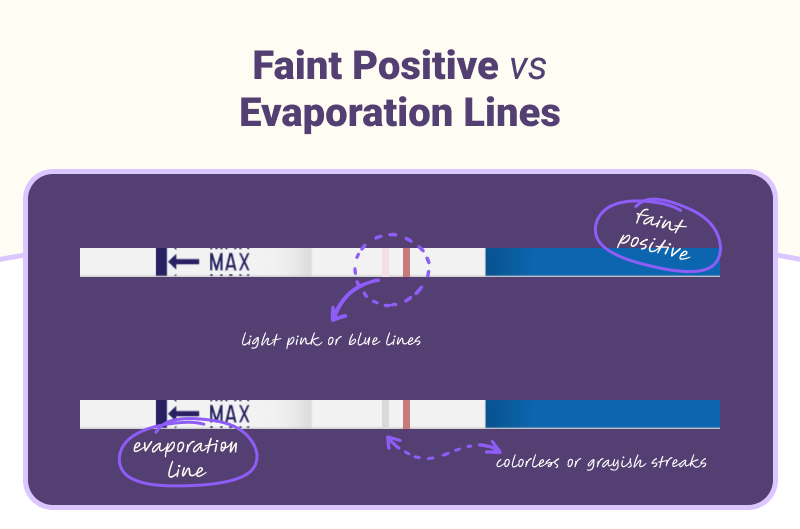
A faint positive usually shows up as a soft pink or blue line that appears within the time listed on the test instructions—often 3 to 5 minutes. Even if the line is light, if it has color and shows up in that window, it most likely means the pregnancy hormone hCG is present and you’re in the very early stages of pregnancy.
Because hCG starts low and roughly doubles every two to three days, the line often begins faint and then darkens as hormone levels rise. The key is that the line is visible during the correct reading time and carries actual dye, not just a shadow or gray mark that appears later.
hCG levels and faint positives
Early pregnancy usually starts with a subtle signal. A true positive, even a faint one, contains dye and appears during the test’s recommended read time (often 3–5 minutes). Because hCG typically doubles every 48–72 hours, a line that darkens on repeat tests is a strong indicator of pregnancy.
Faint positive vs. false positive
False positives are rare but can happen. Possible reasons could include:
- A very early loss (chemical pregnancy)
- Fertility medications containing hCG
- Recent miscarriage if hCG levels haven’t returned to negative yet
If you suspect any of these or if the line stays faint without change, repeat the test in 48 hours or talk with your healthcare provider.
Early pregnancy faint line progression
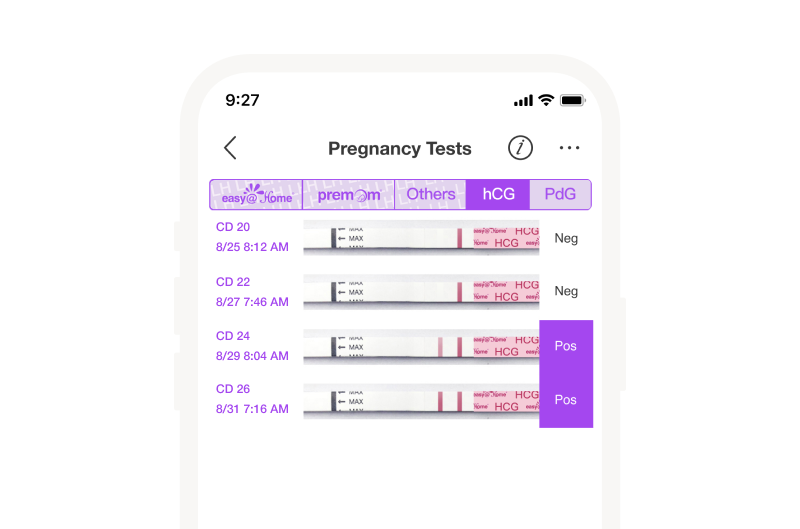
In a healthy early pregnancy, hCG rises steadily. Many people test every day or two and save each strip to watch the line darken.
With the Premom app, you can upload photos of your pregnancy test strips into the test gallery and watch your hCG test line progression side by side. This simple visual record often provides reassurance when you’re waiting for that stronger positive.
Tracking Basal Body Temperature (BBT) can also be an early indicator of pregnancy. BBT rises after ovulation due to the increase in the hormone progesterone. When pregnancy occurs, progesterone stays elevated and even rises, which means BBT will remain elevated, too. You can compare typical patterns in our pregnant BBT chart versus non-pregnant charts for a clearer picture.
What Is an Evaporation Line?
An evaporation line is a faint, gray or colorless streak that can appear on a pregnancy test after the recommended reading time has passed. It isn’t caused by the pregnancy hormone hCG and does not mean you’re pregnant. Instead, it’s a simple side effect of the test strip drying out. Reading the test only within the time window listed on the instructions, usually 3 to 5 minutes, is the best way to avoid confusing an evaporation line with a true result.
Evaporation line vs. faint line
A faint positive has actual color, light pink or blue, and appears within the test’s time limit while the strip is still moist. An evaporation line shows up later and stays gray or colorless.
Evaporation line vs. indent line
Some tests have a shallow groove where the dye travels, known as an indent line. Indents are visible right away but remain colorless and don’t indicate pregnancy. Both indents and evaporation lines are different from a true faint positive.
Why do evaporation lines happen
As urine evaporates, tiny chemical residues can leave a pale shadow on the strip. It’s harmless but confusing if you read the test after it has dried. Always check your result during the recommended time frame and discard the test afterward to prevent second-guessing.
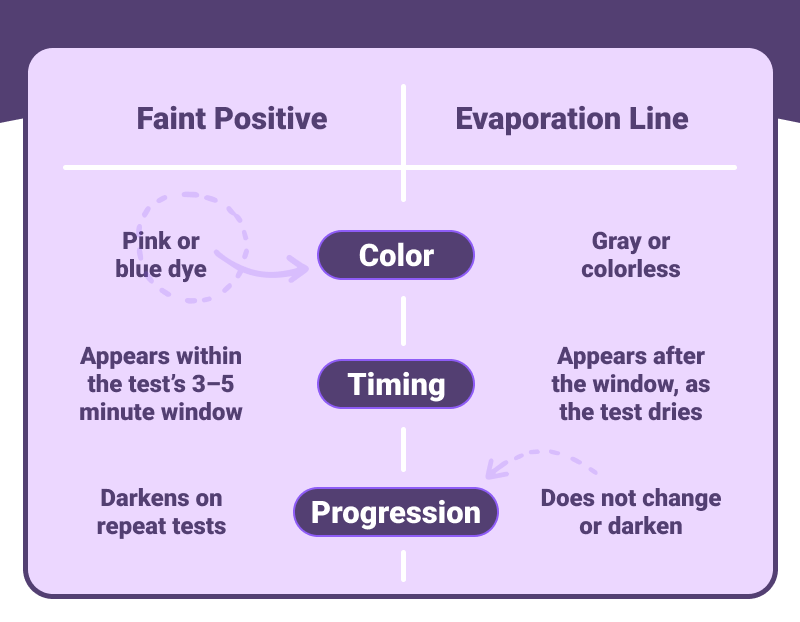
Evaporation Line vs Faint Positive: Key Differences
When it comes to test results, spotting the subtle differences between a faint positive and an evaporation line can feel overwhelming. This quick side-by-side guide of key features to look for highlights the main distinctions, making it easier to understand what your test might really be showing.
Tips for Accurate Pregnancy Testing and When to Retest
Getting a clear answer starts with how you take the test and when you read it. Following a few simple steps can make the difference between a confident positive and a confusing result. Always check the instructions on your specific brand and remember: timing and technique matter.
Follow Instructions Carefully
Read the test only within the time window listed on the package, usually 3 to 5 minutes. Discard the strip after 10 minutes so you’re not tempted to interpret evaporation lines that appear as the test dries.
Use First-Morning Urine
First-morning urine contains the highest concentration of hCG, which increases the chance of a clear positive and reduces the likelihood of a faint line, especially in very early pregnancy.
Repeat the Test in 48 Hours
If you see a faint line, retest after two days. hCG should roughly double every 48–72 hours, so a true positive usually darkens over that time. If the line stays faint or disappears, it may signal an early loss or that you’re not pregnant.
Confirm with a Blood Test
When home results remain unclear or you simply want extra reassurance, ask your healthcare provider for a quantitative blood hCG test. Blood testing is more sensitive and can give a definitive answer.
Common Pregnancy Test Concerns Answered
Why is my pregnancy test line still faint after several days?
A line that stays light can happen if you tested very early and your hCG levels are still low, if your body produces hCG more slowly, or if there was a very early loss (chemical pregnancy). Retesting after another 48 hours or checking with your healthcare provider can give clarity.
If you use the Premom app, you can upload each test and watch the 48-hour line progression side by side to see whether the color deepens over time.
Can I get a false positive from an evaporation line?
No. Evaporation lines don’t contain dye, so they are not true positives. The key difference is timing and color: a real positive appears within the recommended window and has a pink or blue color.
What if my line disappeared after drying?
That could be an evaporation line. Only the result read within the test’s instructed timeframe counts. Once the test dries, any new marks or fading lines should be ignored.
How soon should I retest after a faint line?
Wait at least 48 hours and use with first-morning urine for the most reliable follow-up. If the line stays faint or doesn’t darken, schedule a visit with your doctor for a serum (blood) hCG test. You can also share your uploaded test images or questions with the Premom app community or use the in-app Ask AI feature for cycle-specific guidance while you wait.
For more details on timing, see our blog on when to take a pregnancy test.
How Premom Helps Track hCG Line Progression
Watching a faint line get darker over a few days can feel both exciting and nerve-wracking. Premom makes the process easier and less stressful by combining accurate tests with smart tracking tools, all in one place.
- Easy@Home Pregnancy Test Strips – An affordable and reliable hCG test kit designed for frequent testing, so you can check as often as you need without worrying about running out.
- hCG Test Reader & Tracker – Snap a picture of your tests, mark your result, and track the line progression in one simple view.
- Community Support – Compare your results with others and get reassurance from a supportive TTC community.
- FertilityPro AI – Helps you analyze your cycle data to recommend the best times to test for the most accurate results.
With clear records and side-by-side comparisons, you can stop second-guessing and feel more confident about what your body is telling you. Shop Premom Pregnancy Tests today and use the app’s tracking tools to monitor your hCG line progression with ease.
Key Takeaways
A faint line on a pregnancy test often means you are pregnant, just very early. Evaporation lines are common but harmless and easy to avoid by reading results during the recommended time frame. If the line is faint, test again in 48 hours with first-morning urine. Logging each result in the Premom app and watching the progression provides reassurance and helps you share accurate information with your healthcare provider.
Pregnancy testing doesn’t have to feel overwhelming. With careful timing, reliable tools, and clear tracking, you can move through this part of your fertility journey with more clarity and peace of mind.
Evaporation Line vs Faint Pregnancy Test Line FAQs
Yes. Drinking a lot of water before testing can dilute hCG in your urine, which may make a real positive appear lighter. First-morning urine is best because it’s more concentrated.
A faint line often means you’re very early—usually around 3–4 weeks from your last period (about 1–2 weeks after ovulation). Testing again in 48 hours should show a darker line if pregnancy is progressing.
Only medications that contain hCG, such as certain fertility shots, can create a false positive. Most other common medicines, including antibiotics or pain relievers, will not.
Any colored line, no matter how light, appearing within the test’s time window is considered a positive result. The darkness of the line doesn’t measure how healthy the pregnancy is.
Evap lines are fairly common, especially if the test is read after the recommended time. They appear gray or colorless and don’t contain dye.
This can happen if you tested at different times of day or used urine with different concentration. Retest in 48 hours with first-morning urine for a clearer answer.
No. An evaporation line will not become a true positive. Only a new test showing a colored line within the proper window confirms pregnancy.
Every body produces hCG at a different pace. Some people wait to test until hCG is higher, which results in a bold, immediate line instead of a faint early one.
References
Gnoth C, Johnson S. Strips of Hope: Accuracy of Home Pregnancy Tests and New Developments. Geburtshilfe Frauenheilkd. 2014 Jul;74(7):661-669. doi: 10.1055/s-0034-1368589. PMID: 25100881; PMCID: PMC4119102.
Valenzuela R, Iserson KV, Punguyire D. False-positive urine pregnancy tests–clinicians as detectives. Pan Afr Med J. 2011;8:41. doi: 10.4314/pamj.v8i1.71156. Epub 2011 Apr 10. PMID: 22121449; PMCID: PMC3201605.
Higuera, V. (2018, December 6). Evaporation line pregnancy test: Positive or negative?. Healthline. https://www.healthline.com/health/pregnancy/evaporation-line-pregnancy-test


