
If you’re tracking your cycle and trying to conceive, a yeast infection showing up mid-cycle is genuinely frustrating. The itch, the discharge, the uncertainty about whether it’s messing with your chances — it’s a lot to deal with on top of everything else. The short answer: a vaginal yeast infection doesn’t cause infertility, but it can make conception harder in the short term. Here’s what’s actually happening, and what to do about it.
Key Takeaways
- Vaginal yeast infections are caused by Candida overgrowth and affect 75% of women at least once in their lifetime (NIH).
- Yeast infections don’t directly cause infertility but can interfere with conception by altering vaginal pH and cervical mucus.
- An active yeast infection can create a vaginal environment that is less supportive of sperm movement and survival.
- You can get pregnant with a yeast infection, but treating it first improves your chances and reduces discomfort.
- Safe antifungal treatments (topical azoles) are recommended over oral Diflucan when trying to conceive or pregnant.
- Recurring yeast infections (4+ per year) may signal an underlying hormonal or immune issue worth investigating with your doctor.
- Premom helps you track your fertile window so you can time treatment and conception more effectively.
Key Terms Explained
- Vaginal yeast infection: An overgrowth of Candida albicans, a naturally occurring fungus in the vagina, that causes itching, discharge, and irritation.
- Vaginal pH: A measure of acidity in the vaginal environment. Healthy vaginal pH is 3.8–4.5. Yeast infections can push this higher, disrupting the conditions sperm need to survive.
- Cervical mucus: Fluid produced by the cervix that changes throughout your cycle. Around ovulation, it becomes clear and stretchy — the environment that helps sperm travel toward the egg.
- Candida albicans: The fungal species responsible for most vaginal yeast infections. It’s normally present in small amounts; overgrowth triggers symptoms.
- Vaginal microbiome: The community of bacteria (primarily Lactobacillus) that keeps the vaginal environment balanced and protective.
What Is a Vaginal Yeast Infection?
A vaginal yeast infection is one of the most common conditions among women — and one of the most misunderstood when it comes to fertility. It happens when Candida albicans, a fungus that naturally lives in the vagina, grows out of control. That overgrowth disrupts the vaginal microbiome and the environment that sperm and eggs depend on.
What Causes Yeast Infections in Women?
Anything that throws off your vaginal microbiome can trigger an overgrowth. The most common culprits:
- Antibiotics, which wipe out the Lactobacillus bacteria that keep Candida in check
- High estrogen levels, including during the luteal phase of your cycle or early pregnancy
- High-sugar diets, which feed Candida growth
- Tight synthetic clothing that traps moisture
- Douching or scented products that disrupt vaginal pH
- Weakened immune function from illness, stress, or underlying conditions like uncontrolled diabetes
Vaginal Yeast Infection Symptoms to Watch For
Symptoms range from mild to severe. The most common ones:
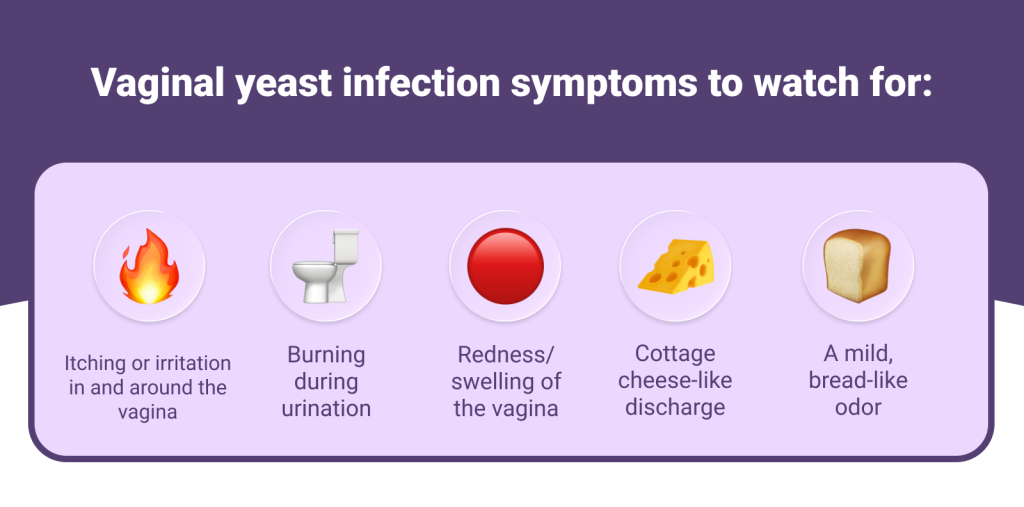
- Intense itching or irritation in and around the vagina
- Burning during urination or sex
- Redness and swelling of the vulva
- Thick, white, cottage cheese-like discharge
- A mild, bread-like odor (distinct from the stronger odor of bacterial vaginosis)
If you’re not sure whether what you’re experiencing is a yeast infection or something else, it’s worth getting it confirmed by your healthcare provider before treating it at home. BV and yeast infections are frequently confused, and they require different treatments.
Yeast Infection Discharge: What Does It Look Like?
Yeast infection discharge is typically thick and white, often described as resembling cottage cheese. It’s usually odorless or has a faint yeast-like smell. It won’t look like your normal cervical mucus — and during your fertile window, that distinction matters. Egg-white cervical mucus (EWCM) is clear, slippery, and stretchy. Yeast infection discharge is clumpy and dense. If you’re tracking cervical mucus as part of your cycle monitoring, an active yeast infection will make that data unreliable until the infection clears.
Can a Vaginal Yeast Infection Affect Fertility?
How Yeast Infections Change Vaginal pH and Cervical Mucus
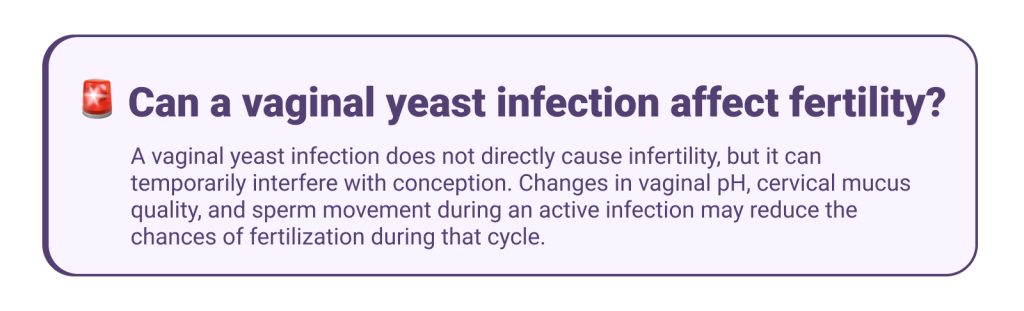
The vagina’s naturally acidic environment (pH 3.8–4.5) is protective for you, but it’s not actually ideal for sperm — which is why fertile-quality cervical mucus works as a neutralizing buffer, creating a sperm-friendly channel around ovulation. Yeast infections disrupt both sides of this equation. The infection itself alters vaginal pH, and the thick, clumpy discharge it causes is nothing like the egg-white mucus sperm need to swim through. Instead of a clear path, sperm are essentially trying to navigate through hostile terrain.
Can Yeast Infections Reduce Sperm Motility?
Research suggests yes. A study published in Fertility and Sterility found that Candida albicans can directly impair sperm motility and increase sperm agglutination (clumping), which reduces the number of sperm capable of reaching and fertilizing an egg. The acidic shift in vaginal pH during an active infection compounds this effect. According to Adetona et al. (2021), Candida colonization in the reproductive tract was associated with reduced sperm quality in couples experiencing unexplained infertility. This is one of the more concrete reasons to treat a yeast infection before your fertile window rather than pushing through it.
Partner Reinfection Risk When Trying to Conceive
Yeast infections can be passed back and forth between partners, even though men rarely develop symptoms. If you clear an infection but your partner is carrying Candida, reinfection is a real possibility. When you’re actively trying to conceive, this cycle of reinfection can mean your vaginal environment is never quite back to baseline. If you’re dealing with recurring infections, it’s worth having your partner evaluated and treated at the same time.
Can You Get Pregnant with a Yeast Infection?
Yes, conception is possible during an active yeast infection. But the conditions aren’t ideal, and the discomfort of intercourse during an infection is its own obstacle.
Can You Get Pregnant During Ovulation with a Yeast Infection?
You can. Ovulation still occurs on its normal schedule regardless of a vaginal infection, and sperm can still reach the egg. The issue is probability, not possibility. Impaired cervical mucus and reduced sperm motility lower your odds during any given cycle. If symptoms appear close to your fertile window, treating the infection promptly with a topical antifungal may help restore a more supportive vaginal environment before ovulation. During this time, tracking LH progression with tools like easy@Home ovulation test strips and Premom can provide additional fertility timing insight when cervical mucus observations become less reliable.
Why Are Yeast Infections More Common During Early Pregnancy?
Elevated progesterone and estrogen levels in early pregnancy create a sugar-rich vaginal environment that Candida thrives in. Immune changes during pregnancy also reduce the body’s ability to keep fungal growth in check. Signs of a yeast infection during pregnancy look the same as outside of pregnancy — intense itching, thick white discharge, vulvar irritation — but treatment options are more limited. Oral Diflucan is not recommended during pregnancy; topical azoles are the safer choice. If you’re newly pregnant and experiencing symptoms, talk to your provider before treating.
What Causes Yeast Infections When Trying to Conceive?
Hormonal Fluctuations and Cycle Phase Triggers
Estrogen rises significantly in the lead-up to ovulation and again in the luteal phase. Both of those estrogen spikes can promote Candida overgrowth, which is why many women notice yeast infections tend to cluster in the second half of their cycle.
Antibiotics, Diet, and Vaginal Microbiome Disruption
Antibiotics are the most common trigger after hormonal shifts. If you’ve recently taken a course — even for something unrelated to reproductive health — the disruption to your Lactobacillus population can open the door to Candida overgrowth. Diet plays a role too. High refined sugar intake feeds Candida. Often a short course of antifungals can keep the Candida away after a course of antibiotics.
Probiotic use, particularly Lactobacillus rhamnosus and Lactobacillus reuteri strains, has some evidence behind it for reducing recurrence, though it’s not a replacement for antifungal treatment during an active infection.
How to Treat a Vaginal Yeast Infection Safely While Trying to Conceive
Topical Antifungals vs. Oral Diflucan: What’s Safe?
Topical azole antifungals — clotrimazole, miconazole, terconazole — are considered safe while trying to conceive and during pregnancy. They treat the infection locally without systemic absorption. Most over-the-counter options fall into this category. Oral Diflucan (fluconazole) is a different story. A 2016 study published in CMAJ found an association between oral fluconazole use in early pregnancy and an increased risk of miscarriage. While a single low dose outside of pregnancy is generally considered lower risk, most providers recommend avoiding oral fluconazole when actively trying to conceive or if there’s any chance of early pregnancy. If you’re unsure, ask your provider before reaching for the pill form.
Yeast infection treatment options while trying to conceive:
| Treatment Type | Safe While TTC? | Safe in Pregnancy? | Notes |
|---|---|---|---|
| Topical azoles (OTC creams, suppositories) | Yes | Yes | First-line recommendation |
| Oral Diflucan (fluconazole) | Use with caution | Not recommended | Associated with miscarriage risk in pregnancy (CMAJ, 2016) |
| Boric acid suppositories | With provider guidance | No | Not safe in pregnancy |
| Probiotics (Lactobacillus strains) | Yes | Yes | Preventive support, not primary treatment |
Does a Yeast Infection Cause Natural Pregnancy Termination?
No. This is a persistent myth worth addressing directly. A vaginal yeast infection does not cause miscarriage or terminate a pregnancy. The infection is localized to the vagina and doesn’t affect the uterus, the embryo, or fetal development. The confusion likely stems from concerns about oral Diflucan (discussed above) or from the general anxiety around anything happening in the reproductive tract during early pregnancy. Treating a yeast infection with a topical antifungal while pregnant or trying to conceive is considered safe and recommended.
How to Prevent Recurring Yeast Infections While Trying to Conceive
Recurring yeast infections (four or more per year) aren’t just inconvenient — they’re a signal worth paying attention to. They may point to an underlying hormonal imbalance, uncontrolled blood sugar, immune dysfunction, or ongoing microbiome disruption. Practical steps that reduce recurrence:
- Wear breathable cotton underwear and avoid tight synthetic fabrics
- Change out of wet bathing suits and workout clothes quickly
- Avoid scented products, douches, or anything that disrupts vaginal pH
- Take probiotics containing Lactobacillus rhamnosus GR-1 and Lactobacillus reuteri RC-14
- If you’re on antibiotics, consider a probiotic course alongside them
- Track your cycle carefully — if yeast infections cluster consistently in your luteal phase, bring that pattern to your provider
Bacterial Vaginosis vs. Yeast Infection: How to Tell the Difference
Both BV and yeast infections cause vaginal discomfort, but they have different causes, symptoms, and treatments. Getting the diagnosis right matters — treating a yeast infection with antifungals when you actually have BV won’t help, and delays treating the actual issue.
| Feature | Yeast Infection | Bacterial Vaginosis |
|---|---|---|
| Discharge appearance | Thick, white, cottage cheese-like | Thin, gray or white, watery |
| Odor | Mild or none | Fishy, especially after sex |
| Itching | Intense | Mild or absent |
| Vaginal pH | Usually normal or slightly elevated | Elevated (above 4.5) |
| Cause | Candida overgrowth | Overgrowth of anaerobic bacteria |
| Treatment | Antifungal | Antibiotic (metronidazole or clindamycin) |
| Fertility impact | Temporary pH/mucus disruption | More directly linked to fertility and pregnancy complications |
BV has a stronger association with fertility problems than yeast infections do. If you’re not certain which you’re dealing with, see your provider for a swab test before treating.
How Long Does It Take for a Yeast Infection to Cause Infertility?
It doesn’t. A single yeast infection or even occasional recurrent infections don’t cause permanent infertility. What they can do is create temporary conditions that reduce your chances in a given cycle — altered pH, impaired cervical mucus, reduced sperm motility. Once the infection clears and your vaginal microbiome returns to baseline, those conditions normalize.
How Premom Helps You Track Fertility During and After a Yeast Infection
When cervical mucus becomes difficult to interpret during an active infection, tracking other fertility signals can provide additional context about ovulation timing. The Premom app helps women visualize LH progression, BBT patterns, and cycle timing across multiple days and cycles, making it easier to identify fertile window trends even when symptoms temporarily disrupt cervical mucus observations.
Here’s where that matters practically:
- Timing treatment: If you know your fertile window is 10 days out, you have time to treat and clear an infection before your best days arrive.
- Identifying patterns: If your Premom charts show yeast infections clustering consistently in your luteal phase, that’s a concrete pattern to bring to your provider.
- Cervical mucus tracking: Because an active infection makes CM data unreliable, your LH data and BBT shift become your most important signals. Premom tracks both.
Together, easy@Home ovulation test strips and the Premom app give you a clear, reliable read on your fertile window — even when other symptoms are making things harder to interpret.
When to See a Doctor About Yeast Infections While TTC
- You’ve had four or more yeast infections in the past year, or have one that won’t clear or is worsening
- Symptoms aren’t clearing with OTC treatment within a week
- You’re not sure whether it’s a yeast infection or BV
- You’re pregnant or newly trying to conceive and want guidance on treatment
- Recurring infections seem to correlate with a specific point in your cycle
Frequently Asked Questions (FAQs) about vaginal yeast infections and pregnancy
Not directly. A yeast infection doesn’t block ovulation or prevent fertilization from happening. It does create a less favorable environment for sperm, altered pH, impaired cervical mucus, possible sperm motility reduction, which can lower your odds in a given cycle. Treating it before your fertile window gives you the best conditions for conception.
Yes. Conception is possible during an active yeast infection. Ovulation still happens, sperm can still reach the egg, and implantation isn’t affected by vaginal Candida. The infection makes things harder, not impossible.
It doesn’t cause infertility. Even recurring yeast infections don’t permanently damage fertility. What they may do is reduce your chances in individual cycles by disrupting cervical mucus and sperm motility. Chronic recurrence is worth investigating, not because of the yeast itself, but because it may indicate an underlying issue affecting fertility more broadly.
Research suggests yes. Candida albicans has been shown to directly impair sperm motility and cause sperm agglutination (clumping), reducing the number of sperm that can effectively reach and fertilize an egg. The acidic vaginal environment during an active infection adds to this. It’s one of the more concrete reasons to treat an infection before your fertile window rather than during it.
Topical azole antifungals, clotrimazole, miconazole, terconazole, are the recommended first-line treatment when trying to conceive or pregnant. They treat the infection locally without systemic absorption and are widely considered safe. Oral Diflucan (fluconazole) is generally avoided when TTC due to associations with miscarriage risk in early pregnancy. Talk to your provider if you’re unsure which option is right for you.
No, a vaginal yeast infection does not cause miscarriage or terminate a pregnancy. This is a myth. Yeast infections are localized to the vaginal canal and don’t affect the uterus, embryo, or pregnancy.
Recurring yeast infections can throw off cervical mucus tracking, which is one of the key fertility signals many women rely on. When CM data is unreliable, your LH surge data and BBT chart become your most important signals, and Premom tracks both in one place. If infections are clustering at a consistent point in your cycle, your Premom charts can help you map that pattern and bring concrete data to your provider for conversation.
Vaginal yeast infections are common, treatable, and with the right timing, don’t have to derail your TTC cycle. The key things to hold onto: schedule an appointment with your provider for evaluation, treat with a topical antifungal, clear the infection before your fertile window when you can; and if infections keep coming back, that pattern is worth investigating rather than managing month to month. Your vaginal microbiome is part of your fertility picture. Keeping it healthy isn’t a side issue, it’s directly connected to giving sperm the environment they need to do their job.