
Ovulation is essential for pregnancy because an egg must be released to be fertilized. The highest chances of getting pregnant occur during the 5 days before ovulation and the day of ovulation itself, often referred to as the fertile window.
If you’re trying to conceive, understanding how ovulation works may help you improve your chances of conception. Pregnancy can only happen during a short fertile window each cycle. By learning ovulation signs, timing, and using tools like ovulation predictor kits, you may be able to improve your chances of getting pregnant naturally.
Key Takeaways
- Without the release of an egg, conception cannot occur.
- Your best chances of getting pregnant are during the 5 days before ovulation plus the day of ovulation itself.
- Sperm can live inside the body for up to 5 days, making the days leading up to ovulation vital.
- Using ovulation test strips and an app like Premom helps you identify your peak fertility with data-driven precision.
What Is Ovulation and How Does It Lead to Pregnancy?
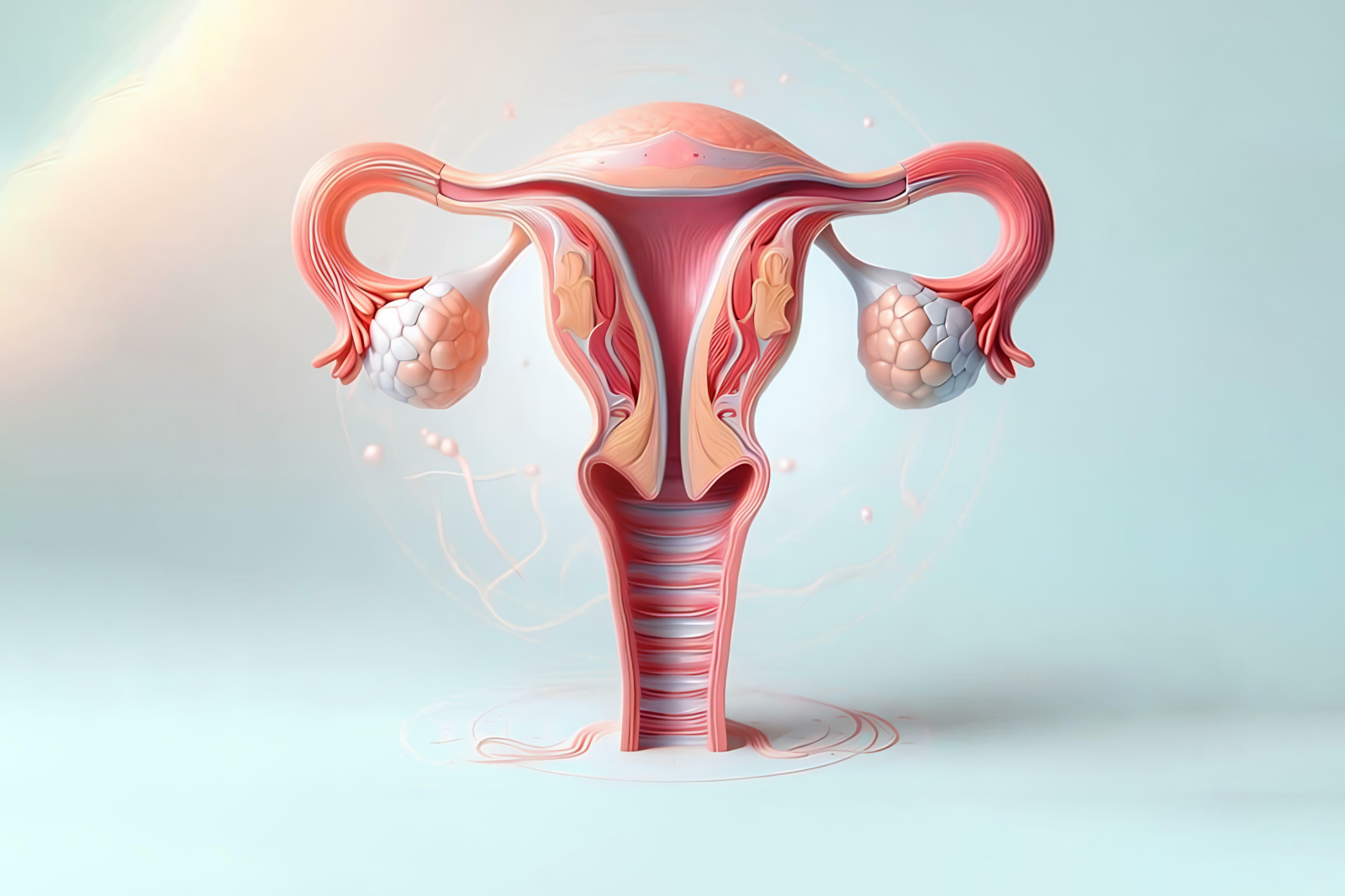
To understand ovulation and pregnancy, we first have to look at the cycle. Ovulation is the moment a mature egg is released from the ovary. Once released, the egg travels down the fallopian tube, where it waits for about 24 hours. If a sperm meets and fertilizes the egg during this short window, pregnancy begins.
Ovulation Facts for Success:
- Most women ovulate about 12 to 16 days before their next period starts.
- You are born with all the eggs you will ever have—about 1 to 2 million.
- Only one egg is typically released each month.
Why Is Ovulation Important for Pregnancy?
Ovulation plays a central role in pregnancy, as an egg needs to be released for fertilization to occur.
Can you get pregnant without ovulation?
Technically, no. While you might experience „withdrawal bleeding“ that looks like a period, if an egg isn’t released (a process called anovulation), pregnancy cannot happen.
Do you have to ovulate to get pregnant?
Yes. Ovulation is the biological „green light“ for conception. If you find that you aren’t ovulating regularly, focusing on natural ways to improve fertility, such as nutrition and stress management, can help get your cycle back on track.
When Can You Get Pregnant During Ovulation?
A common question we often get is, “During ovulation, can you get pregnant?” The answer is yes, but your most fertile days actually start before the egg is released.
Ovulation vs fertile window: what’s the difference?
Ovulation is the release of an egg from the ovary and typically lasts about 12–24 hours.
The fertile window includes the 5 days leading up to ovulation plus the day of ovulation. This is because sperm can survive in the reproductive tract for up to 5 days.
In simple terms:
- Ovulation → the moment the egg is released
- Fertile window → the days when pregnancy is possible, meaning the days the sperm can survive inside the female reproductive track and ovulation
Understanding this difference may help you time intercourse more effectively.
Can you only get pregnant during ovulation?
You can only get pregnant from sex that happens during the fertile window. Because sperm can live for up to 5 days, you can have sex on Monday and have that sperm fertilize an egg that is released on Thursday. However, although this can happen, we recommend emphasizing sex during the 2 days before ovulation and the day of ovulation during the fertile window to increase the chances of sperm being present when the egg is released.
What are your 6 most fertile days?

Signs Your Body Is Likely Ovulating (Natural Fertility Signals)
Your body gives off subtle clues when it’s time to get pregnant.
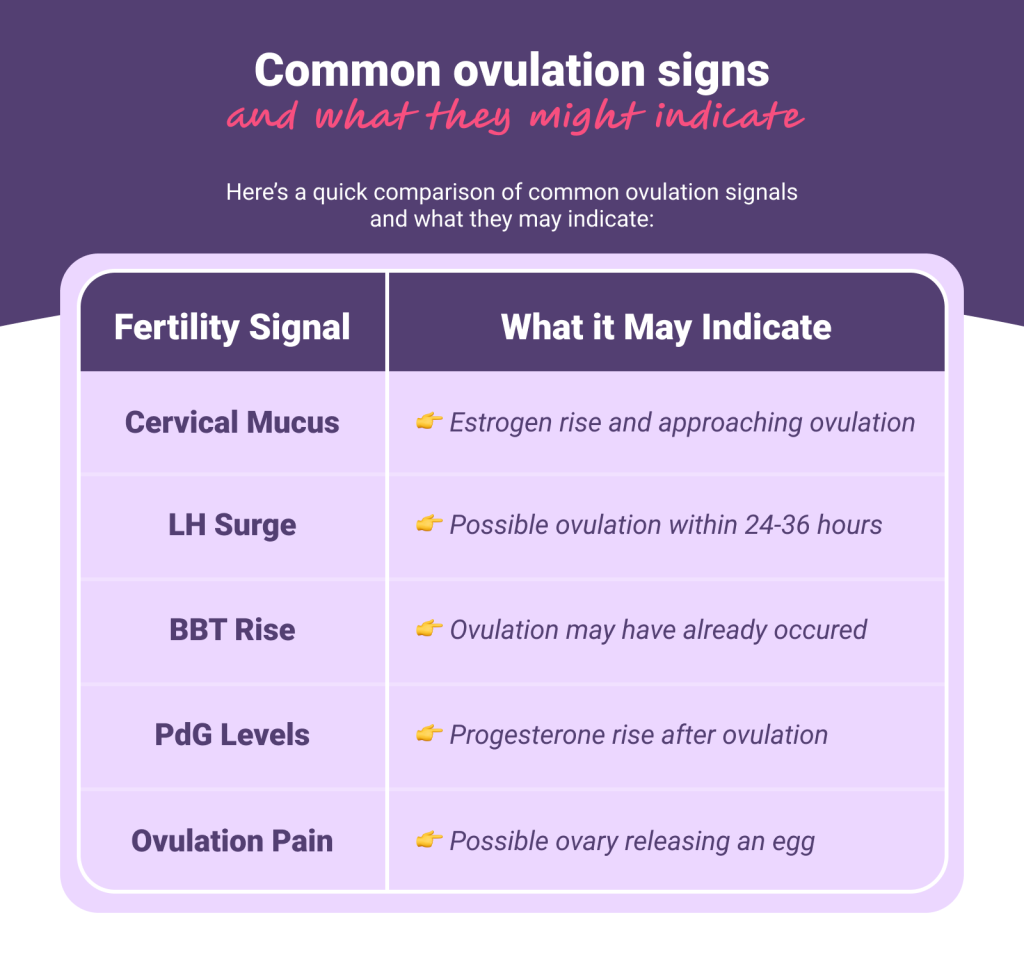
- Cervical mucus changes: It becomes clear, stretchy, and slippery (like raw egg whites), which may suggest rising estrogen levels.
- LH surge: Your ovulation predictor kits will show a dark line just before your body prepares to release the egg.
- Ovulation pain: Some women feel a mild twinge on one side of their lower abdomen.
- Basal body temperature rise: A slight increase in your resting temperature in the luteal phase suggests that ovulation likely happened.
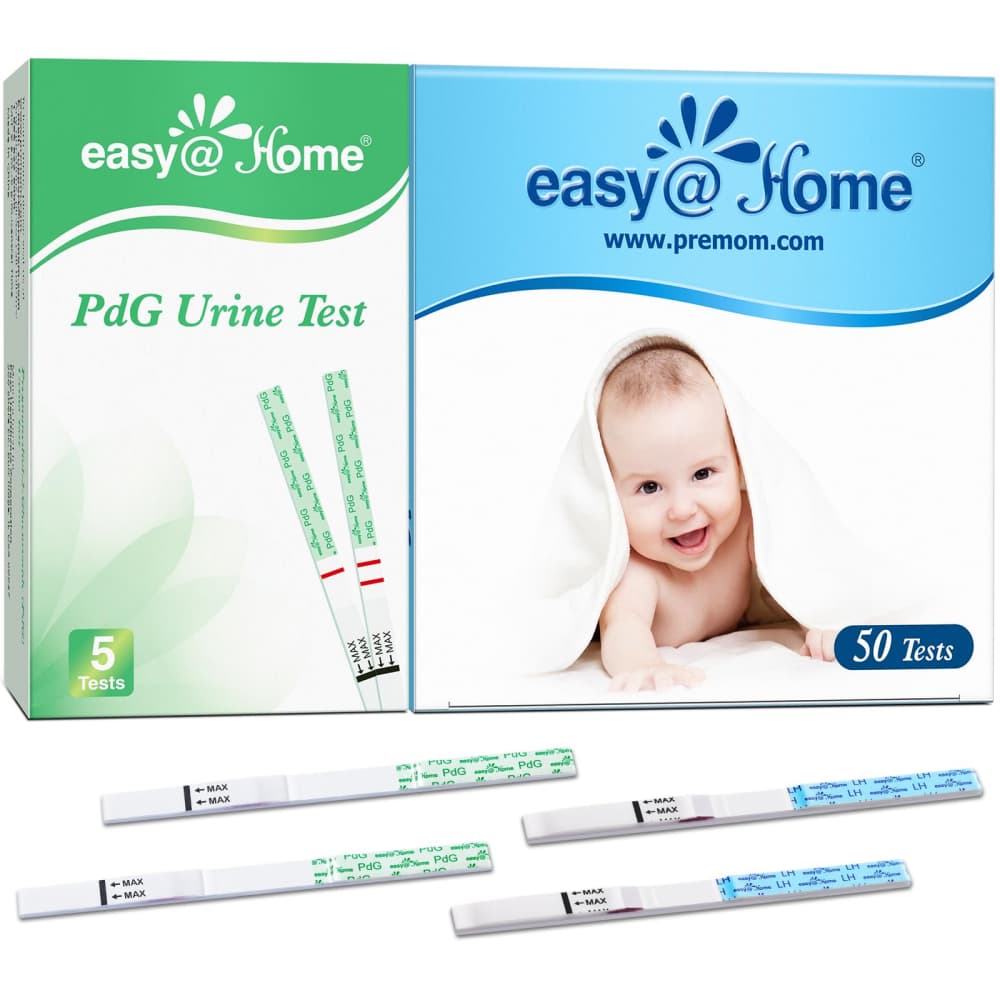
- PdG levels: A rise in PdG (a progesterone metabolite) after ovulation may help suggest that ovulation has likely occurred.
Common ovulation signs and what they may indicate
Here’s a quick comparison of common ovulation signals and what they may indicate:
How to Increase Chances of Getting Pregnant Naturally
If you’re looking for natural ways to conceive, try these:
- Start having intercourse every other day during the 6-day fertile window, which may increase the chances of sperm being present when ovulation occurs.
- Focus on whole foods, healthy fats, and a good quality prenatal vitamin to supplement any dietary nutrient gaps.
- High stress levels can have an effect on ovulation. Find a good way to help you destress and aim for 7–9 hours of sleep each night.
How to Track Ovulation for Pregnancy
Tracking ovulation may help you better understand your fertile window and timing for conception. Using multiple signals together can provide a more complete picture of your cycle.
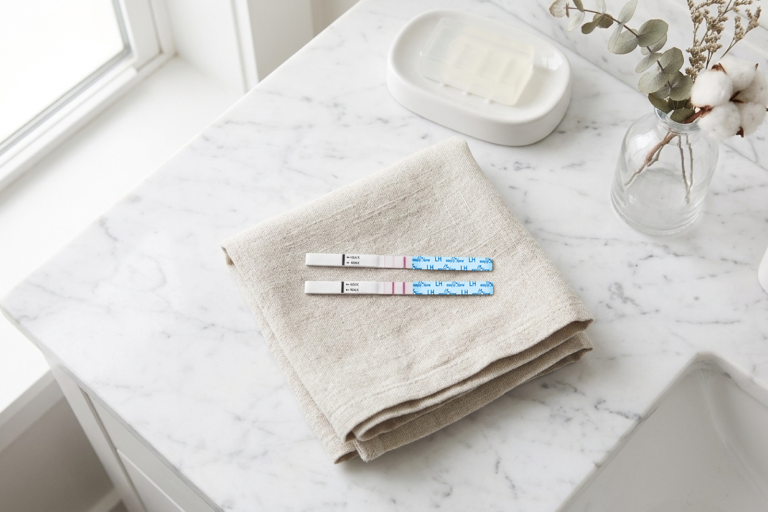
- Ovulation test strips: These detect the LH peak, which is associated with triggering ovulation and often occurs about 24 hours before the egg is released.
- Basal body temperature (BBT): A sustained rise in temperature after ovulation may suggest that ovulation has likely occurred.
- Cervical mucus: Changes in cervical mucus, such as a clear and stretchy texture, may suggest that your body is approaching ovulation.
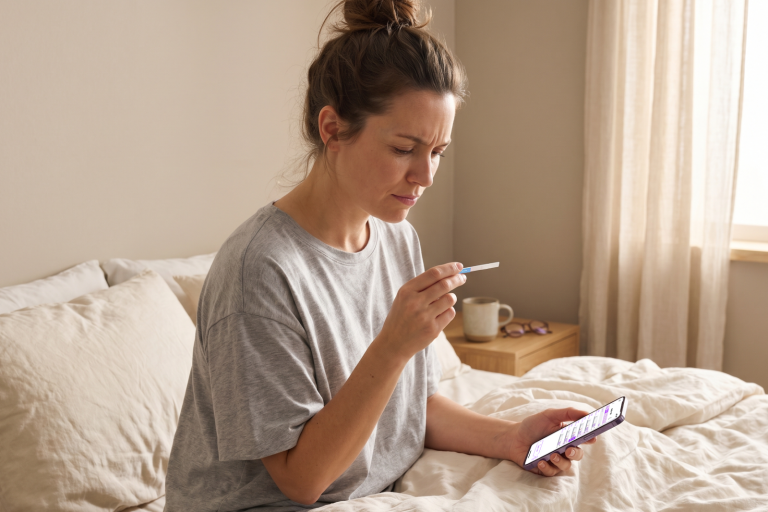
- Logging these signals in an ovulation tracking app like Premom can make it easier to organize your data and observe patterns over time.
Overcoming the „Information Overload“ of Trying to Conceive
We know that when you first look at tracking, whether it’s LH levels, ovulation and pregnancy facts, or BBT, it can feel a little overwhelming. You might worry that tracking symptoms is too complex.
Premom is designed to change that. We believe you shouldn’t need a medical degree to understand your own body. The app removes stress by:
- Simplifying the Learning Period: Premom’s AI helps you identify what a typical cycle looks like for you based on your own logged data.
- Taking Away the Guesswork: You don’t have to wonder if you’re doing it right. Premom helps you see trends over time.
- One-Step Entry: A quick scan of a result or just a tap to log your symptoms, and the app organizes everything into easy-to-read charts.
Ovulation vs Fertility: What Comes First?
Many people use these words interchangeably, but they are different. Ovulation is a single event (releasing the egg), while fertility is your overall ability to conceive. You can be fertile for several days a month, even though you only ovulate for one.
When to See a Doctor for Ovulation or Fertility Issues
If you are under 35 and have been trying for a year (or 6 months if over 35) without success, it’s a good idea to chat with a professional. Bringing your Premom data can help your doctor see your trends and exactly what your cycle is doing.
Your Path to Pregnancy
Understanding ovulation and pregnancy doesn’t have to be complicated. By listening to your body’s natural signals and using the right tools, you can take the stress out of trying to conceive.
- Focus on the days leading up to ovulation.
- Track daily after your period ends, using ovulation test strips to find your peak.
- Premom can help organize your data so you can better understand your cycle patterns.
![[Download the Premom App Today] – Because your journey to parenthood starts with understanding your body.](https://premom.com/wp-content/uploads/2026/05/Best-Time-to-Take-Ovulation-Test_In-Blog-3-2-1024x397.png)
Common Questions About Ovulation and Pregnancy
Yes! Healthy sperm can wait in the fallopian tubes for up to 5 days, meaning sperm from intercourse a few days before ovulation may still fertilize an egg.
No, ovulation does not guarantee pregnancy. While tracking your fertile window is a great step, ovulation itself doesn’t guarantee a pregnancy right away. In general, the natural chance of conceiving in any given cycle is about 20% at the peak of fertility. This means that even when your timing is spot-on, it can still take a little time.
Ovulation often occurs about 12–16 days before your next period. In a typical 28-day cycle, this is around Day 14, but timing can vary between individuals.
Pregnancy is less likely after ovulation because the egg typically survives for about 24 hours. Once this window passes, the chance of fertilization decreases until the next cycle.
References
American Society for Reproductive Medicine (ASRM). Age and Fertility Booklet. https://www.reproductivefacts.org/news-and-publications/fact-sheets-and-infographics/age-and-fertility-booklet/
American College of Obstetricians and Gynecologists. (2023). How to tell when you are ovulating. https://www.acog.org/womens-health/faqs/fertility-awareness-based-methods-of-family-planning
Holesh, T. B., Bass, A. S., & Lord, M. (2023). Physiology, Ovulation. StatPearls Publishing. https://www.ncbi.nlm.nih.gov/books/NBK441996/
Mayo Clinic. (2023). What are the chances of getting pregnant? https://www.mayoclinic.org/healthy-lifestyle/getting-pregnant/expert-answers/ovulation-signs/faq-20058000