

Many women with PCOS do conceive, but it often requires better cycle awareness, consistent tracking, and the right support. Trying to understand how to get pregnant with PCOS can feel overwhelming, especially when your cycles are irregular or unpredictable. You may be asking yourself, “ Can I get pregnant with PCOS?” The answer is yes. This guide will help you understand your body.
Key Takeaways
- You can get pregnant with PCOS. Ovulation may not happen every cycle, but it can still occur with the right tracking and support.
- PCOS is the most common cause of anovulation globally, affecting an estimated 10-13% of women of reproductive age according to the World Health Organization.
- Tracking LH alongside BBT gives you a more complete picture of your cycle than either method alone, which matters especially when LH surges are irregular.
- Diet, exercise, and stress management may support more regular ovulation patterns in women with PCOS.
- The Premom app brings LH tracking, BBT charting, and symptom logging together in one place so patterns become visible across cycles.
What is PCOS?
PCOS stands for Polycystic ovarian syndrome. PCOS and pregnancy are closely connected because this condition affects how ovulation happens. According to the WHO, PCOS affects an estimated 10-13% of women of reproductive age. It is estimated that up to 70% of women with PCOS worldwide do not know they have this condition.
How Does PCOS Impact Fertility?
PCOS is the most common cause of anovulation among women globally and a leading cause of infertility. Many women with PCOS have more follicles (the small sacs inside which eggs grow) than age-based averages for women without PCOS. However, they often fail to respond to the brain’s signal to grow and ovulate an egg, resulting in irregular periods. Since the ovaries are not releasing an egg every month, individuals with PCOS often struggle with infertility as a result.
In addition to issues with ovulation, PCOS can also impact many other aspects of health, including acne and excessive dark hair growth, mental health, and metabolic issues, such as blood sugar, weight, and cholesterol. Each person with PCOS experiences the diagnosis differently, with a unique combination of these symptoms.
When ovulation is not regular, it becomes harder to predict your fertile window. This is why learning how to get pregnant with PCOS starts with understanding your cycle.
How to Get Pregnant With PCOS With The Help of Premom
Tracking ovulation with PCOS works best when you’re not relying on a single method. Because LH patterns can be irregular and not every surge leads to ovulation, combining tools gives you a more complete picture of what your cycle is actually doing.
Use LH Testing to Understand Your Hormone Pattern
Ovulation tests measure the LH rise that typically occurs before ovulation, helping you see when your fertile window may be opening. With PCOS, LH can fluctuate or show multiple peaks across a cycle, which makes a single positive result harder to act on. Testing at the same time each day and tracking the pattern across several cycles gives you a much clearer read than any one result on its own.
With PCOS you may see:
- You may see multiple LH surges in a single cycle
- Not every surge leads to ovulation
- Important Tip: Always read your test within 5 to 10 minutes. Results can become invalid after the strip dries out.
Use BBT to Understand Your Ovulation Window
Basal body temperature rises after ovulation due to the hormone progesterone, which is released after the ovary forms the corpus luteum. Progesterone has a warming effect on the body, leading to a small but measurable increase in resting temperature. Tracking your temperature daily helps you notice a consistent upward shift that suggests ovulation has likely occurred. This rise is usually about 0.5 – 1ºF and remains elevated for several days during the luteal phase.
Over time, this pattern helps you understand whether ovulation is happening in your cycle and how your body’s hormonal changes are functioning.
When used together with LH tracking, BBT adds more clarity. LH reflects the body’s signal from the brain to the ovary before ovulation, while BBT reflects the body’s response after ovulation. This combined approach is especially helpful in PCOS, where multiple LH surges may occur, but not all of them lead to ovulation.
Use the Premom App for Better Clarity
The Premom app brings your tracking data together so you’re not managing separate charts or trying to connect the dots manually. LH readings, BBT temperatures, cervical mucus observations, and cycle analysis all sit in one place, which makes it easier to see patterns even when your cycles are irregular.
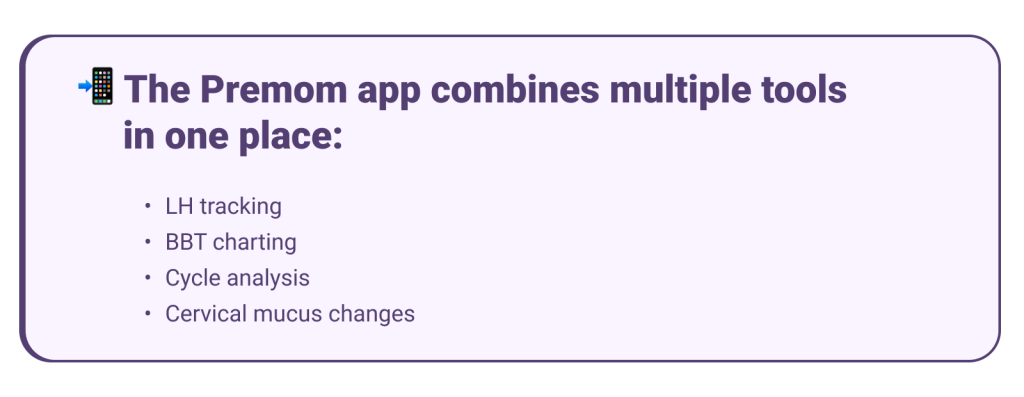
This may help you see patterns, even if your cycles are irregular due to PCOS and challenges in getting pregnant.
What Lifestyle Changes Can Support Polycystic Ovary Fertility Treatment?
Tracking your cycle tells you when ovulation may be approaching. What you eat, how you move, and how you manage stress can all play a role in how regularly that happens.
Nutrition supports hormone balance and ovulation
Food directly affects how your body regulates hormones, insulin, and energy levels. In PCOS, the body may have insulin resistance, which can affect ovulation.
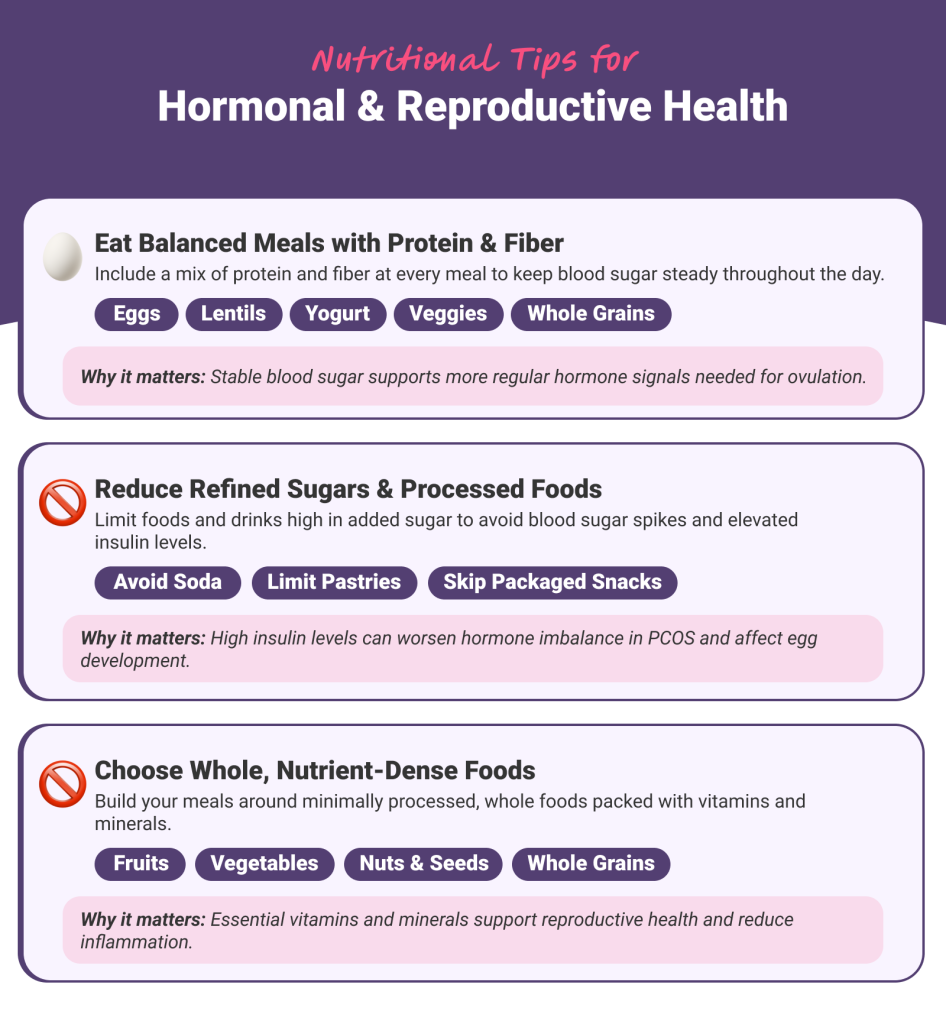
- Eat balanced meals with protein and fiber
Including protein (eggs, lentils, yogurt) and fiber (vegetables, whole grains) helps keep blood sugar stable. Stable blood sugar supports more regular hormone signals needed for ovulation. - Reduce refined sugars and processed foods
Foods high in sugar can increase insulin spikes. High insulin levels may worsen hormone imbalance in PCOS and affect egg development. - Choose whole, nutrient-dense foods
Whole foods like fruits, vegetables, nuts, seeds, and whole grains provide essential vitamins and minerals that support reproductive health and reduce inflammation.
Physical activity improves insulin sensitivity and cycle regularity
Regular movement helps your body use insulin more effectively, which is especially important in PCOS.
- Engage in moderate exercise most days
Activities like walking, yoga, or light strength training can help regulate hormones without putting stress on the body. - Support healthy weight management
Even small changes in weight, when needed, may help improve ovulation patterns in some women with PCOS. - Reduce stress through movement
Gentle exercise can also lower stress hormones, which may positively influence your cycle and overall well-being.
Mental Health and Mood Tracking
PCOS can affect more than your physical health. Hormonal fluctuations, the uncertainty of irregular cycles, and the emotional weight of trying to conceive can all take a toll. Research has linked PCOS to higher rates of anxiety and depression compared to women without the condition, which makes emotional well-being a real part of the picture, not an afterthought.
Using the Premom app, you can:
- Log your mood daily
- Notice stress patterns
- Connect emotional health with cycle changes
Understanding the connection between your emotional state and your cycle isn’t about adding more to track. It’s about having the full picture.
When Should You Consider Medical Help for PCOS
If you are unsure how to get pregnant with polycystic ovaries, a healthcare provider can guide you.
Consider asking for medical advice if:
- You have not had periods for several months
- You have been trying for 6 to 12 months
- Your cycles are irregular with unclear signs of ovulation (ie. absent LH peak or BBT rise)
What Are The Common Challenges With PCOS and How to Get Pregnant?
| Challenge | What It Means | How Tracking Helps |
|---|---|---|
| Irregular cycles | Hard to predict ovulation | Logging LH and BBT across multiple cycles helps reveal your personal pattern, even when cycle length shifts month to month. |
| Multiple LH surges | Confusing results | Combining LH with BBT and/or PdG helps because each marker reflects a different phase of ovulation. LH predicts that ovulation may happen soon, while basal body temperature and PdG typically rise afterward due to progesterone. |
| Delayed ovulation | Longer cycles | Continuing to test beyond day 14 reduces the chance of missing a late surge, which tends to occur more often in PCOS cycles. |
| Emotional stress | Anxiety and uncertainty | Mood tracking over time may help you notice whether stress patterns seem to coincide with cycle changes, giving you something to discuss with your provider. |
How to Get Pregnant With PCOS in Simple Steps
Pulling everything together, here’s what a consistent tracking approach looks like in practice. None of these steps require perfection. The goal is building enough data over time that your cycle starts to make sense.
- Monitor your LH pattern daily to understand your hormone trends across your cycle
- Use BBT to add context after ovulation may have occurred
- Log cervical mucus changes in the Premom app alongside your other tracking data
- Focus on lifestyle habits that may support more regular cycles, including nutrition, movement, and sleep
- Track your mood and stress levels to notice any patterns that seem to connect to your cycle
- Reach out to a healthcare provider if cycles remain absent, if you have been trying for 6 to 12 months, or if you experience symptoms that concern you
Your cycle does not have to feel confusing. With PCOS Pro, you can start understanding patterns more clearly and feel more supported every step of the way. Unlock deeper tracking today. PCOS Pro is a one-time, 6-month access pass that unlocks deeper cycle tracking tools, personalized insights, and supportive resources within the Premom app. It is designed especially for people with irregular or complex cycles like PCOS, who want a clearer understanding of their body.
How to Get Pregnant with PCOS – Frequently Asked Questions ( FAQs)
Yes. Many women with PCOS conceive naturally. Ovulation may not happen every cycle, but pregnancy is still possible when ovulation occurs. Tracking your cycle can help you better understand timing.
PCOS can cause higher LH levels, leading to multiple surges. Not all surges result in ovulation. Tracking patterns over time and using BBT can help you better understand what your body is doing.
It may take longer due to irregular ovulation. However, pregnancy is still possible. Understanding your cycle and tracking consistently can improve your chances over time.
Using both LH tests and BBT together provides better clarity. LH shows when your body is preparing to ovulate, and BBT helps you understand if ovulation likely occurred.
Yes. Stress can affect hormone balance and ovulation patterns. Tracking your mood can help you notice patterns and support your overall well-being.
Disclaimer
This content is for informational purposes only and is not intended as medical advice, diagnosis, or treatment. Always consult a qualified healthcare provider for personalized guidance regarding your health and fertility.
References
- World Health Organization. Polycystic ovary syndrome (PCOS). Accessed March 27, 2026. https://www.who.int/news-room/fact-sheets/detail/polycystic-ovary-syndrome
- World Health Organization. Infertility. Accessed March 27, 2026. https://www.who.int/news-room/fact-sheets/detail/infertility
- Eunice Kennedy Shriver National Institute of Child Health and Human Development. Polycystic ovary syndrome (PCOS). Accessed March 27, 2026. https://www.nichd.nih.gov/health/topics/pcos
- MedlinePlus. Polycystic ovary syndrome. Accessed March 27, 2026. https://medlineplus.gov/polycysticovarysyndrome.html