
Did you know that cervical mucus is also a great way to predict your day of ovulation? Whether you are trying to conceive or simply curious about your menstrual cycle, understanding cervical mucus and its relationship to ovulation is essential. In this blog, we will cover the basics of cervical mucus, its role in ovulation, how it changes throughout the menstrual cycle, and how to check and improve its quality.
What is cervical mucus?
Cervical mucus is a natural fluid secreted by the cervix, which is the lower part of the uterus that connects to the vagina. Cervical mucus changes in consistency and appearance throughout the menstrual cycle due to the fluctuation of hormones, such as estrogen and progesterone. It serves several functions, including:
- Providing lubrication for sexual intercourse
- Acting as a barrier to prevent bacteria from entering the uterus
- Helping nourish, protect, and transport sperm towards the egg
Cervical mucus and its relationship to ovulation
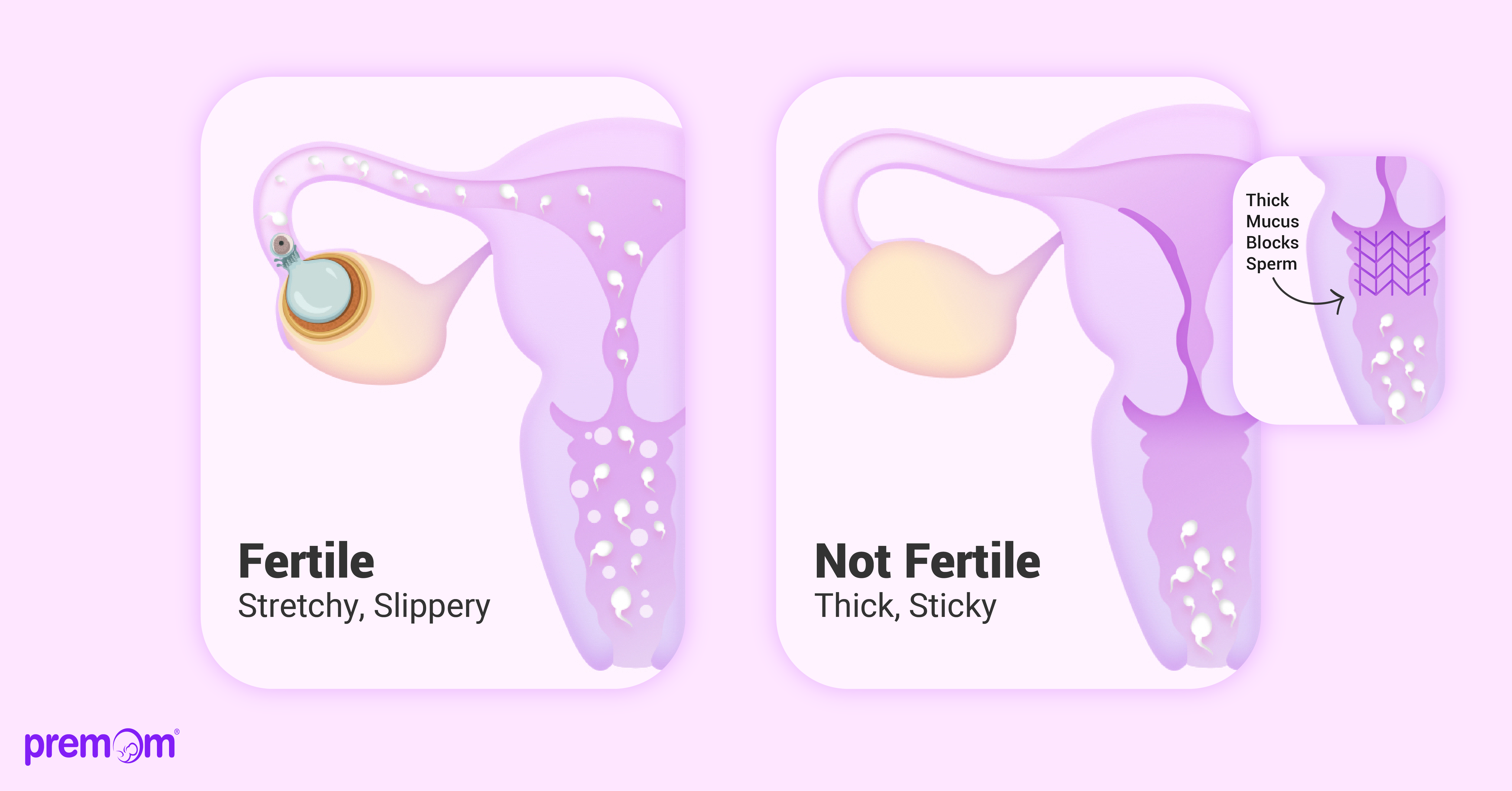
Cervical mucus plays a vital role in fertility by serving as a natural lubricant and provides the ideal environment for sperm to survive and swim towards the egg. As a woman approaches ovulation, the cervix produces more cervical mucus, which becomes thinner, clearer, and more slippery, similar to the consistency of raw egg whites.
This fertile cervical mucus provides a desirable environment for sperm to survive for up to five days. This means that if you have sex during this time, there is a higher chance of sperm fertilizing the egg and leading to pregnancy! Additionally, if there is an absence of fertile cervical mucus, this may indicate a hormonal imbalance or fertility issues that should be addressed.

Cervical mucus changes throughout the menstrual cycle
The menstrual cycle can be divided into four phases: menstrual, follicular, ovulatory, and luteal. During each phase, the quality and quantity of cervical mucus change, indicating fertile and non-fertile times. Let’s use an average 28-day cycle for example:
- Menstrual phase (Days 1-5)
- Menstrual bleeding occurs, and cervical mucus is minimal or absent. This is known as the ‘Dry Phase’.
- Menstrual bleeding occurs, and cervical mucus is minimal or absent. This is known as the ‘Dry Phase’.
- Follicular phase (Days 6-14)
- Following menstruation, estrogen levels begin to rise, causing the cervix to produce more mucus.
- Cervical mucus is cloudy, sticky, and opaque.
- The amount of mucus gradually increases, becoming more abundant and thinner as ovulation approaches.
- Fertile cervical mucus usually appears a few days before ovulation and is stretchy and clear.
- Ovulatory phase (Day 14)
- As ovulation approaches, estrogen levels peak, causing a surge in luteinizing hormone (LH), which triggers the release of an egg from the ovary.
- Cervical mucus is at its peak, abundant, clear, and stretchy.
- The mucus resembles raw egg white and is fertile, providing a perfect environment for sperm to swim through and fertilize the egg. This is known as the ‘Fertile Phase’, and it’s the ideal time for conception to take place.
- Luteal phase (Days 15-28)
- After ovulation, progesterone levels increase, causing the cervical mucus to become thick and sticky again.
- The amount of mucus decreases, and it is less ideal for traveling sperm. This is the least fertile time of the menstrual cycle

How to check your cervical mucus
Checking your cervical mucus daily is a straightforward method to help you better understand your cycle and fertility. Here’s a step-by-step guide on how to check your cervical mucus:
- Wash your hands thoroughly to avoid introducing any bacteria into the vagina.
- Find a comfortable position, either sit on the toilet or stand with one foot on the edge of the bathtub.
- Insert one or two fingers into your vagina, reaching towards the cervix, and collect a small sample of cervical mucus.
- Note the color, consistency, and texture of the mucus and record it in the Premom app.
- Repeat this process daily, ideally at the same time each day, and establish a pattern to better understand your cycle and fertility.
What factors affect cervical mucus quality and quantity?
Several factors can affect the quality and quantity of cervical mucus, including:
- Hormonal imbalances: Estrogen and progesterone play crucial roles in regulating cervical mucus production. Any hormonal imbalances, such as those caused by polycystic ovary syndrome (PCOS) or thyroid disorders, can affect cervical mucus.
- Age: As a women ages, their bodies naturally produce less estrogen. This can result in drier, thicker mucus.
- Medications: Certain medications, such as antihistamines and decongestants.
- Smoking and alcohol consumption: This can impact your hormone balance, which can in turn impact cervical mucus production.
- Stress: Chronic stress can disrupt the delicate balance of hormones.
- Dehydration: When the body is dehydrated, cervical mucus becomes thicker and sticker, making it more difficult for sperm to travel through the cervix and reach the egg.
- Poor hygiene: Improper hygiene practices could introduce bacteria into the vagina leading to infections.
How to improve your cervical mucus
There are several steps women can take to improve their cervical mucus production:
- Stay hydrated: Drinking plenty of water can help thin the cervical mucus and make it easier for sperm to travel through the cervix.
- Eat a healthy diet: Consume a diet rich in fruits, vegetables, and healthy fats.
- Limit caffeine and alcohol intake: Excessive caffeine and alcohol intake can dehydrate the body, leading to thicker cervical mucus.
- Practice good hygiene: Poor hygiene habits can lead to infection or inflammation of the cervix.
- Reduce stress: Stress can interfere with hormone levels. Try some stress-reducing techniques such as yoga or meditation.
Tracking of your cervical mucus throughout your cycle can help you identify your most fertile days and increase your chances of conception. The Premom app makes it so easy to track and is here to support you no matter where you may be in your fertility journey!
References
Boivin, J., Schmidt, L., & Macklon, N. (2017). Using fertility indicators to identify delays in conception: a global perspective. Archives of gynecology and obstetrics, 296(6), 1121–1132. https://doi.org/10.1007/s00404-017-4532-2
Pacey, A. A., & Barratt, C. L. (2018). Cervical mucus and reproduction. Human fertility (Cambridge, England), 21(3), 183–189. https://doi.org/10.1080/14647273.2017.1388024