

Follicle Stimulating Hormone (FSH) plays a critical role in reproductive health and fertility. Understanding FSH and its interactions with other hormones is essential for anyone trying to conceive or support reproductive health.
What is Follicle Stimulating Hormone (FSH)?
Follicle Stimulating Hormone (FSH) is a hormone produced by the pituitary gland, located at the base of the brain, below the hypothalamus. It plays a pivotal role in the reproductive systems of both males and females.
- In women, FSH is responsible for stimulating the growth of ovarian follicles, which are small sacs in the ovaries that contain immature eggs. As these follicles grow, they produce estrogen, a hormone that prepares the body for ovulation and pregnancy.
- In men, FSH helps to stimulate the production of sperm in the testes.
FSH and Its Relationship with LH, Estrogen, and Progesterone
FSH doesn’t work in isolation. It functions in a finely tuned balance with other hormones like LH (Luteinizing Hormone), estrogen, and progesterone to regulate the menstrual cycle and maintain reproductive health.
- FSH and LH are both produced by the pituitary gland and work closely together. While FSH is responsible for the growth of ovarian follicles, LH plays a crucial role in triggering ovulation.
- Estrogen: As the follicles mature under the influence of FSH, they produce increasing amounts of estrogen. This rise in estrogen signals the pituitary gland to reduce FSH production and increase LH production, leading to the LH surge that triggers ovulation.
- Progesterone: After ovulation, the ruptured follicle transforms into the corpus luteum, which produces progesterone. Progesterone prepares the uterine lining for the possible implantation of a fertilized egg and maintains early pregnancy. If fertilization does not occur, progesterone levels fall, leading to menstruation.

FSH, LH, estrogen, and progesterone are all interrelated in the complex hormonal orchestra that governs the menstrual cycle and fertility. A delicate balance between these hormones is crucial for optimal reproductive function.
What Are Normal FSH Levels for Optimal Fertility?
Normal FSH levels vary depending on the stage of the menstrual cycle and a person’s current age. However, for optimal fertility, FSH levels should generally fall within a specific range. Below is a chart that outlines the typical FSH levels at different stages for a female.

FSH levels are usually higher in older women due to a decrease in ovarian reserve. High FSH levels during the follicular phase may indicate diminished ovarian reserve or menopause, whereas low levels might suggest an issue with the pituitary gland.
What Causes High FSH Levels?
High FSH levels can be indicative of several conditions, most notably a diminished ovarian reserve or menopause. When the ovaries produce fewer follicles, the body increases FSH production in an attempt to stimulate the ovaries to produce more eggs. Conditions that can lead to high FSH levels include:
- Menopause: As women approach menopause, the ovaries become less responsive to FSH, leading to higher circulating levels of the hormone.
- Primary Ovarian Insufficiency (POI): Also known as premature ovarian failure, POI is characterized by the early loss of ovarian function before the age of 40. This condition leads to elevated FSH levels due to reduced ovarian activity.
- Polycystic Ovary Syndrome (PCOS): Although PCOS is often associated with low FSH levels, some women with PCOS may exhibit elevated FSH levels depending on the stage of the menstrual cycle and individual hormonal imbalances.
- Turner Syndrome: A chromosomal disorder in females where one of the X chromosomes is missing or partially missing, often leading to elevated FSH levels due to poor ovarian function.
Low FSH Levels: What Do They Indicate?
Low FSH levels can indicate a problem with the pituitary gland or hypothalamus, both of which are responsible for hormone regulation. Conditions that may cause low FSH levels include:
- Hypothalamic Amenorrhea: A condition often caused by excessive exercise, low body weight, or stress, leading to reduced production of hormones necessary for ovulation, including FSH.
- Pituitary Disorders: Tumors or other disorders affecting the pituitary gland can lead to insufficient production of FSH, resulting in low levels of the hormone.
How to Test Your FSH Levels: At Home vs. Professional Testing
Testing your FSH levels can provide valuable insights into your fertility status. There are two primary methods for testing FSH: at home and through professional clinical testing.
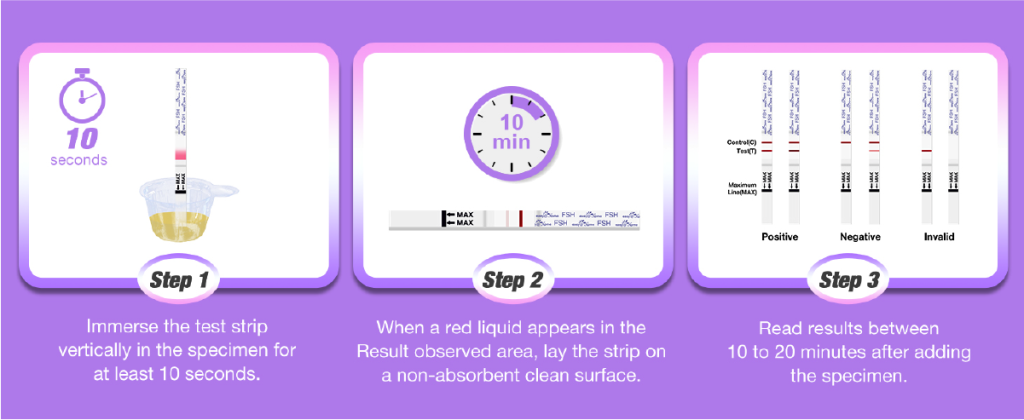
- At-Home Testing: At-home FSH tests, such as Easy@Home’s FSH test, are convenient and relatively inexpensive. These tests involve using a urine sample to measure FSH levels, similar to how an ovulation or pregnancy test works. At-home tests can provide a preliminary understanding of your FSH levels, especially if you’re trying to conceive or monitor your reproductive health.
- Professional Testing: Clinical FSH testing involves a blood test performed by a healthcare provider. This method is more accurate than at-home testing and provides a comprehensive view of your hormone levels. You can ask your healthcare provider for this blood test if you have irregular menstrual cycles, are over 35 and trying to conceive, have symptoms of hormonal imbalances, or are just interested in having your hormones tested.
Comparing At-Home FSH vs Professional Testing
- Cost: At-home urinary tests are generally more affordable and user-friendly, costing anywhere from $10 to $50. For example, the Easy@Home FSH at-home tests are $20, while clinical tests can range from $50 to $200 or more and often include a blood draw, depending on the healthcare provider and insurance coverage.
- Accuracy: Clinical tests may be more precise, as they measure FSH directly from the bloodstream, whereas at-home tests may have variability based on urine concentration but are a great method for screening for abnormalities.
- Convenience: At-home tests offer the convenience of testing in privacy at any time, while clinical tests require a visit to a healthcare provider and a lab.
When to Choose At-Home Tests vs Professional Testing
- At-Home Testing: Ideal for preliminary checks, routine monitoring, or when convenience and cost are primary concerns.
- Professional Testing: Recommended for more accurate assessments, especially if there are signs of hormonal imbalances or if you’re undergoing fertility treatments.
Can You Lower FSH Levels Naturally?
While elevated FSH levels can be a sign of reduced ovarian reserve, there are a few natural approaches that may help to manage and potentially lower FSH levels:
- Lifestyle Changes: Maintaining a healthy weight, reducing stress, and avoiding smoking can positively influence hormone levels.
- Diet: A balanced diet rich in antioxidants, healthy fats, and whole grains can support hormonal balance. Some studies suggest that supplements like CoQ10 and DHEA may improve ovarian function, though you should consult with a healthcare provider before starting any supplement regimen.
- Acupuncture: Some research indicates that acupuncture may help regulate hormonal imbalances and improve fertility, although more studies are needed to confirm its effectiveness in lowering FSH levels.
It’s important to note that while these approaches may help, they cannot reverse conditions like menopause or significantly improve ovarian reserve in older women. Always consult a healthcare provider before making significant changes to your health regimen.
When Should You Consult a Doctor About Your FSH Levels?
You should consult a doctor about your FSH levels if:
- You are over 35 and trying to conceive without success for six months or more.
- You have irregular or absent menstrual cycles.
- You experience symptoms of hormonal imbalances, such as unexplained weight gain, fatigue, or changes in mood.
- Your at-home FSH test results indicate high or low levels outside the normal range.
A healthcare provider can offer a comprehensive evaluation of your reproductive health, including additional hormone testing, and provide guidance on potential treatments or interventions.
FAQs About Follicle Stimulating Hormone (FSH) and Fertility
Q: What does a high FSH level mean for fertility?
A: High FSH levels can indicate reduced ovarian reserve or diminished fertility, especially in women over 35. There could be other potential factors, therefore it is recommended to speak to your healthcare provider and have further testing done to evaluate the root cause.
Q: Can FSH levels fluctuate?
A: Yes, FSH levels naturally fluctuate throughout the menstrual cycle. However, persistently high or low levels may indicate an underlying issue that requires further evaluation.
Q: Is there a way to predict menopause using FSH levels?
A: Consistently elevated FSH levels, particularly in the postmenopausal range, can be an indicator that a woman is approaching or has entered menopause. However, other factors should also be considered, and a healthcare provider can offer a more comprehensive assessment.
References
- American Society for Reproductive Medicine. (n.d.). Hormone reference. Retrieved August 28, 2024, from https://www.asrm.org
- Mayo Clinic. (n.d.). FSH test. Retrieved August 28, 2024, from https://www.mayoclinic.org/tests-procedures/fsh-test/about/pac-20384900
- Professional, C. C. medical. (2024, May 1). Follicle-stimulating hormone (FSH): What it is & function. Cleveland Clinic. https://my.clevelandclinic.org/health/articles/24638-follicle-stimulating-hormone-fsh


