

If you’ve been tracking your ovulation and wondering how long the egg lives after ovulation, you’re definitely not alone. For anyone trying to conceive (TTC), timing can feel like everything and understanding this short but powerful window is key to improving your chances of pregnancy.
Here’s what you should know: once released, an egg lives for only about 12 to 24 hours. However, sperm can survive inside the female reproductive tract for up to five days. This means pregnancy can occur from intercourse that happens in the five days leading up to ovulation or on the day of ovulation itself—but not after the egg has already disintegrated. So, your fertile window includes the five days before ovulation plus ovulation day.
That means conception isn’t about a single “perfect” moment, it’s about understanding how your body works and learning to time things right, in advance. The more you know, the more empowered (and less stressed) you’ll feel on your TTC journey.
Let’s walk through exactly what happens when you ovulate, how long your egg really lives, and how you can track ovulation with the help of the Premom app to make every fertile day count.
Key Takeaways About Egg Lifespan and Fertility
- Your egg lives only 12-24 hours after ovulation, but sperm can survive up to 5 days in fertile mucus
- Your fertile window is about 6 days: the 5 days before ovulation plus ovulation day itself
- The best time for sex is in the 2-3 days leading up to ovulation, not after
- Track LH surges, BBT, and cervical mucus together for more accurate ovulation detection
- Combining multiple tracking methods in one smart ovulation app can help you better identify your personal fertility patterns
Understanding Ovulation and Its Timing
Ovulation is the main event in your menstrual cycle, when a mature egg is released from your ovary and becomes available for fertilization. It’s the center of your fertile window and determines when you can get pregnant.
What happens during ovulation
Your hormones work like a perfectly timed orchestra:
- FSH (Follicle-Stimulating Hormone) encourages your follicles to grow and mature.
- Estrogen rises and prepares your uterine lining for implantation.
- LH (Luteinizing Hormone) triggers the final release of that mature egg.
- After ovulation, progesterone (PdG) increases and maintains the uterine lining in case fertilization happens.
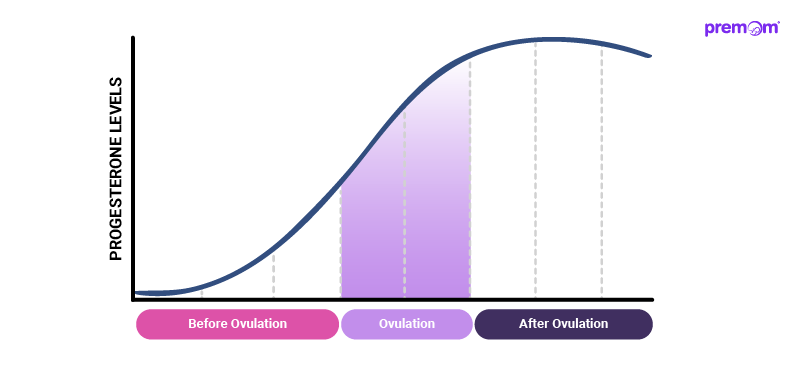
Typically, only one egg is released per cycle. Once it’s released, it begins traveling down the fallopian tube toward the uterus, where fertilization may occur.
For many women, ovulation happens about 14 days before their next period. But your body isn’t a calendar, your ovulation day might vary depending on stress, illness, or natural hormonal differences.
Common signs of ovulation
You might notice:
- Clear, stretchy cervical mucus (similar to raw egg whites)
- A small rise in basal body temperature (BBT) after ovulation
- Slight cramping or “twinges” near the lower abdomen (mittelschmerz)
- A boost in libido or energy
Logging these patterns in your Premom app helps you identify when ovulation is near and when to time sex in hopes of conceiving.
How Long Does the Egg Live After Ovulation?
Here’s the short answer: your egg remains viable for about 12 to 24 hours after ovulation.
That’s right, the window for fertilization is less than one day. Once released, your egg travels down the fallopian tube, waiting to meet sperm. If it isn’t fertilized during that time, it naturally begins to disintegrate and your body reabsorbs it.
This quick process explains why timing sex around ovulation is so important. However, you don’t need to catch it “in the act.” Because sperm can survive up to five days, having sex in the days leading up to ovulation dramatically increases your chances of success.
The goal is to ensure sperm are already waiting when the egg is released, not racing the clock after.
Why Timing Matters for Conception
When it comes to conception, timing is everything. The egg’s short life makes the days before ovulation more critical than the day after.
Here’s how it breaks down:
- Sperm lifespan: Up to 5 days in fertile cervical mucus
- Egg lifespan: About 12–24 hours after ovulation
- Fertile window: 6 days total (5 before ovulation + ovulation day)
So, if you’re trying to conceive, the best time to have sex are the few days leading up to ovulation and on ovulation day itself.
With Premom, your app does the heavy lifting, you do the LH tracking while the app analyzes your data. That means no more guessing or stressing over your timing.
Can You Get Pregnant Before Ovulation?
It’s easy to assume pregnancy can only happen on ovulation day, but that’s one of the most common misconceptions.
Since your fertile window lasts about six days each cycle, you could get pregnant in the five days leading up to ovulation. This is because sperm can survive and remain capable of fertilizing an egg for several days inside your body.
How sperm survive for days
Your cervix produces special fertile mucus just before ovulation. This mucus protects sperm and helps them travel toward your fallopian tubes. Some sperm even “rest” in tiny pockets (crypts) in your reproductive tract until ovulation occurs.
So even if your egg only lives for a single day, your body has an amazing way of extending your fertile window.
Best days to try for pregnancy
Your highest chances of conception occur when you have sex every day or every other day during your fertile window, especially the two days before ovulation.
What Happens If the Egg Gets Fertilized?
If sperm successfully meets your egg during that 24-hour window, fertilization occurs inside the fallopian tube. The fertilized egg, now called a zygote, begins dividing into multiple cells as it travels toward your uterus.
About 6 to 10 days after ovulation, it starts to implant into your uterine lining, this is when your body starts producing hCG (the pregnancy hormone), which can be detected on a pregnancy test within days.
You can track if ovulation likely occurred and luteal health with PdG (progesterone metabolite) testing, available in Easy@Home + Premom’s combo kits. PdG testing helps track if your body is supported ovulation and is providing an optimal environment for implantation.
Common Myths About Egg Lifespan and Fertility
Let’s clear up some common TTC myths that often cause unnecessary worry:
Myth 1: You can only get pregnant on ovulation day.
False! Because sperm live up to 5 days, your chances are actually highest when you have sex before ovulation day.
Myth 2: Late ovulation means infertility.
Not necessarily. Ovulating later in your cycle (like day 21 instead of day 14) can still lead to pregnancy, your luteal phase just shifts later too.
Myth 3: Stress stops ovulation entirely.
Severe or chronic stress can delay ovulation, but occasional stress is unlikely to prevent it completely.
Myth 4: All cycles are 28 days long.
Only a small percentage of women have textbook 28-day cycles. Anything from 21 to 35 days is considered within normal range.
By tracking your personal cycle trends with Premom, you’ll understand what’s normal for you — and that’s what really matters.
Ways To Help Track Ovulation Accurately
Because your egg lives such a short time, tracking ovulation precisely helps you make the most of your fertile days.
1. Ovulation Predictor Kits (OPKs)
OPKs detect your LH surge that happens about 24 hours before ovulation. Easy@Home test strips, paired with the Premom app, make it easy — just scan your strip, and the app automatically logs and interprets your results using an advanced algorithm.
2. Basal Body Temperature (BBT)
Your BBT rises slightly (about 0.5–1.0°F) after ovulation. Using Premom’s Smart Basal Thermometer, your readings sync directly with the app, helping you visualize when ovulation likely occurred.
3. Cervical Mucus Tracking
Cervical mucus changes throughout your cycle, becoming slippery and stretchy around ovulation. Logging these observations in Premom alongside your LH and BBT readings paints the full picture.
4. PdG Testing
PdG (progesterone metabolite) shows up in your urine after ovulation when your body produces progesterone. Testing PdG a few days after your LH surge helps you understand if ovulation likely occurred. Together with LH tests, PdG testing ensures you’re not only catching ovulation but also seeing if your body’s hormones follow through.
Simply speaking:
- LH = “Ovulation is about to happen”
- PdG = “Ovulation likely happened”
When you combine all four methods within the Premom period and ovulation tracker app, you turn scattered fertility data into a complete, easy-to-read pattern.
Lifestyle Tips to Support Fertility
While understanding ovulation timing is essential, lifestyle factors play a big role too.
- Get enough sleep: Aim for 7–9 hours to regulate hormone balance.
- Eat fertility-friendly foods: Leafy greens, omega-3-rich salmon, nuts, and whole grains all support reproductive health.
- Reduce caffeine and alcohol: Keep caffeine below 200mg per day and drink alcohol in moderation.
- Manage stress: Try yoga, meditation, or gentle walks — even small breaks make a difference.
- Use non-toxic products: Switch to paraben-free skincare and cleaning products to minimize hormone disruption.
These simple steps can help support ovulation health and egg quality, especially when combined with consistent tracking.
How Premom Helps You Every Step of the Way
Your fertility journey doesn’t have to feel like guesswork. Premom gives you clarity and confidence by connecting all your fertility signs in one place.
With the app, you can:
- Predict your fertile window based on your personal hormone patterns.
- Log your LH, PdG, and BBT results effortlessly using Premom & Easy@Home products.
- Visualize your hormone curve with an easy-to-read fertility chart.
- Join a supportive community of women on the same TTC path.
- Share your fertility tracking with your partner through PreDad™, which provides cycle date visibility and helpful reminders so conception timing becomes a collaborative effort.
You can even schedule virtual consultations with fertility experts directly in the app to review your patterns or ask cycle-related questions.
Shop the Easy@Home LH + PdG combo kit to start testing and tracking seamlessly through the Premom app.
What This Means for You
Your egg may only live 12-24 hours after ovulation, but your fertile window spans about six days each cycle. The key to conception success is understanding your personal ovulation patterns and timing sex in the days leading up to egg release.
By tracking LH surges, BBT, and PdG with Easy@Home test strips and the Premom app, you transform scattered data into clear, actionable patterns. No guessing, no stress—just confident, informed decisions every cycle.
Download the Premom app today and shop the Easy@Home LH + PdG combo kit to start tracking smarter and moving closer to your fertility goals.
Frequently Asked Questions About Egg Lifespan and Ovulation
Your egg lives for about 12 to 24 hours after ovulation. This is why tracking your LH surge with Premom helps you time sex in the days before ovulation—when sperm can be waiting for the egg, rather than trying to catch the egg in that short 24-hour window.
In rare cases, the egg may remain viable slightly longer, but most research confirms up to24 hours is standard. This is why your fertile window focuses on the days before ovulation rather than after—sperm survival (up to 5 days) matters more than egg lifespan when timing conception.
The egg’s 12-24 hour lifespan remains consistent regardless of age. What changes is egg quality—older eggs may have chromosomal abnormalities that make fertilization or implantation less likely. This makes accurate ovulation tracking even more important after 35, so you can maximize your chances during each cycle’s fertile window.
Ovulation happens about 24 hours after your LH peak, which is the highest point of the LH Surge that you can detect using Easy@Home LH tests with the Premom app. Your BBT will rise about 0.5-1°F the day after ovulation, helping signal that ovulation was likely successful. PdG testing 5-10 days after suspected ovulation provides additional confirmation. Tracking all three in Premom will provide you with a better picture of your most fertile days and help you time sex for conception.
References
Ecochard R, Leiva R, Bouchard T, Boehringer H, Direito A, Mariani A, Fehring R. Use of urinary pregnanediol 3-glucuronide to confirm ovulation. Steroids. 2013 Oct;78(10):1035-40. doi: 10.1016/j.steroids.2013.06.006. Epub 2013 Jul 4. PMID: 23831784.
Wilcox, A. J., Baird, D. D., & Weinberg, C. R. (1999). Time of implantation of the conceptus and loss of pregnancy. New England Journal of Medicine, 340(23), 1796–1799. https://doi.org/10.1056/NEJM199906103402304
Mayo Clinic Staff. (2024, July 09). Ovulation signs: When is conception most likely? Mayo Clinic. https://www.mayoclinic.org/healthy-lifestyle/getting-pregnant/expert-answers/ovulation-signs/faq-20058000
Wilcox AJ, Dunson D, Baird DD. The timing of the “fertile window” in the menstrual cycle: day specific estimates from a prospective study. BMJ. 2000 Nov 18;321(7271):1259-62. doi: 10.1136/bmj.321.7271.1259. PMID: 11082086; PMCID: PMC27529.


