
What You’ll Learn:
- PCOS has many different causes; you’ll need to get to the root of the issue.
- Some women with PCOS may have higher levels of LH or multiple LH peaks, making it crucial to track ovulation consistently
- Women with PCOS tend to need to use ovulation tests for more days than regular cycling women.
- Combining ovulation testing with basal body temperature tracking to identify if your LH peak resulted in ovulation.
- 5 tips for trying to conceive with PCOS
Nailing down ovulation day with PCOS (polycystic ovarian syndrome) can sometimes be difficult due to longer, irregular menstrual cycles – but it is absolutely possible!
Understanding hormones with PCOS
PCOS is driven by a hormonal imbalance. Let’s take a look at the hormones involved in PCOS:
- Luteinizing hormone (LH)
- Follicle-stimulating hormone (FSH)
- Testosterone
- Dehydroepiandrosterone sulfate (DHEA-S)
- Estrogen
- Progesterone
LH and FSH are the hormones responsible for the maturation of the follicles and triggering ovulation. Women who do not have PCOS typically have equivalent levels of LH and FSH at the beginning of their cycles; however, a woman with PCOS usually has higher baseline levels of LH equating to 3 times higher than their FSH level. This imbalance is enough to disrupt regular ovulation.
All women have some male hormones, also referred to as androgens, present in their bodies. With PCOS, the male-dominant hormones testosterone and DHEA-S are generally higher than in women who do not have PCOS. Estrogen and progesterone are the female-dominant hormones that promote a healthy menstrual cycle and regular ovulation. Many women with PCOS do have a normal level of estrogen, but due to increased androgens, the imbalance causes an alteration in regular menstrual cycles and ovulation. The absence or rarity of ovulation may also leave these women with lower progesterone levels.
In many cases of PCOS, insulin resistance can also disrupt hormones, meaning the body cannot efficiently regulate blood sugar levels. High levels of insulin can contribute to higher levels of androgens. Consistent blood sugar elevation can alter reproductive hormonal cycling, which can also contribute to irregular ovulation.
Finding ovulation day with PCOS
Though finding your ovulation may prove more difficult, it can be achieved by doing the following with consistency:
- Utilize ovulation predictor kits (OPKs)
- Test LH daily after your period ends
- Observe fertile signs such as changes in cervical mucus and cervical position
- Identify if ovulation was likely successful with a basal body temperature (BBT) shift
Tracking ovulation through the means of OPKs and cervical mucus is helpful for longer, irregular cycles. Ovulation tests detect LH (luteinizing hormone) levels in the urine. LH surges right before ovulation, so by testing daily, you will be able to pinpoint when ovulation will most likely occur.
Due to higher baseline levels of LH, fluctuations encountered while testing are not uncommon, so don’t lose faith! Near ovulation, cervical mucus tends to become thinner, clear, and stretchy (like raw egg whites), making it the perfect consistency for traveling sperm. The cervix will also become soft, high, and open, which is another indicator of fertility to observe while trying to conceive with PCOS.
Charting your BBT daily, in addition to LH testing, is so important for women with PCOS because it can help identify if ovulation was likely successful. To efficiently track BBT, you’ll need a basal body temperature thermometer.
After sleeping for at least 3 consecutive hours, check your temperature immediately upon waking before getting out of bed. Try to check at the same time each day to ensure accuracy and look for the spike in temperature that should occur after ovulation.
Getting pregnant with Premom when you have PCOS
Take some of the guesswork out of charting by logging your ovulation symptoms, LH tests, and BBT into your Premom app! It uses all of the information about your cycle to pinpoint your most fertile window in hopes of helping you achieve pregnancy faster.
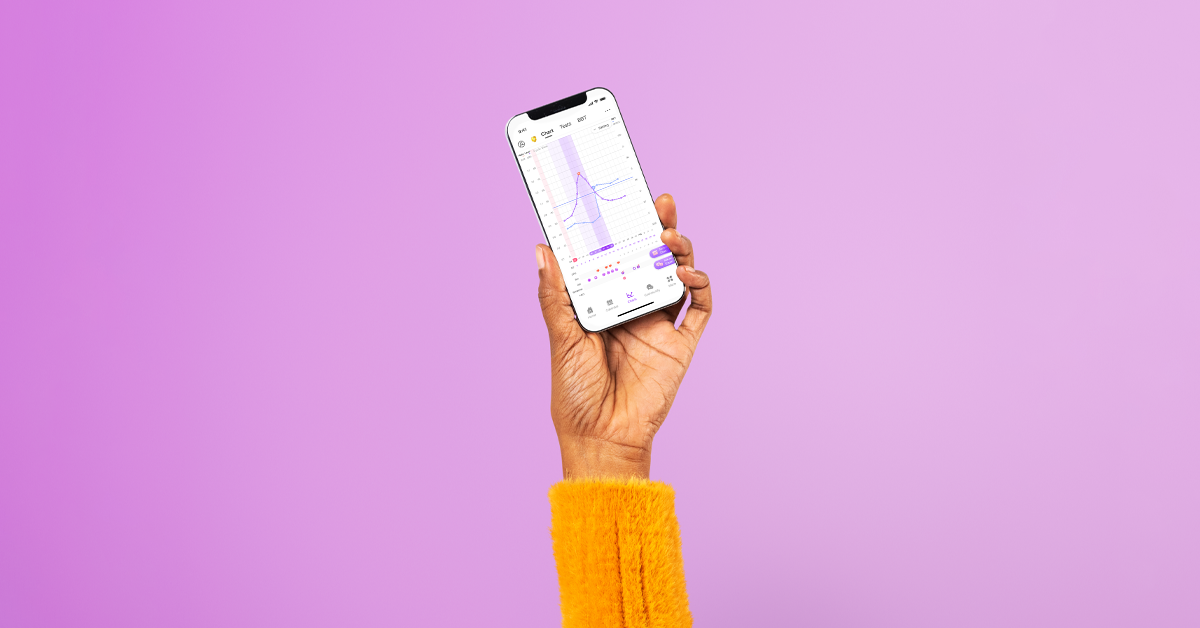
Below is an in-app example of what cycle tracking looks like with PCOS:

Notice the LH fluctuations before reaching peak level on CD (cycle day) 25. Ovulation follows on CD 26 and is shown by increased basal temperature afterward.
In addition to this chart overview, Premom also provides a physician-designed cycle analysis report and cycle comparison report that can identify your unique cycle patterns for better ovulation prediction in future cycles.

Here are 5 tips to help get pregnant with PCOS
Tip 1: Lifestyle modifications
Optimize your health and well-being! Multiple studies have shown us that the gold standard for helping the cycle become more regular is nutrition and lifestyle-based. Our goal at Premom is to help solve the root problem to help you conceive. The recommendation is a two-part approach.
Nutrient-Dense Diet
What exactly does this mean? It means you want to focus on consuming healthy, unprocessed foods like eggs (with the yolk!), vegetables (steamed, sautéed, raw, etc), fruit (2-3 servings a day), quality proteins like chicken, beef, bison and so on. You also want to pack the diet with healthy fats from foods such as avocados, nuts, and seeds and a serving of quality dairy. You want to avoid processed foods that contain canola oil or vegetable oil. These are inflammatory in your body and wreak havoc on your overall health. This means limiting foods like pasta, chips, cookies, crackers, protein bars, white bread, etc.
Exercise
Start slowly by trying to be active at least 4-5 days a week for at least 20 minutes a day. This can be a walk around your neighborhood, playing tag with a little one, riding an exercise bike or taking a class at the gym. As your body becomes more accustomed to working out, you can gently increase the intensity. There is no need to overdo it — just focus on a moderate intensity 4 days a week. This will help to regulate blood sugars and help stabilize hormones.
Tip 2: Track your ovulation
One of the hardest parts of PCOS is that cycles may not be predictable. It may be difficult to know exactly when your fertile window is, which makes timing intercourse challenging. If each month your cycle is different, you will want to use ovulation strips to help find your fertile window. Learn more about the difference between quantitative strips and regular ovulation strips here.
Tip 3: Medication and supplements for PCOS
Medications
PCOS has a metabolic component that can impact the way your body uses sugar. This could cause problems with insulin resistance and increase your risk of diabetes and heart disease. Having a chat with your OB/GYN or Primary Care Provider about using a medication called Metformin can be a good idea. This medication can help with insulin sensitivity.
Supplements
You can also discuss a few supplements with your provider, including Ovasitol, vitamin D3, folic acid or folate, and choline, which can all be great for fertility. You should always talk to your doctor about adding supplements and making sure they are right for you.
Tip 4: Identify ovulation with basal body temperature
Having PCOS can make ovulation more irregular and challenging. Using a second form of testing after the preferred ovulation strips can be helpful. We suggest using BBT (basal body temperature) testing to look for a slight rise in body temperature that occurs shortly after ovulation (usually within a couple of days). Premom offers a BBT thermometer that wirelessly syncs all of your information right to the app.
Tip 5: Seek help
If you are experiencing symptoms of PCOS, it’s always a good idea to reach out to your doctor. Due to its prevalence, – 10% of women carry this diagnosis equating to over 5 million women in the United States – it has been widely researched. Providers have a better understanding of PCOS now than in past years which aids in optimizing fertility!
Having a medical evaluation can not only be beneficial physically, but emotionally as well. Living with PCOS can feel isolating at times, but know you are supported and pregnancy is absolutely achievable! Keep in mind that you may need to test LH for longer periods of time due to irregular cycles, but in addition to observing the other fertility signs mentioned above, you will be able to find your ovulation day more easily.
Our medical team is also available for virtual consultations through the Premom app – please feel free to reach out to us if you are having trouble understanding how to track your cycles efficiently!
References