| "Helping women track their ovulation in a smarter way" |

A lot of women may feel fatigued, sick, sleepy, moody, or experience sore breasts early in pregnancy A lot of women may feel fatigued, sick, sleepy, moody, or experience sore breasts early in pregnancy before they experience the most obvious sign of pregnancy: a missed period. Tracking DPO symptoms by day can help women identify these early signs and symptoms of pregnancy.
Unfortunately, many of these signs and symptoms aren’t unique to pregnancy. Some early pregnancy symptoms look like premenstrual symptoms, making it difficult to differentiate between the two. This is why, when trying to get pregnant, taking a pregnancy test is helpful. A positive result on a pregnancy test is the one reliable way to confirm a pregnancy as early as possible.
But you might be wondering:
- How soon can pregnancy be detected?
- What symptoms of pregnancy should I watch for?
- How early can I take a pregnancy test?
- Do I really have to wait two weeks to take a pregnancy test?
This is an exciting time in your life and we know you have questions about how to tell if you’re pregnant. We also know you’re likely impatient and want to get pregnant fast. This article walks you through the signs and symptoms of pregnancy, what’s happening with your body during that dreaded two-week wait, and when you should take a pregnancy test.
What Does DPO Mean?
The two week wait (TWW) is the period of time between ovulation and when you take a pregnancy test. This is an exciting and precious time when the fertilized egg that becomes a baby starts to develop. During the two-week wait, many women experience a variety of symptoms that indicate early pregnancy.
DPO stands for “days past ovulation”—it’s how you track where you are in the two-week wait based on the day that you likely ovulated. For example, if you ovulated on Monday, Tuesday is 1 DPO, Wednesday is 2 DPO, and so on.
Understanding your DPO helps you:
- Know when implantation typically occurs (6-12 DPO)
- Identify when symptoms might start appearing (usually 7+ DPO)
- Determine the earliest you can take a pregnancy test (12-14 DPO for accuracy)
- Interpret symptoms in the correct biological context
To calculate your DPO, you need to know when ovulation occurred. The most reliable methods include:
- LH peak followed by a temperature rise (if tracking BBT)
- LH peak followed by a positive PdG test (indicating progesterone rise after ovulation)
- Using apps like Premom that help you track these signals and identify when ovulation likely occurred
If you have irregular cycles, tracking ovulation with LH tests, BBT, and PdG can help with more accurate DPO calculation.
What Happens After Ovulation?
After the egg is released during ovulation, it survives for approximately 12-24 hours. If sperm is present in the fallopian tube during this window, fertilization may occur, creating a zygote that will eventually become a baby.
The fertilized egg (now called a blastocyst) travels down the fallopian tube toward the uterus over 5-7 days. During this journey, it divides and develops, preparing to implant in the uterine lining around 6-12 days post-ovulation (most commonly 8-10 DPO).
Meanwhile, the corpus luteum, what remains of the follicle that released the egg, produces progesterone. This hormone:
- Thickens the uterine lining to support implantation
- Causes your basal body temperature to stay elevated
- Creates many of the “symptoms” you feel during the TWW (whether pregnant or not)
After successful implantation, cells that will become the placenta start producing hCG (human chorionic gonadotropin), the pregnancy hormone. hCG levels double approximately every 48-72 hours in early pregnancy, eventually reaching levels detectable by home pregnancy tests (typically 12-14 DPO).
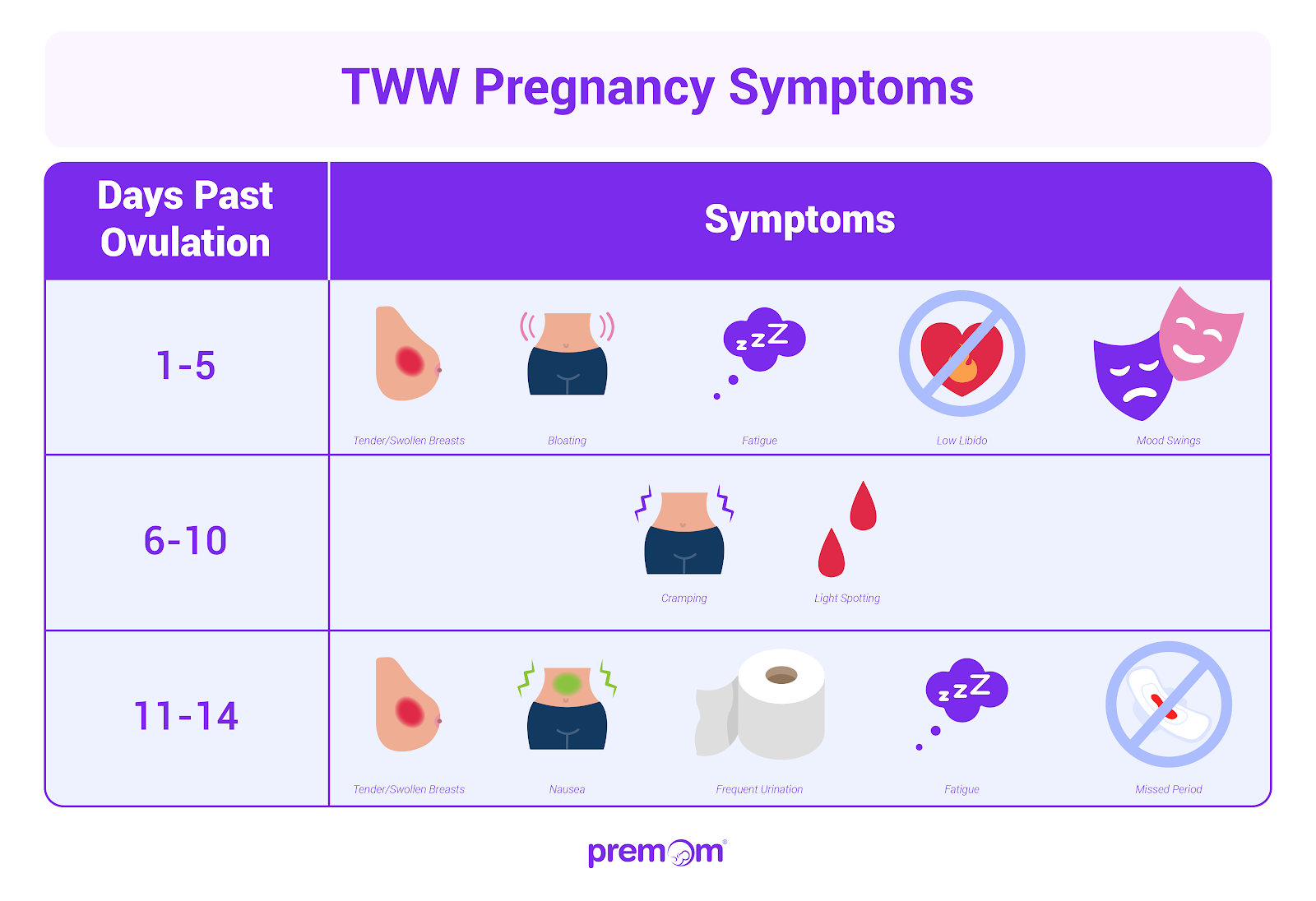
1-3 DPO Symptoms: Progesterone Production Begins
During this time, the fertilized egg starts its journey down the fallopian tubes and to the uterus where it finds a cozy spot to implant for the next nine months. Since implantation does not happen until about 6-10 days post ovulation, in these early days after ovulation any symptoms you have are likely related to the release of progesterone and not necessarily related to pregnancy just yet.
At 1-3 DPO, fertilization may have just occurred (or may still be happening), but the fertilized egg hasn’t reached your uterus yet. Any symptoms you experience are caused by rising progesterone from the corpus luteum, not pregnancy. You cannot distinguish pregnancy from a regular cycle at this stage.
Common signs of high progesterone:
- Breast swelling or tenderness
- Bloating
- Fatigue
- Lower libido
- Mood swings
These symptoms are identical whether you’re pregnant or not, they’re simply progesterone’s effects on your body.
4-5 DPO Symptoms: The Fertilized Egg Travels
At 4-5 DPO, if fertilization occurred, the blastocyst is traveling through the fallopian tube toward your uterus, dividing as it goes. Implantation has not yet occurred, so your body isn’t producing pregnancy hormones yet.
Common 4-5 DPO symptoms:
- Continued breast tenderness or fullness
- Mild cramping (can feel like pulling or stretching—this is normal progesterone effect)
- Fatigue
- Bloating
- Mood swings
- Mild backache
Why you won’t feel “pregnant” yet: Since implantation hasn’t occurred, there’s no hCG production. All symptoms you feel are still progesterone-related and occur in every cycle, whether you conceived or not. It’s impossible to tell if you’re pregnant based on symptoms alone at this stage.
6 DPO Symptoms: Approaching Implantation Window
By this time, implantation should be happening! Not every woman experiences signs of implantation, and some have no idea that it is happening.
At 6 DPO, implantation may begin for some women (though 8-10 DPO is more typical). The blastocyst is reaching your uterus and preparing to burrow into the uterine lining. However, most women won’t feel anything distinctive yet.
Common 6 DPO symptoms:
- Mild cramping (implantation may be starting for early implanters, but this is rare)
- Light pink spotting (very rare at 6 DPO—most implantation bleeding occurs 7-10 DPO)
- Breast tenderness continuing from earlier DPO days
- Fatigue
- Mild nausea (usually progesterone-related, not pregnancy)
- Bloating
- Mild backache
Can you test at 6 DPO? No. Even if implantation occurred today (which would be early), hCG levels are far too low to detect. Testing at 6 DPO will result in a negative test, even if you’re pregnant. You’ll waste tests and risk unnecessary disappointment. Wait until at least 10-12 DPO for earliest detection with sensitive tests.
7 DPO Symptoms: Early Implantation Window
Seven DPO is within the typical implantation window. For women who implant early, this may be when the blastocyst attaches to the uterine lining and hCG production begins, though levels remain very low (usually under 5 mIU/mL).
Two of the most common signs of implantation:
- Cramping: Mild cramping or pulling sensation (implantation cramping—feels different than period cramps, more like a pinching or tugging)
- Light spotting: Light Pink ork or, brown, or light red discharge (implantation bleeding occurs in approximately 25% of women)
Some women continue to experience fatigue, breast tenderness, and swelling, or mood swings. You may also notice:
- Increased breast sensitivity
- Mild nausea
- Slight dizziness
- Increased basal body temperature (remains elevated from ovulation)
- Heightened sense of smell
Implantation bleeding vs. period: If you see spotting at 7 DPO, it’s too early to be your period (which wouldn’t arrive until 12-16 DPO). Light spotting at this time could indicate implantation bleeding, but remember, most women who conceive never experience implantation bleeding at all.
Can you test at 7 DPO? It’s still too early. hCG levels, even if implantation just occurred, won’t be high enough to detect on home pregnancy tests. Testing now risks false negatives and wastes tests. Be patient for a few more days.
8 DPO Symptoms: Peak Implantation Window
Eight DPO is the most common day for implantation to occur. If conception happened, the blastocyst is burrowing into your uterine lining, and hCG production is beginning. However, levels are still very low, usually under 10 mIU/mL.
Common 8 DPO symptoms:
- Mild cramping: Implantation cramping feels different than menstrual cramps—more like a pulling, stretching, or pinching sensation rather than the dull ache of period cramps
- Light spotting or pinkish discharge: Implantation bleeding, if it occurs (happens in about 25% of pregnancies)
- Increased breast tenderness or fullness: May feel more pronounced than earlier DPO days
- Fatigue: May feel more noticeable or overwhelming
- Mild nausea: Usually still progesterone-related rather than pregnancy-specific
- Slight dizziness or lightheadedness
- Increased sense of smell: Some women report heightened sensitivity to odors
- BBT remains elevated: Your basal body temperature stays high if you’re tracking
Is 8 DPO different if you’re pregnant? Honestly, not really. At 8 DPO, symptoms caused by progesterone (which every woman produces after ovulation) feel nearly identical to early pregnancy symptoms caused by rising hCG. You simply can’t distinguish the two reliably at this stage based on how you feel.
Can you test at 8 DPO? Some very sensitive pregnancy tests (like Easy@Home early detection tests) may show a faint positive at 8 DPO if implantation occurred early (6-7 DPO) and hCG is rising quickly. However, most women will still get negatives even if pregnant. Testing this early risks disappointment from false negatives. If you do test and see a negative, don’t lose hope, try retesting in 2-3 days.
9 DPO Symptoms: hCG Production Begins
At 9 DPO, if implantation occurred at 7-8 DPO, hCG is beginning to rise more substantially. Levels may reach 10-20 mIU/mL in some women—still low, but climbing. For women who implanted later (8-9 DPO), hCG production is just beginning.
Common 9 DPO symptoms:
- Continued or increased cramping (may come and go)
- Breast tenderness worsening or breasts feeling heavier
- Fatigue (may be more noticeable than earlier DPO days)
- Nausea (mild, may come in waves)
- Food aversions or cravings starting (though this is more common slightly later)
- Mood swings or emotional sensitivity
- Headaches
- Increased urination (rare this early, but possible as uterus begins expanding)
- Mild bloating
Can you test at 9 DPO? You might get a faint positive on a very sensitive test if implantation occurred early and hCG is doubling properly. But many pregnant women still test negative at 9 DPO because hCG hasn’t climbed high enough yet. If you test and get a negative, don’t lose hope—retest at 12 DPO for more reliable results.
10 DPO Symptoms: Early Testing Window Opens
During this time, you may be eager to take a home pregnancy test, but it may still be too early for the pregnancy test to show positive.
At 10 DPO, hCG levels in pregnant women typically range from 10-50 mIU/mL (if implantation occurred around 7-9 DPO). This is entering the range where sensitive pregnancy tests may detect hCG, though results can still vary based on when implantation occurred.
Common 10 DPO symptoms:
- Increased breast tenderness: Breasts may feel heavier or fuller
- Darkening areolas: Some women notice this change very early
- Nausea, especially in the morning: May be more persistent than earlier days
- Fatigue or exhaustion: Can feel overwhelming
- Mild cramping continuing: On-and-off pulling or stretching sensations
- Mood swings or emotional sensitivity
- Bloating
- Increased sense of smell: Strong reactions to certain odors
- Mild dizziness
- Frequent urination: May begin for some women
Can you test at 10 DPO? Yes, this is the earliest most fertility experts recommend testing with a sensitive early detection test. You may see a faint positive if pregnant, though negatives are still very common at this stage (especially if implantation occurred later or hCG is rising slowly).What a negative means: A negative at 10 DPO doesn’t mean you’re not pregnant. Many successful pregnancies don’t show positive tests until 12-14 DPO. Your hCG may simply not be high enough yet. Retest in 2-3 days if your period doesn’t arrive.
11 DPO Symptoms: hCG Doubling Continues
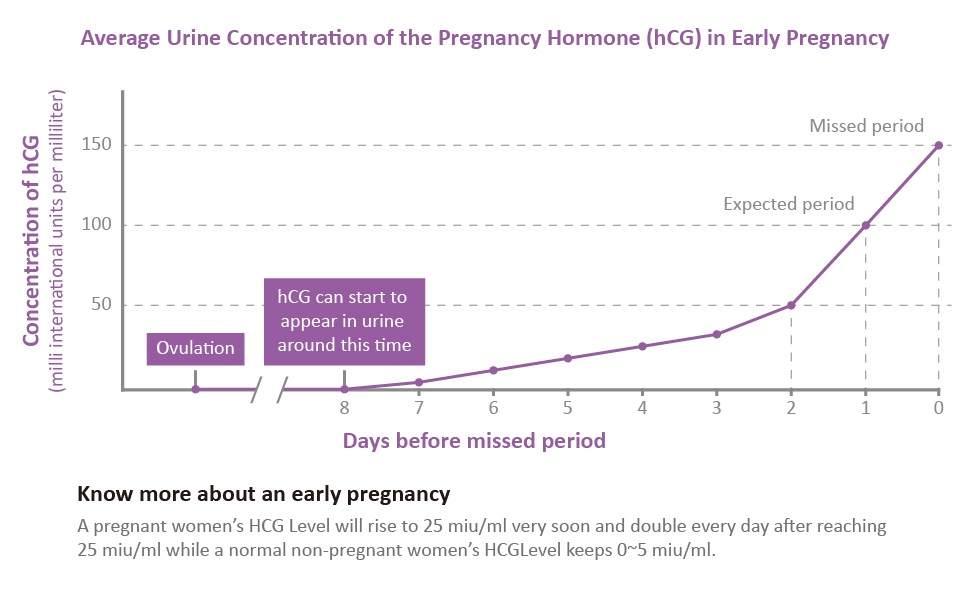
After implantation, the cells that become the placenta start to produce the pregnancy hormone, hCG, which creates symptoms very similar to what you feel right before the start of a new period, during PMS. A pregnant woman’s hCG level rises after getting pregnant and doubles every 2-3 days to reach the detection level of 25 mIU/mL.
By 11 DPO, hCG levels continue doubling every 48-72 hours. Pregnant women typically have levels between 17-200 mIU/mL at this point (wide range depending on implantation timing and individual variation).
Common 11 DPO early pregnancy symptoms:
- Tender swollen breasts
- Nausea or vomiting (may be more pronounced)
- Increased urination
- Fatigue (can feel extreme)
- Frequent urination beginning or increasing
- Food cravings or strong aversions
- Mild cramping or pulling sensations
- Emotional sensitivity or mood swings
- Elevated BBT continuing
- Mild backache
Can you test at 11 DPO? Yes. Most pregnant women will show positive results by 11 DPO on sensitive tests. The test line may still be faint, but it should be visible. If you get a negative, test again at 13-14 DPO or after your missed period for more definitive results.
12 DPO Symptoms: Reliable Testing Window
By 12 DPO, hCG levels in pregnant women are usually high enough (25-300 mIU/mL) to be detected by most home pregnancy tests. This is considered the “reliable testing window” where accuracy increases significantly.
Common 12 DPO symptoms if pregnant:
- Tender, swollen breasts (may have visible veins)
- Nausea (may be persistent throughout the day, not just mornings)
- Fatigue or exhaustion
- Frequent urination (becoming more noticeable)
- Mild cramping (uterus beginning to expand)
- Food aversions (certain smells or foods may trigger nausea)
- Mood swings or crying more easily
- Heightened sense of smell
- BBT remains elevated (doesn’t drop like it would before period)
- Mild bloating or feeling “full”
Common 12 DPO symptoms if not pregnant:
- Breast tenderness may start decreasing (progesterone dropping)
- BBT may begin dropping (signaling period arrival in 1-2 days)
- PMS symptoms intensify: cramping becomes more period-like
- Mood shifts toward irritability
- Period expected in 2-4 days
Can you test at 12 DPO? Absolutely. 12 DPO is an excellent time to test. If you’re pregnant, you’ll likely see a clear positive (though it may still be somewhat faint depending on your hCG levels). If negative and your period doesn’t arrive within 2-3 days, retest at 14 DPO.
What to do with a positive test: Congratulations! Call your healthcare provider to schedule a prenatal appointment (usually scheduled around 8-10 weeks). Continue taking prenatal vitamins, especially folic acid. Avoid alcohol, smoking, and high-mercury fish. Test again in 2-3 days to check the line is darkening, which indicates hCG is rising appropriately.
13-14 DPO Symptoms: Period Due or Missed Period
For women with regular 28-day cycles, your period is due around 14 DPO. If you’re pregnant, hCG levels are now high enough to produce clear positive tests and potentially cause early pregnancy symptoms. If not pregnant, progesterone drops sharply and your period arrives.
Common 13-14 DPO symptoms if pregnant:
- Missed period (the most obvious sign)
- Persistent nausea (may worsen in coming days)
- Breast changes becoming more obvious (darkening nipples, visible veins, significant tenderness)
- Frequent urination (noticeably increased)
- Exhaustion or extreme fatigue
- Strong food aversions or intense cravings
- Mood swings or emotional reactions
- Mild cramping (uterus expanding)
- Bloating or feeling of fullness
- Heightened sense of smell
Common 13-14 DPO symptoms if not pregnant:
- Period arrives (bleeding begins, usually within 24-48 hours of 14 DPO)
- Cramping intensifies into typical menstrual cramps
- Breast tenderness begins fading
- BBT drops to pre-ovulation baseline
- Bloating may decrease once period starts
Can you test at 13-14 DPO? Yes, this is the ideal testing window. Pregnancy tests are highly accurate at 14 DPO (the day of your expected period or one day after). If positive, you’re pregnant. If negative and your period doesn’t arrive within 2-3 days, retest or see your healthcare provider for a blood test.
After implantation occurs, the pregnancy hormone, hCG, takes a few days to get high enough to show positive on an at-home pregnancy test. We recommend waiting to test until you are 12-14 days post-ovulation or on the first day of your missed period for the most accurate results.
DPO Symptoms vs. PMS: How to Tell the Difference
The most frustrating aspect of the TWW is that early pregnancy symptoms and PMS (premenstrual syndrome) symptoms are nearly identical. Both are driven by progesterone, which rises after ovulation whether you conceive or not. However, there are subtle differences that emerge around 10-14 DPO.

When symptoms diverge: The clearest differences emerge around 12-14 DPO:
If PMS: Breast tenderness begins fading as period approaches, BBT drops 1-2 days before bleeding starts, cramping intensifies into typical menstrual pattern, and period arrives within 1-2 days of expected date.
If Pregnancy: Symptoms intensify rather than fade, BBT stays elevated (doesn’t drop), period doesn’t arrive on expected date, and pregnancy test shows positive result.
Before 12 DPO, the symptoms are simply too similar to reliably distinguish. This is why pregnancy tests are the only definitive answer during the TWW.
What If I Have No DPO Symptoms?
Every woman and pregnancy is unique. It’s common to see a variety of pregnancy symptoms after ovulation as the body prepares for menstruation or to carry a baby, but the absence of symptoms does not mean you are not pregnant.
Some women experience pregnancy symptoms very early, while others may not feel any signs of pregnancy until the hCG hormone further increases during the first trimester.
The most accurate and reliable way to know if you are pregnant is to take an at-home pregnancy test.
Having minimal or no symptoms during the TWW is incredibly common—and it tells you nothing about whether you’re pregnant. Many women don’t experience noticeable symptoms until 6-8 weeks of pregnancy, well after a positive hCG test.
Why symptoms vary so widely:
Several factors affect symptom intensity:
- Individual hormone sensitivity: Some bodies react more strongly to progesterone and hCG than others
- Natural hCG level variation: hCG levels vary widely between healthy pregnancies (one woman may have 100 mIU/mL at 12 DPO while another has 300 mIU/mL—both are normal)
- First pregnancy vs. subsequent pregnancies: Some women notice more symptoms in later pregnancies; others notice fewer
- Overall health and stress levels: High stress or exhaustion may mask pregnancy symptoms or make them harder to distinguish from everyday fatigue
What low symptoms or no symptoms do NOT mean:
- You’re not pregnant
- Something is wrong with the pregnancy
- Your pregnancy isn’t viable
- Your hCG levels are too low
- You won’t have a healthy baby
The absence of symptoms is completely normal and very common. Don’t let it cause unnecessary anxiety during your TWW. Trust the pregnancy test, not how you feel.
When To Take a Pregnancy Test
Optimal Testing Timeline
You can take a pregnancy test as early as five days before your missed period, but you must understand how testing works so you can identify early pregnancy without compromising accuracy and reliability.
The best time to take a pregnancy test is after the two week wait, 14 days past ovulation, or on the first day of your missed period.
Why wait two weeks to test for pregnancy? Your hCG level needs to be high enough to be detected in your urine, and the longer you wait after implantation, the more accurate your results.
For the most accurate results, follow this timeline:
10 DPO: Earliest detection possible
- Pros: May get early positive with very sensitive tests (Easy@Home early detection)
- Cons: High chance of false negative even if pregnant; hCG may not be detectable yet
12 DPO: Reliable testing window begins
- Pros: Most pregnant women show positive results by now
- Cons: Late implanters may still test negative; some women need to wait longer
14 DPO (Missed period): Most accurate timing
- Pros: Highest accuracy; clear, definitive results; less chance of false negative
- Cons: Requires patience through the entire TWW
Recommendation: Test at 12 DPO for a balance of early detection and accuracy. If negative, retest at 14 DPO or after your missed period for more reliable results.
How to Take a Pregnancy Test Correctly
The key to an accurate result is to test for pregnancy the right way. With a home pregnancy strip test, you can find out if you’re pregnant in three easy steps:
- Dip the white absorbent tip of the test into the urine up to the black “MAX” line and keep the tip in the urine until the dye rises into the results window. (Estimated time for the Easy@Home brand is 5-10 seconds.)
- Wait 3-5 minutes after laying the test on a flat, dry, non-absorbent surface. Don’t read results before 3 minutes or after 10 minutes.
- Read the results: Two lines mean you’re pregnant and one line means you’re not pregnant. Even a faint second line is considered positive.
Best practices for accurate testing:
- Use first morning urine when hCG concentration is highest
- Don’t drink excessive fluids before testing (dilutes hCG)
- Read results in the specified time window (3-5 minutes for most tests)
- Test again in 2-3 days if you get a negative but period doesn’t arrive
BONUS TIP: Use the free Premom app to track your results and increase your chances of getting pregnant.
When you upload your pregnancy test result to the Premom pregnancy test gallery, you can track your hCG progression in your urine from a faint test line, from approximately 6 days before your missed period day, until a bold test line appears. The app helps you see line progression over multiple days, giving comfort that hCG is rising appropriately.
Understanding Faint Lines on Pregnancy Tests
A pregnancy test shows a faint test line when you test early, and the line gets darker as hCG increases in the urine. So, the short answer is yes, even a very faint line on your pregnancy test could be a sign of pregnancy.
If you test for pregnancy early, be sure to test again after a couple of days to see if the test line continues to darken. This is a positive sign that pregnancy likely occurred and indicates that hCG is rising appropriately.

If you test multiple times, and the faint test line never darkens or gets lighter, it may be a sign of a chemical pregnancy—a very early miscarriage that occurs shortly after implantation.
Beyond an at-home pregnancy test, there are many different methods to check for pregnancy. This includes a blood test to examine your hCG level, which can detect pregnancy even earlier than urine tests and provide specific hCG numbers.
What to Do After a Positive Test
If you receive a negative pregnancy test, wait a few days before testing again, as your hCG levels may not be high enough to be detected, giving you a false negative test result.
If you see a positive pregnancy test, congratulations! Here’s what to do next:
- Test again in 2-3 days to check the line is darkening, which indicates hCG is rising appropriately (a sign of healthy early pregnancy)
- Call your healthcare provider to schedule a prenatal appointment (usually scheduled around 8-10 weeks of pregnancy)
- Continue taking prenatal vitamins, especially folic acid (at least 400mcg daily)
- Avoid alcohol, smoking, and high-mercury fish (such as swordfish, king mackerel, tilefish)
- Track your symptoms in the Premom app to monitor how your pregnancy progresses
- Stay hydrated and rest as your body begins the incredible work of growing a baby
Be sure to call your healthcare provider to set up a prenatal appointment to confirm your pregnancy with blood work and eventually an ultrasound.
When Should You Trust Your Symptoms?
Here’s the truth: Early pregnancy symptoms and PMS feel nearly identical until 12-14 DPO. Before then, progesterone causes the same symptoms whether you’re pregnant or not. The only reliable way to confirm pregnancy is through a blood test with your healthcare provider, not analyzing every twinge and sensation.
Whether you’re experiencing symptoms at 8 DPO or feeling nothing at all, both are completely normal. Wait until at least 12 DPO to test for accurate results, and remember: no symptoms doesn’t mean you’re not pregnant.
Ready to test? Easy@Home pregnancy tests detect hCG as early as 10 DPO. Track your results in the Premom app to see your line progression and rising hCG levels.
Shop Easy@Home Pregnancy Tests →
Frequently Asked Questions About DPO Symptoms
The most common 8 DPO symptoms include mild cramping, breast tenderness, fatigue, and occasional spotting. However, these symptoms are caused primarily by progesterone and occur whether you’re pregnant or not. At 8 DPO, implantation may be occurring, but hCG levels are still too low to cause distinctive pregnancy symptoms. You cannot reliably distinguish pregnancy from a regular cycle based on how you feel at 8 DPO.
It’s unlikely. While implantation can begin as early as 6 DPO for some women, most won’t feel anything specific. If you do feel mild cramping at 6 DPO, it’s more likely progesterone-related than implantation itself. The majority of implantation occurs between 8-10 DPO, and even then, many women feel nothing at all during the process.
No, 10 DPO is when sensitive early detection pregnancy tests may show positive results. However, many women who are pregnant still test negative at 10 DPO because hCG levels haven’t risen high enough yet (may still be under 25 mIU/mL). If you test at 10 DPO and get a negative, don’t lose hope—retest at 12-14 DPO for more reliable results.
Most women don’t experience distinctive pregnancy symptoms until after 12-14 DPO (around their missed period or shortly after). While some report symptoms as early as 6-8 DPO, these are usually progesterone-related and identical to regular cycle symptoms. True pregnancy-specific symptoms (caused by rising hCG) typically start 1-2 weeks after a missed period, though this varies widely between women.
Absolutely. Many women experience minimal or no symptoms in early pregnancy. Some don’t feel anything until 6-8 weeks or later. Absence of symptoms tells you nothing about whether you’re pregnant—only a pregnancy test or blood draw can help check. Symptom intensity doesn’t correlate with pregnancy health or hCG levels. Having no symptoms is completely normal and common.
Stress doesn’t delay symptoms per se, but it can affect progesterone levels and cycle regularity. High stress may delay ovulation itself, which shifts your entire DPO timeline. If ovulation is delayed by several days due to stress, all DPO milestones (implantation window, testing window, symptom timing) shift later too. This is why tracking ovulation with OPKs or BBT is important—it ensures you’re counting DPO from actual ovulation, not assumed ovulation.
Cramping at 7 DPO could indicate implantation (as 6-12 DPO is the typical implantation window), but it’s just as likely to be normal progesterone-related cramping that occurs every cycle. Cramping alone can’t confirm pregnancy. Many women experience mild cramping throughout the luteal phase regardless of whether they conceived. If cramping is accompanied by spotting at 7 DPO, it increases the possibility of implantation, but it’s still not definitive.
The first reliable sign at 10 DPO is a faint positive pregnancy test. Symptom-wise, you might notice increased breast tenderness, fatigue, mild nausea, or frequent urination beginning—but these symptoms are identical to PMS at this stage. You cannot distinguish pregnancy from PMS based on symptoms alone at 10 DPO.
Yes! Tracking symptoms in apps like Premom helps you identify patterns over multiple cycles, see correlations between symptoms and pregnancy outcomes, and avoid relying on memory alone during the emotional TWW. The app can also help you calculate your DPO accurately based on ovulation tracking (from OPKs, PdG or BBT), track your pregnancy test progression, and connect with a supportive TTC community.
References
- Dix, M. (2019, July 17). Implantation signs and symptoms: Bleeding, cramps, and more. Healthline.
- Mayo Foundation for Medical Education and Research. (2021, December 3). Symptoms of pregnancy: What happens First. Mayo Clinic.
- Pugle, M. (2022, January 28). High progesterone: Signs, symptoms, and complications. Verywell Health.