
Standing in the vitamin aisle, you might find yourself staring at a bottle of prenatals and wondering, “Is it too soon for these?” It can feel a little strange to buy them before you’re even pregnant, but you aren’t alone in that feeling.
The truth is, starting a prenatal vitamin is one of the most proactive steps you can take for your future. It isn’t about being “early, it’s about building the nutritional foundation your body needs long before a positive test. Whether you’re planning for a baby now or years from now, here is why taking prenatals today is a smart move for your reproductive health.
Key Takeaways: Benefits of Prenatal Vitamins While Not Pregnant
- Start 3–6 Months Early: Begin supplementation months before trying to conceive to optimize egg quality and build the nutrient stores necessary for a healthy pregnancy.
- Prevent Early Birth Defects: Sufficient folate levels must be established before conception to protect the baby’s neural tube, which develops in the first weeks of pregnancy.
- Targeted Reproductive Support: Unlike standard multivitamins, prenatals offer higher concentrations of specific “building blocks” like iron, iodine, and choline designed for reproductive health.
- Optimize Cycle & Hormones: Essential vitamins support thyroid function and hormone metabolism, which are foundational for regular ovulation and a healthy menstrual cycle.
Is It Weird to Take Prenatal Vitamins If You’re Not Pregnant?
If you’re just starting your journey into fertility, cycle health, and thinking about trying to conceive (TTC) “someday,” you might be wondering about prenatal vitamins. Specifically, you might be asking: Is it strange to take a prenatal vitamin if I’m not actually pregnant yet?
You are absolutely not alone. This is one of the most common questions people ask when they start exploring preconception health. It’s natural to feel curious, maybe a little hopeful, and perhaps slightly nervous as you learn about your body’s incredible reproductive process.
Here’s the reassurance you need: It is not weird. In fact, most reproductive health experts strongly recommend starting a prenatal vitamin 3 to 6 months before you begin trying to conceive. It’s a proactive, intelligent step toward preparing your body for a healthy pregnancy in the future.
Starting a prenatal vitamin is often the very first action people take on their path to parenthood, long before they start using ovulation predictor kits (OPKs—which we’ll define later!) or tracking basal body temperature. It’s a foundational step, and we’re here to help you understand why.
What Are Prenatal Vitamins? (And How Are They Different From Regular Multivitamins?)
What “Prenatal” Actually Means
The term prenatal means “before birth.” While it’s easy to assume these are only for people who are already pregnant, they are actually designed for the whole journey: preconception, pregnancy, and postpartum.
Prenatal Vitamins vs. Regular Multivitamins
Standard multivitamins are designed for general maintenance. However, a body preparing for pregnancy has higher demands for specific “building block” nutrients.
| Nutrient | Standard Multivitamin | Premom Prenatal Multivitamin | Why it Matters Pre-Pregnancy |
|---|---|---|---|
| Folate | 400mcg or less (Folic Acid) | 800mcg DFE (Methylfolate as Quatrefolic ®) | Prevents neural tube defects before you even know you’re pregnant.* |
| Iron | 0mg – 27mg | 18mg (Easily absorbable iron bisglycinate chelate*) | Builds blood supply to support a future pregnancy and supports iron loss due to menstruation.* |
| Choline | Often 0mg | 225mg | Essential for baby’s brain and spinal cord development.* |
| Iodine | Varies | 150mcg | Supports your thyroid, which regulates your ovulation and metabolism.* |
| Vitamin A | Often high Retinol | Beta-Carotene and Retinyl Palmitate combo | Safer for a developing fetus (high Retinol can be toxic).* |
Standard multivitamins are designed for general maintenance and may fall short in these key areas. If you are preparing your body for pregnancy, you need higher levels of these specific nutrients, which is why making the switch is so important.
Can You Take Prenatal Vitamins While Not Pregnant?
Starting a prenatal while you’re still in the planning phase is one of the most effective ways to support a future pregnancy. Most experts recommend a three-month head start, and there’s a biological reason for that 90-day window: egg maturation.
It takes about three months for an egg to fully mature before it’s released during ovulation. When you start your vitamins early, you’re providing the nutrients and antioxidants that support the egg’s quality throughout that entire final cycle.
There is also the matter of timing. A baby’s neural tube—which eventually becomes the brain and spine—closes within the first few weeks after conception. This usually happens before you even have enough hCG in your system to get a positive pregnancy test. Having consistent folate levels already built up means you’re supporting that development from the very first day, even before you know you’re pregnant.
Since it’s easy to forget a daily pill when you don’t “feel” pregnant yet, many women find it helpful to use the supplement reminders in the Premom app to stay consistent during the preconception months. It takes the mental load off your plate so that by the time you see that double line, your nutrient stores are exactly where they need to be.
Who Prenatal Vitamins Are Helpful For
While prenatals are designed for pregnancy, their utility starts much earlier. If you’re in any of the following stages, getting a head start can make the eventual transition to pregnancy much smoother.
- Thinking about pregnancy “someday”: If the thought of having a baby is on your horizon within the next year or two, starting now gives you a low-pressure way to build up those nutrient stores.
- Early TTC (Cycles 1–2): If you’ve just started trying (TTC stands for “Trying To Conceive”) and haven’t been on a prenatal yet, starting immediately is beneficial.
- Irregular cycles or nutrient concerns: If you know you have dietary restrictions (like vegetarianism or veganism), a past history of iron-deficiency anemia, or just want to support consistent cycle health, a prenatal can help fill potential nutritional gaps.
- Postpartum: During this time after birth it is also important to focus on replenishing nutrient supplies while you are recovering, especially if you are breastfeeding.
- People who want to support long-term reproductive health: The vitamins and minerals in a prenatal (like B vitamins and iron) are essential for general energy, healthy menstruation, and overall well-being, whether you’re planning a family or not.
Benefits of Prenatal Vitamins While Not Pregnant
The benefits of taking a prenatal before you’re pregnant are all about preparation and prevention.
1. Builds Nutrient Stores Before You Need Them
The biggest nutritional need in early pregnancy is Folate. The neural tube (which becomes the baby’s brain and spine) develops and closes between 3 and 6 weeks of gestation. This is often before a person even gets a positive pregnancy test. By taking a prenatal now, you ensure your folate levels are already at the protective threshold when conception occurs.
Research has repeatedly shown that achieving an optimal preconception folate status (meaning you have plenty of folate actively available in your body before conception) significantly reduces the risk of Neural Tube Defects (NTDs) like spina bifida. If you wait until you see a positive pregnancy test to start taking folate, you’ve likely missed that critical window.
2. Supports Hormone & Cycle Health
Many of the nutrients in a prenatal vitamin play a vital, foundational role in supporting a healthy menstrual cycle and optimal ovulation:
- Iron: Necessary to replenish the stores lost during your monthly period. Consistent iron levels help support healthy red blood cells and energy.
- B Vitamins (like Folate (B9), B6, B12, B1, B2, B3, B5): Essential for hormone metabolism and energy production, which directly supports the complex process of ovulation (the release of an egg from the ovary).
- Iodine: Needed for the thyroid gland to function properly. The thyroid regulates metabolism, which, in turn, influences reproductive hormones and cycle regularity.
A prenatal vitamin is not a fertility drug. It will not force you to ovulate or conceive. However, by ensuring your body has the right building blocks, it provides foundational support for your body’s natural cycle processes.
3. Helps Prevent Hidden Deficiencies
Even with a varied, healthy diet, modern life can lead to “silent” or hidden deficiencies. These include:
- Vitamin D: Crucial for immune function and hormone regulation, and many people, depending on where they live, do not get enough from sun exposure alone.
- Folate: Though found in leafy greens, getting the optimal, protective amount needed for pregnancy through diet alone can be difficult and inconsistent.
- Iron: Especially common in people who menstruate. Low iron can cause fatigue and poor reproductive health outcomes.
- Choline: Important for fetal brain developement and recommended daily while pregnant. Many women do not consume enough choline through diet alone, so ensuring your prenatal vitamin has added choline to help fill in nutrient gaps is important.
By taking a prenatal, you are using it as nutritional backup to ensure you are meeting your daily needs, closing any micronutrient gaps that could subtly affect your reproductive health and general energy levels.
4. Supports Egg Quality & Early Reproductive Health
The egg you ovulate this month has been developing for many months, undergoing maturation phases. During this time, the egg is highly sensitive to its nutritional environment.
While we are only talking about foundational support (and not magic fixes!), some evidence links a steady supply of micronutrients, antioxidants, and DHA to supporting the overall health and quality of the egg as it develops. By nurturing your body now, you are supporting the health of your future eggs.
Will Prenatal Vitamins Help You Get Pregnant Faster?
It’s natural to hope a prenatal vitamin will speed up the process, especially when you are so excited to start trying. It’s important to set clear, realistic expectations.
What Prenatal Vitamins Can Do
- Support Nutrient Adequacy: Ensure your body has the essential vitamins and minerals it needs for conception and early development.
- Help Reduce Preventable Risks: Help to lower the risk of NTDs by building up folate availability.
- Support Overall Reproductive Health: Help maintain healthy hormone and energy levels necessary for consistent menstrual cycles and ovulation.
What They Can’t Do
- Not a Guarantee: A prenatal vitamin cannot guarantee that you will get pregnant, nor can it guarantee a specific timeline.
- Not a Replacement for Ovulation Timing: The most important factor for getting pregnant is correctly timing intercourse around ovulation (when the egg is released). This is where tools like the Premom ovulation tracker app become essential for beginners.
- Not a Substitute for Medical Care: If you have underlying medical conditions or concerns, a prenatal is a supplement, not a treatment. Always consult with your healthcare provider.
When Should You Consider Taking Prenatal Vitamins?
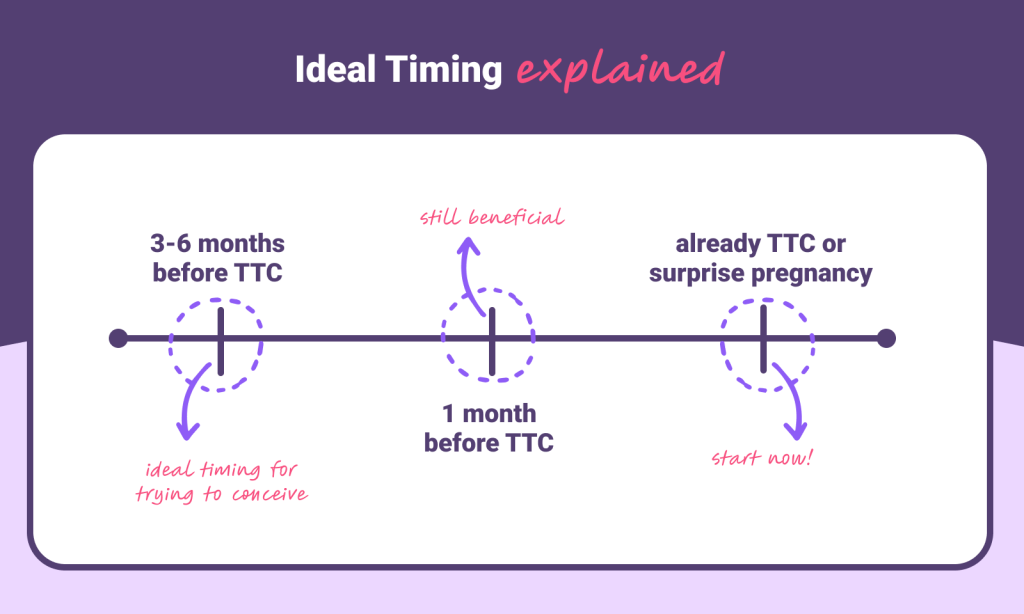
- 3–6 Months Before TTC: Ideal window to influence egg quality and build folate stores.
- 1 Month Before TTC: Minimum recommended time to start.
- Already Trying? Start today! Consistency matters more than a “perfect” start date.
“Is It Too Early or Too Late?”
If you’re the “Curious Explorer,” you might be anxious about getting the timing exactly right.
Too Early? No. If you’re generally healthy, there is no such thing as “too early” to start preparing your body.
Too Late? No. While you ideally start early, it is never too late to begin a healthy habit. If you are already trying to conceive or even pregnant, start today and maintain consistency. Do not let guilt over a missed timeline stop you from taking this beneficial step now. Focus on consistency over perfection.
Are There Side Effects If You’re Not Pregnant?
Since a prenatal vitamin contains higher doses of some minerals, it’s possible to experience mild side effects, even when not pregnant. These are almost always manageable.
Common Mild Side Effects
- Nausea or Upset Stomach: The concentration of B vitamins and iron can sometimes cause this, especially if taken on an empty stomach. It’s always best to take any prenatal vitamin with a full meal!
- Metallic Taste: Some people report a slight metallic or vitamin taste after taking the prenatal vitamins if in tablet form, which is usually fleeting. This can often be avoided by taking encapsulated prenatal vitamins instead of tablet form.
How to Reduce Side Effects
- Take with Food: This is the best defense against nausea and stomach upset. A full meal or even a hearty snack is better than taking it with just a glass of water.
- Take at Night: If you experience evening sickness or morning nausea, try taking your prenatal right before bed. This allows you to “sleep through” any mild digestive adjustment.
- Choose Gentle Formulations: Look for prenatals that use gentler, more bioavailable forms of iron (like iron bisglycinate) or folate (like methylfolate), which can be easier for your body to absorb without discomfort.
Prenatal Vitamins as Part of a Learning-First TTC Journey
Education Without Overwhelm
As you start this journey, your primary need is education without feeling overwhelmed. You are learning the language of your body. What is an OPK? How does ovulation work?
Starting a prenatal vitamin is a simple, tangible action you can take right now while you are still learning the ropes. It allows you to feel proactive and prepared.
This is why tools that combine education and tracking are so valuable. The Premom ovulation tracker app is a fantastic place to start because it:
- Tracks Your Cycle: It helps you track and understand when you ovulate and when your best chances for conception are.
- Provides Educational Resources: You can learn what an OPK is, how to use it, and what all those acronyms mean, all in one friendly, accessible space.
How Prenatal Vitamins Fit Into a Bigger Picture
Taking a prenatal is one piece of a successful preconception puzzle that also includes:
- Cycle Awareness: Learning to track your cycle and accurately predict ovulation.
- Nutrition: Committing to a whole-foods diet.
- Stress Management: Taking care of your mental and emotional health.
Starting Prenatal Vitamins Is a Small Step With Long-Term Benefits
Taking charge of your preconception health is one of the most empowering things you can do, and starting a prenatal vitamin is the easiest, most beneficial first step.
You don’t need to be ready for pregnancy or even actively trying to conceive to start caring for your future health. You are making an informed, pressure-free choice to support your body today for the health of your future family.
As you continue to learn, track your cycle, and explore your fertility journey, know that your decision to start a prenatal vitamin is a significant, positive action.
Ready to dive deeper into your cycle? Download the Premom app to start tracking your ovulation, learning your body’s signals, and accessing a library of educational resources, it’s the best learning tool for the hopeful and curious TTC explorer!
Frequently Asked Questions About Prenatal Vitamins While Not Pregnant
Yes, for most healthy adults, it is safe and highly recommended. Prenatal vitamins are designed to build up key nutrients like folate and iron, which are vital for early pregnancy and general reproductive health. Always check with your healthcare provider if you have pre-existing medical conditions.
The ideal timing is to start about 3 months before you plan to stop using birth control and begin trying to conceive (TTC). This ensures your body’s essential nutrient stores are optimized, especially folate, before the critical neural tube development window.
No, you should not take them together. Prenatal vitamins are essentially a specialized multivitamin with higher doses of specific nutrients. Taking both can lead to excessive intake of certain fat-soluble vitamins (A, D, E, K), which can be harmful. Talk to your doctor about stopping your regular multivitamin when you start your prenatal.
Yes! If you experience nausea during the day, taking your prenatal vitamin right before bed is a great strategy to minimize side effects, as most women report sleeping through any mild digestive complaints.
In addition to a high-quality prenatal, many experts recommend:
– DHA/Omega-3s: If your prenatal doesn’t include enough, a pure fish oil supplement is highly recommended for brain and eye development.
– CoQ10 (Coenzyme Q10): Sometimes recommended to support egg quality, especially for those over 35, but discuss this with your doctor first.
– Choline: While your prenatal may contain some choline, the recommended daily intake during pregnancy is typically higher. If you feel your diet falls short of meeting this need, you may benefit from an additional choline supplement. Discuss your total intake goals with your healthcare provider.
*These statements have not been evaluated by the Food and Drug Administration. This product is not intended to diagnose, treat, cure, or prevent any disease.
References:
Adams JB, Kirby JK, Sorensen JC, Pollard EL, Audhya T. Evidence based recommendations for an optimal prenatal supplement for women in the US: vitamins and related nutrients. Matern Health Neonatol Perinatol. 2022 Jul 11;8(1):4. doi: 10.1186/s40748-022-00139-9. PMID: 35818085; PMCID: PMC9275129.
Cleveland Clinic. (2014, September 17). Prenatal Vitamins: Importance, Deficiency & Essentials. Retrieved from https://my.clevelandclinic.org/health/drugs/9754-pregnancy-prenatal-vitamins
Scovell JM, Ramasamy R. Should Men Take Prenatal Vitamins? Reprod Syst Sex Disord. 2014 Jul 1;3(3):1000139. doi: 10.4172/2161-038X.1000139. PMID: 25763298; PMCID: PMC4352710.
Hecker J, Layton R, Parker RW. Adverse Effects of Excessive Folic Acid Consumption and Its Implications for Individuals With the Methylenetetrahydrofolate Reductase C677T Genotype. Cureus. 2025 Feb 20;17(2):e79374. doi: 10.7759/cureus.79374. PMID: 40130142; PMCID: PMC11930790.


