

For anyone in the two-week wait (TWW), there’s one question that tends to take over your mind: “How early can a pregnancy test actually detect pregnancy?”
You may notice fatigue, sore breasts, or mood swings — but the frustrating part is that those symptoms could just as easily be PMS. And while we all wish there was a way to know instantly, the truth is the only reliable way to confirm pregnancy is with a test.
The tricky part? Knowing how soon a test can pick up those first traces of pregnancy hormone, how to interpret faint lines, and when you can trust the results without second-guessing. Let’s break it down step by step.
How Pregnancy Tests Work
Pregnancy tests work by detecting human chorionic gonadotropin (hCG), the hormone your body starts producing after implantation (when the fertilized egg attaches to the uterus).
The Role of hCG in Early Pregnancy Detection
- hCG is released by the cells that will form the placenta when you are pregnant.
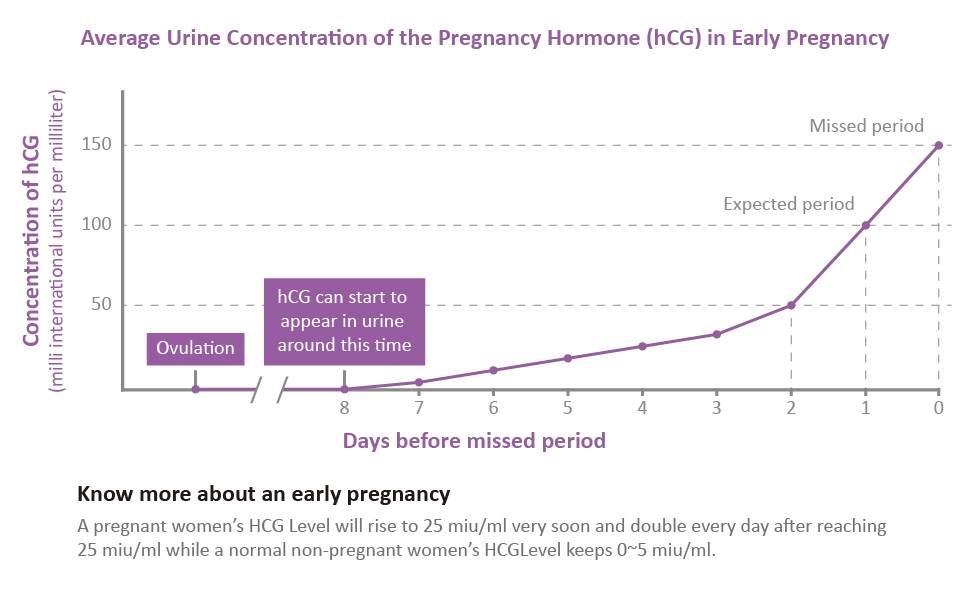
- In early pregnancy, hCG typically doubles every 48–72 hours, which is why lines on tests often look darker every couple of days.
- Most home urine tests detect hCG at 25 mIU/mL, which usually happens a few days before your missed period.
Urine vs. Blood Pregnancy Tests
- Urine tests (home tests): Sensitive strips like Easy@Home can detect pregnancy a few days before your missed period. They’re quick, affordable, and you can use them in the comfort of your own home.
- Blood tests: Ordered by your doctor, these detect even smaller amounts of hCG (sometimes as early as 7–10 DPO). They’re more accurate but require a lab draw.
How Early Can You Take a Pregnancy Test?
You might be able to see a positive pregnancy test as early as 5–6 days before your missed period (around 9–10 days past ovulation), but it really depends on three key factors:
- When you ovulated
- When implantation happened
- How quickly your hCG levels are rising
Why Testing Too Early Can Be Misleading
If you test very early — for example, at 7–8 DPO — you’ll almost always see a negative result. That doesn’t necessarily mean you’re not pregnant; it may just be too soon for your body to produce enough hCG for the test to detect. Early negatives can cause unnecessary stress, so keep this in mind.
The Best Time to Test
- Best time: The first day of your missed period (about 14 DPO).
- Earliest possible window: Up to 5 days before your missed period if you’re using an early detection test. But remember — a negative this early doesn’t always mean you’re not pregnant.
How pregnancy tests work: After implantation, your body starts producing hCG, which roughly doubles every 2–3 days. The darker the test line, the more hCG is present.
Choosing the Right Test
Not all pregnancy tests are equally sensitive. Some, like the Easy@Home early detection strips, can detect lower hCG levels and may show a positive up to 5 days before a missed period. Always check your test’s specifications so you know how early it can accurately detect pregnancy.
👉 Want to learn more about what’s happening during this time? [Read our guide to the two-week wait →]
What hCG Levels Mean for Early Testing
How Quickly hCG Rises After Implantation
Implantation is happening between 6–12 DPO, and then hCG begins doubling every 2–3 days. If implantation doesn’t happen until 9-10 DPO, then you add 3-5 days for hCG to start to rise and get strong enough to be detected on a pregnancy test, it could be 13-14 DPO before you see your first positive test.
Why Some Women See Faint Positives Earlier
- Early implanters (6–7 DPO) may test positive by 9 DPO.
- Later implanters (11–12 DPO) may not see a positive until after their missed period.
What Counts as “Positive”
Any double line (the test line), no matter how faint, that appears within the test window counts. Easy@Home strips detect 25 mIU/mL, which is the standard threshold.
Is a Faint Second Line on a Pregnancy Test Positive?
The short answer is yes. Even a very faint double line on your pregnancy test could be regarded as a sign of a positive test.
However, a faint line alone doesn’t always tell the full story. To better confirm your pregnancy, take another test after 48–72 hours. If your hCG levels are rising as expected, the test line should gradually become darker and bolder.
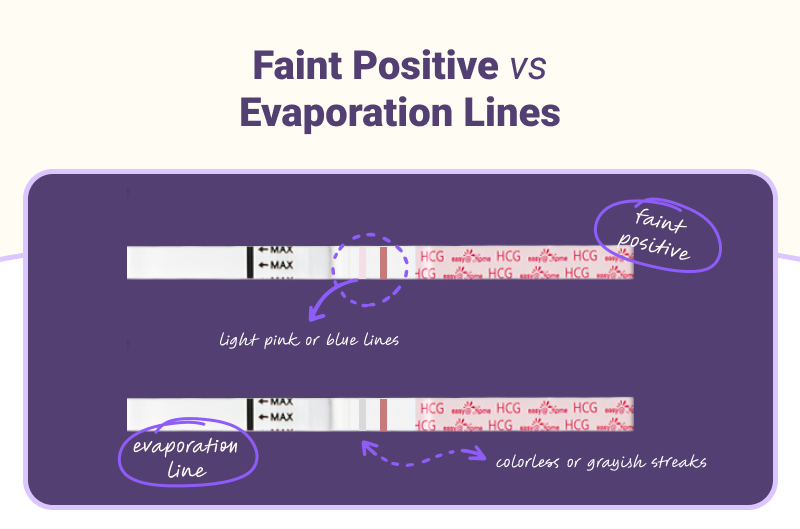
Sometimes, what looks like a faint positive is actually an evaporation line—a colorless streak that shows up after the test’s recommended read time.
Faint Positives vs. Evaporation Lines
Here’s how to tell the difference:
- Faint positives: Light pink or blue lines within the testing window = hCG detected.
- Evap lines: Colorless or grayish streaks that appear after the time limit = not a true positive.
What hCG Line Progression Should Look Like
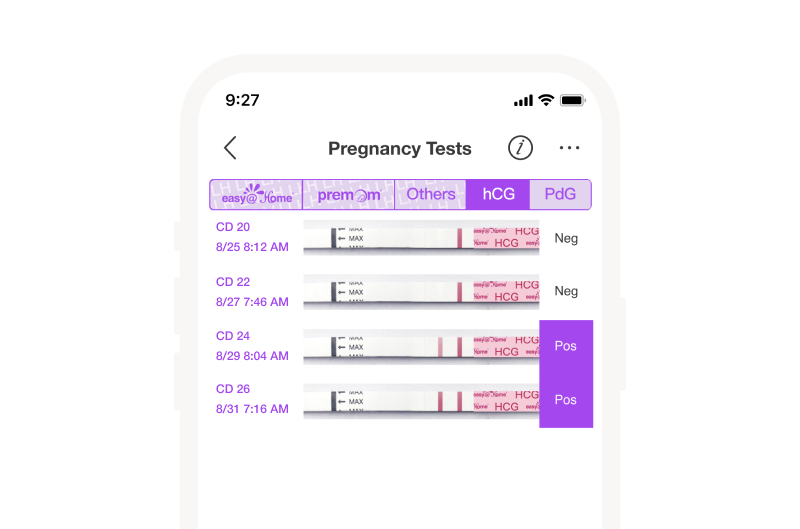
In an early healthy pregnancy, hCG levels typically double every 48–72 hours. That means your test line should get noticeably darker with each test if you space them out by a couple of days.
For example, here’s how a typical hCG progression looks over several days using the Premom app:

When Faint Lines Might Signal a Chemical Pregnancy
If your test line fades or even disappears after initially testing positive, it could indicate a chemical pregnancy—an early miscarriage that often happens before a missed period.
While this can be emotionally difficult, tracking your line progression inside the Premom app can help you understand what’s happening and decide when it’s time to follow up with your provider.
How to Take a Pregnancy Test for the Most Accurate Results
Taking a pregnancy test is simple and can be done by following a few simple steps to ensure you get the most accurate results. Here’s how to do it:
- Dip the white absorbent tip of the test into the urine up to the black “MAX” line and keep the tip in the urine until the dye rises into the results window. (Est. time for Easy@Home brand: 5-10 seconds)
- Place the test stick on a flat surface and wait for the recommended 3-5 minutes before reading your results. Avoid checking the test too early or too late.
- Read your results by checking the test window. If you upload your hCG test result to the Premom pregnancy test gallery, you can track your hCG line progression in your urine from a faint line—starting about 6 days before your missed period—until a bold, clear line appears.
Why First-Morning Urine Matters
First-morning urine is the most concentrated and usually has the highest hCG levels for that reason. If you’re testing early, this can make the difference between seeing a faint line and seeing nothing.
Common Mistakes to Avoid
- Testing too early in your cycle, try waiting until closer to your missed period.
- Reading results after the time limit
- Drinking too much water before testing (dilutes urine)

Can a Pregnancy Test Be Wrong?
When you’re eagerly awaiting results, a pregnancy test can feel like the ultimate verdict on your journey to conceive. But is it always accurate? The short answer is: not always. Several factors can lead to incorrect results, causing confusion and stress at a time when clarity is needed most. Here’s what you need to know about the reliability of pregnancy tests:
False Negatives
A false negative pregnancy test shows you’re not pregnant when you are. This can be caused by:
- Testing Too Early: If you take a test before your body produces enough hCG, it may not be detectable. Waiting until after your missed period is recommended for the most accurate results.
- Diluted Urine: Taking a test with diluted urine (such as drinking lots of fluids too close to when you test) can lower hCG concentrations, making it harder for the test to detect hCG levels. This is why it’s recommended to take a pregnancy test with first-morning urine when your urine is most concentrated.
- Faulty Test: This is rare, but a defective test can give inaccurate results. Always check the expiration date and follow the instructions of your test kit to ensure accuracy.
False Positives
A false positive pregnancy test is rare but can be equally distressing. This occurs when the test shows a positive result even though you’re not pregnant. Possible causes include:
- Chemical Pregnancy: This occurs when a very early pregnancy is lost shortly after implantation. The hCG levels rise enough to trigger a positive pregnancy test, but the pregnancy doesn’t continue.
- Medications: Some fertility treatments or other medications containing hCG can cause false positives.
- Evaporation Lines: If a test is read after the recommended time frame, a faint evaporation line may appear, which can be mistaken for a positive result.
If you receive unexpected results, it’s advisable to retest in a few days or consult with your healthcare provider for a more definitive answer, such as a blood test, which measures hCG levels more precisely. By understanding the factors that can lead to inaccurate results, you can better navigate the testing process and feel more confident in your next steps.
When to Confirm With a Blood Test
If you’re confused by your results or have missed your period but are still getting negative test results, a blood test from your doctor can measure exact hCG levels and confirm whether you’re pregnant or not.
Early Pregnancy Symptoms and Testing: How to Use Both Together
It can be hard to tell if what you’re feeling means pregnancy or just PMS. Paying attention to your symptoms and testing can give you a clearer picture of what’s really happening.
Common Symptoms Before a Missed Period
Fatigue, sore breasts, bloating, mood swings, nausea — sound familiar? These can all show up even before you miss your period.
Why Symptoms Alone Aren’t Reliable
Here’s the frustrating part: PMS and early pregnancy can feel exactly the same. You might swear you “just know,” but symptoms alone can’t confirm pregnancy. That’s why testing is so important, even when your body feels like it’s dropping hints.
How to Use Symptoms Alongside Testing
Instead of relying on one or the other, combine both. Log every wave of nausea, burst of fatigue, or mood swing alongside your hCG test results in the Premom app. Seeing your symptoms and line progression together helps you make sense of what’s happening — and spot changes early.
Pregnancy Test: How Early? Key Takeaways
- Earliest positive: 5–6 days before your missed period (but not always reliable).
- Best time: First morning urine on the day of your missed period (around 14 DPO).
- Faint lines: Usually positive — confirm by retesting in 48 hours.
- Premom advantage: Log your pregnancy test strips, track your line progression, and use our AI-powered insights to reduce uncertainty.
Final Thoughts
Waiting to test during the TWW can feel endless, but remember: your body is working on its own timeline. Implantation and hCG rise vary for every woman — and that’s normal.
If you’re testing early, give yourself grace. A negative test at 9 DPO doesn’t mean you’re not pregnant; it may just be too soon. And if you see a faint line, hold onto hope and retest after 48 hours to look for progression.
With the Premom app, you don’t have to navigate this confusing stage alone. From tracking your line progression to tracking your pregnancy, you’ll have the tools and support to approach early testing with more calm and confidence.
Frequently Asked Questions About Early Pregnancy Testing
As early as 5 days before your missed period, with an early-detection strip.
It is unlikely to get a positive pregnancy test at 7 DPO — hCG usually isn’t high enough yet. Most positives appear after 9–10 DPO.
Yes, if they appear within the test window. Evaporation lines appear later and are colorless.
You may have tested too early. Retest after 2–3 days or confirm with a blood test.
Usually, 2–3 days after implantation, depending on when it occurred.

References
American College of Obstetricians and Gynecologists (ACOG). (2021). Clinical management guidelines: Early pregnancy loss (Practice Bulletin No. 200). Obstetrics & Gynecology, 132(5), e197–e207. https://doi.org/10.1097/AOG.0000000000002937
Ecochard, R., Leiva, R., Bouchard, T., Vigil, P., de Mouzon, J., & Trussell, J. (2017). Use of urinary pregnanediol 3-glucuronide and other fertility indicators to identify the fertile window. Fertility and Sterility, 107(2), 361–368. https://doi.org/10.1016/j.fertnstert.2016.10.038
Gnoth, C., Johnson, S., Strips, J., & Freundl, G. (2014). Time to pregnancy: Results of the German prospective study and impact on the management of infertility. Reproductive Health, 11(1), 3. https://doi.org/10.1186/1742-4755-11-3
Keselman, A., Mikhail, M., & Patel, N. (2023). Quantitative measurement of urinary luteinizing hormone and its application in ovulation prediction. Frontiers in Public Health, 11, 996026. https://doi.org/10.3389/fpubh.2023.9960263
Mayo Clinic Staff. (2022). Home pregnancy tests: Can you trust the results? Mayo Clinic. https://www.mayoclinic.org/tests-procedures/home-pregnancy-tests/in-depth/pregnancy-tests/art-20047940
Prior, J. C., Naess, M., Langhammer, A., & Forsmo, S. (2018). Ovulation prevalence in women with spontaneous normal-length menstrual cycles: A population-based cohort from HUNT3, Norway. PLOS ONE, 13(12), e0207457. https://doi.org/10.1371/journal.pone.0207457Wilcox, A. J., Baird, D. D., & Weinberg, C. R. (1999). Time of implantation of the conceptus and loss of pregnancy. New England Journal of Medicine, 340(23), 1796–1799. https://doi.org/10.1056/NEJM199906103402304
Original Publish Date: August 12, 2022